Pasta Starch Calculator
Why This Matters
Starch is the secret ingredient that makes sauce cling to pasta. Rinsing removes it, making your dish taste bland and slippery.
Ever watched someone drain their pasta and immediately rinse it under cold water? You might’ve thought they were trying to cool it down fast-or maybe you’ve done it yourself. But here’s the truth: cold water over pasta is one of the most misunderstood cooking habits out there. And unless you’re making a cold pasta salad, you’re probably making your dish worse.
Where Did This Habit Come From?
The idea of rinsing pasta with cold water started as a workaround for home cooks who didn’t know how to handle starch properly. Back in the day, people would overcook pasta, then panic when it stuck together in the colander. So they’d turn on the tap and wash away the gooey mess. It looked clean. It looked safe. But it didn’t make the pasta better-it just made it bland and slippery.Some folks still swear by it because they remember their grandma doing it. Others think rinsing stops the cooking process. And a few believe it removes excess starch, which they think makes the sauce slide off. But here’s the thing: starch isn’t the enemy. It’s the glue.
Why Starch Matters More Than You Think
When pasta cooks, it releases starch into the water. That’s not a flaw-it’s a feature. That starchy water is liquid gold for sauces. When you toss your drained pasta back into the pot with your sauce and a splash of that cooking water, the starch helps the sauce cling to every strand. It creates a creamy, cohesive texture without needing cream or butter.Think about it: why do professional chefs never rinse pasta? Because they know the sauce won’t stick if the surface is washed clean. A rinsed noodle is like a plastic spoon trying to hold soup-it just slides right off. A properly drained noodle, coated in its own starch, becomes a canvas for flavor.
What Happens When You Rinse Pasta?
Rinsing pasta with cold water does three things-and none of them help your dish:- It washes away the starch that helps sauce stick
- It cools the pasta down too fast, making it harder for the sauce to absorb into the noodles
- It leaves the pasta with a wet, soggy surface that doesn’t brown or caramelize if you’re finishing it in a pan
There’s one exception: cold pasta salads. If you’re making a pasta salad for a picnic or potluck, rinsing makes sense. You want the noodles to stay separate and cool. But even then, many chefs recommend shocking the pasta in ice water for just 30 seconds, then draining it thoroughly-no long, slow rinse under the tap.
The Right Way to Drain Pasta
Here’s how to drain pasta like a pro:- Use a large pot with plenty of water (at least 4 quarts per pound of pasta). This keeps the starch from getting too concentrated and makes the pasta cook evenly.
- Salt the water well-about 1 to 2 tablespoons per quart. It seasons the pasta from the inside out.
- Don’t add oil to the water. It makes the pasta slippery and prevents sauce from sticking.
- Cook pasta until it’s al dente-firm to the bite. It will soften a little more when mixed with sauce.
- Reserve at least 1 cup of the starchy cooking water before draining.
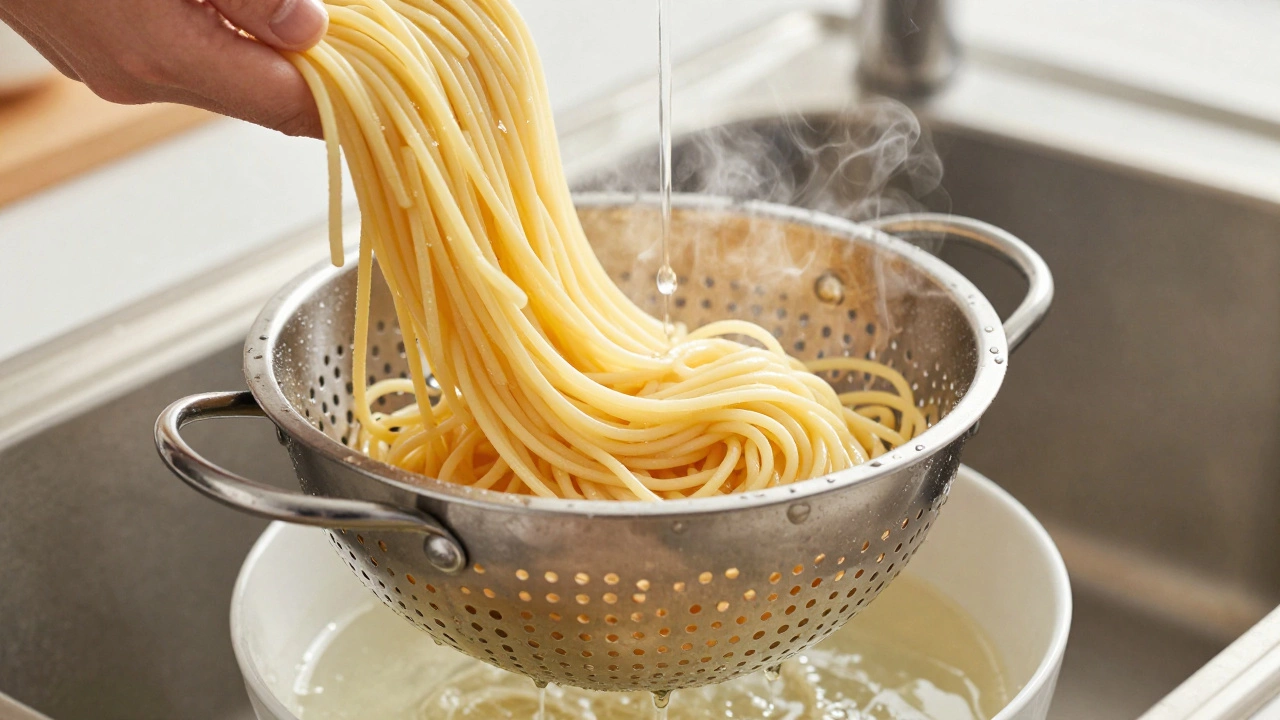
- Drain the pasta in a colander, but don’t rinse it.
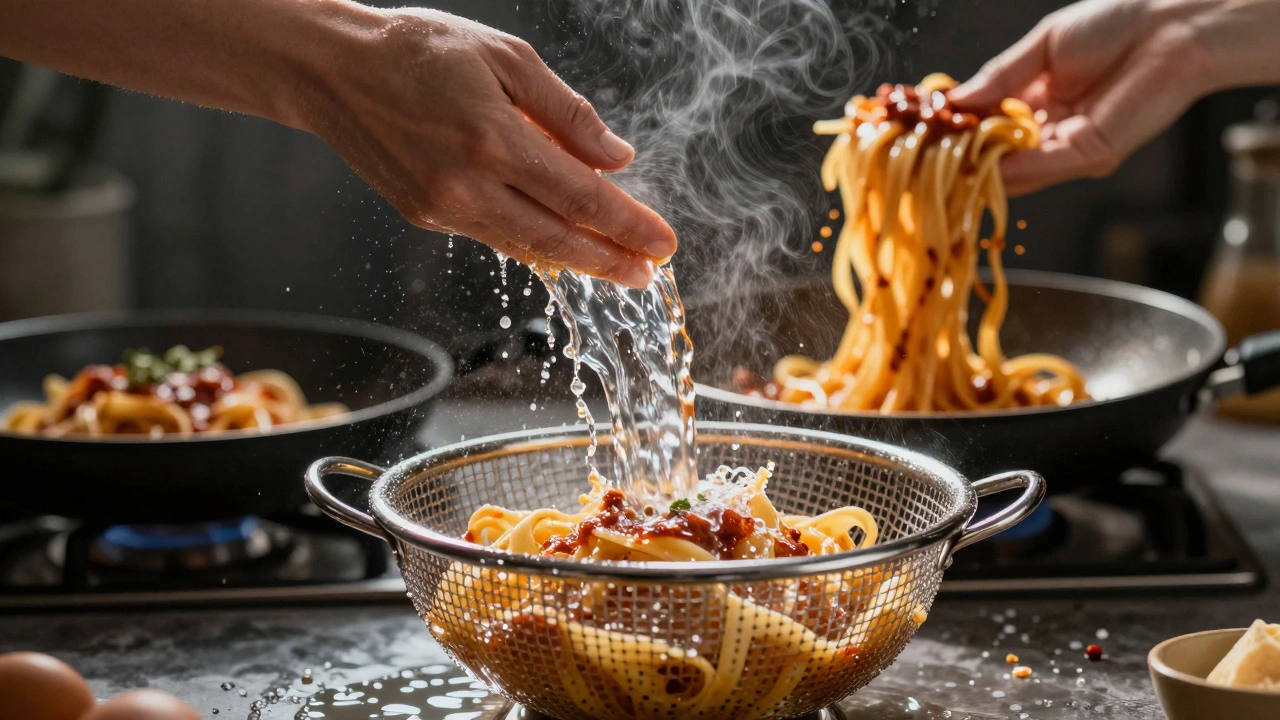
- Immediately add the hot pasta to your sauce in the pan. Toss over low heat for 1-2 minutes, adding splashes of reserved water until the sauce coats the noodles perfectly.
This method works whether you’re making spaghetti carbonara, pesto, or a simple garlic and olive oil sauce. The pasta doesn’t need to be perfect-it needs to be connected to the sauce.
What About Leftovers?
If you’ve got leftover pasta, rinsing it might seem like a good idea to stop it from sticking. But it’s still the wrong move. Instead, toss the cooled pasta with a tiny bit of olive oil before storing it in the fridge. That’s enough to keep the strands apart without washing off the flavor.When you reheat it, add a splash of water or broth to the pan and stir it gently. The starch will reactivate, and the pasta will come back to life-not turn into a gluey mess.
Why This Myth Persists
You’ll still hear people say, “I rinse my pasta because it’s always sticky otherwise.” But that’s not because rinsing helps-it’s because they’re using too little water, under-salting, or overcooking. Rinsing masks the problem instead of fixing it.Think of it like washing the grease off a steak before searing it. You’re removing the very thing that helps flavor develop. Pasta starch is the same. It’s not a flaw. It’s the secret ingredient.
Real-World Test: Rinsed vs. Unrinsed
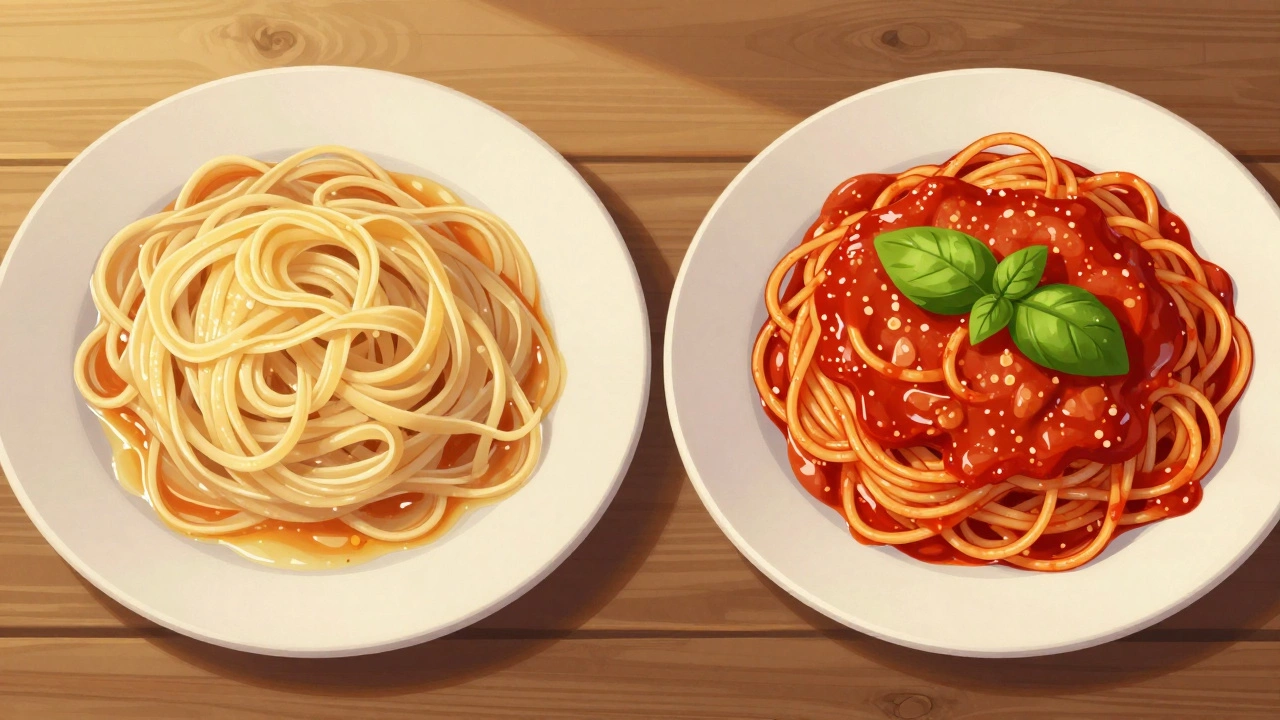
A simple test you can do at home: cook two batches of spaghetti. Drain one and rinse it under cold water. Drain the other and leave it as-is. Toss both with the same sauce-say, a simple tomato and basil sauce. Taste them side by side.The rinsed batch will taste flat. The sauce will pool at the bottom of the bowl. The noodles will feel slippery and disconnected.
The unrinsed batch will have sauce clinging to every curve of the pasta. It’ll feel richer. It’ll taste more like the sauce was made *for* the pasta-not just served alongside it.
Final Rule: Never Rinse Pasta (Unless It’s Cold)
If you’re serving pasta hot with sauce-don’t rinse. Ever.If you’re making a cold pasta salad, rinse briefly with cool water, then drain well and toss with oil to prevent sticking.
That’s it. No exceptions. No myths. Just one simple rule that changes everything about how your pasta tastes.
What to Do Instead
Stop rinsing. Start saving.- Save the starchy water-it’s your sauce’s best friend
- Use a wide, shallow pan to toss pasta with sauce-it gives more surface area to coat
- Don’t drain all the water at once. Leave a little in the pot to help emulsify the sauce
- Finish cooking pasta in the sauce, not the other way around
These aren’t fancy tricks. They’re the basics that separate good pasta from great pasta. And they’ve been used in Italian kitchens for centuries-not because they’re traditional, but because they work.