Sauce Flavor Calculator
Discover how onions build the essential flavor foundation in traditional Italian sauces. Input your ingredients and technique to see how they impact your sauce's depth and authenticity.
Flavor Depth Analysis
Based on traditional Italian cooking principles
Why this matters:
Contributes to the essential sweetness and body of your sauce. Without it, you miss the "quiet backbone" that makes sauce feel complete.
Key Insight
Your sauce has a balanced flavor profile. Onions provide the sweet, earthy depth that makes sauce feel rich and complex.
Ever stared at a pot of simmering tomato sauce and wondered if onions belong in it? You’re not alone. Many home cooks, especially outside Italy, skip onions thinking they’re not "authentic." But here’s the truth: onions are a quiet backbone of most traditional Italian pasta sauces-not as the star, but as the foundation.
Italians Don’t Use Raw Onions in Sauce
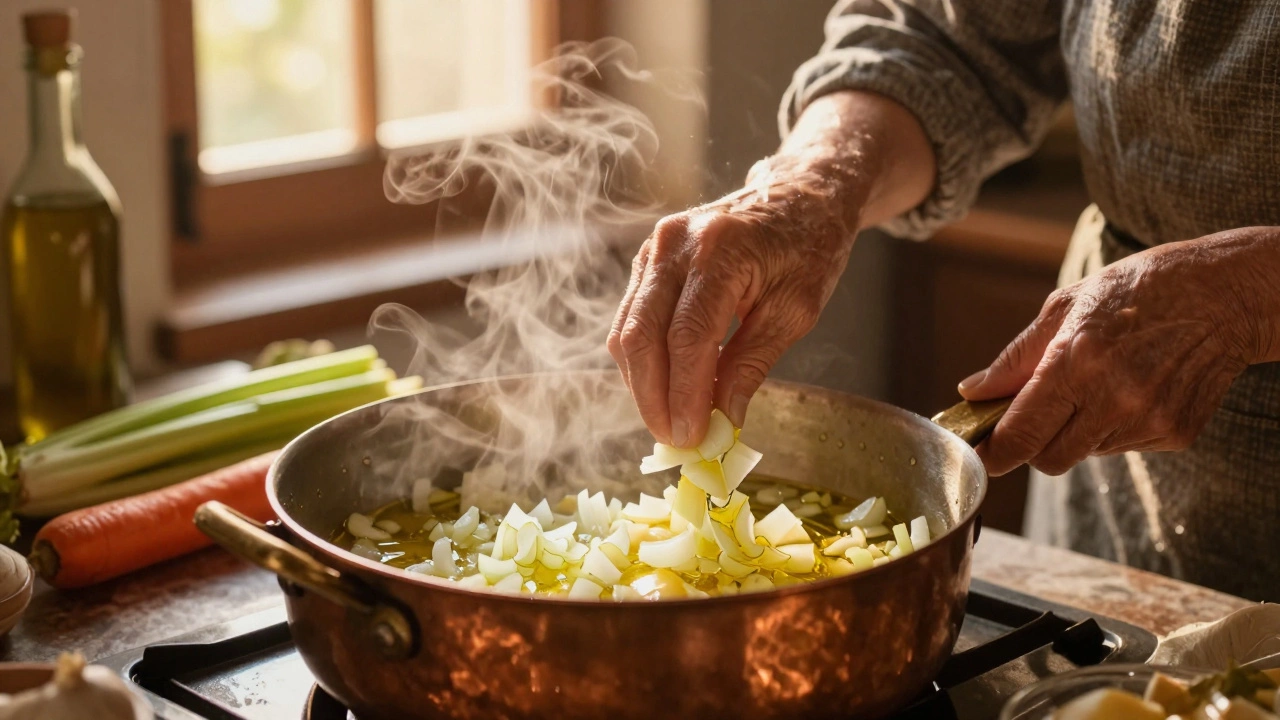
You won’t find a nonna tossing chopped raw onion into a pot of boiling tomatoes. That’s not how it works. In Italy, onions are never added raw. They’re always cooked low and slow, softened in olive oil until they melt into the sauce. The goal isn’t to taste onion-it’s to build depth. When onions are gently sautéed, their sharpness fades, leaving behind a sweet, earthy richness that makes the sauce feel whole.This technique is called soffritto. It’s the first step in nearly every savory Italian sauce, from ragù to marinara. Soffritto isn’t just onions-it’s usually a mix of onions, celery, and carrots, all finely diced and cooked together. But onions are the most consistent part. Skip them, and you’re missing the base flavor that holds everything else together.
Regional Differences Matter
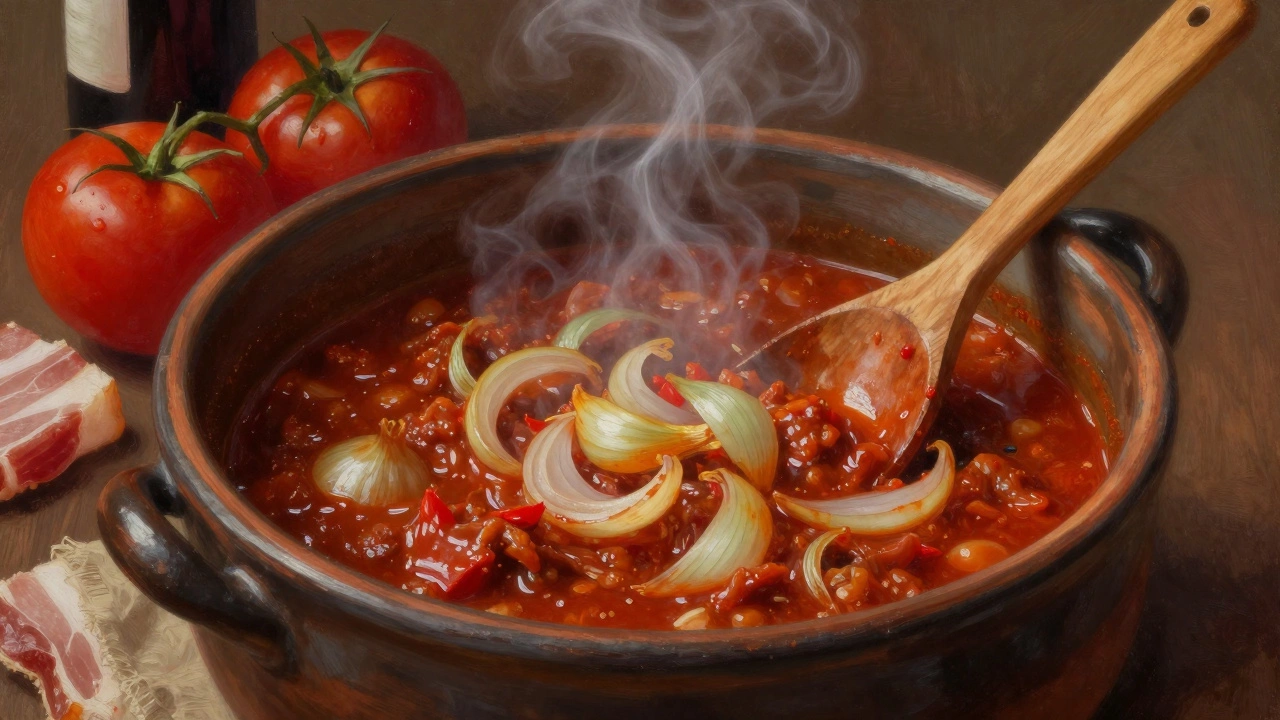
Not all Italian sauces are the same. In Naples, where tomato sauce was perfected, you’ll find onions used sparingly, sometimes just a quarter of one, slowly caramelized. In Bologna, where ragù is a slow-cooked meat masterpiece, onions are essential. The classic ragù alla bolognese recipe from the Bologna Chamber of Commerce includes onions, celery, and carrots-along with ground beef, pancetta, and wine. It simmers for hours, and the onions disappear into the sauce, leaving no trace of bite, only body.Up north, in Lombardy, some versions use leeks instead of onions for a milder flavor. In Sicily, you might find a touch of red onion added raw at the end as a garnish-but that’s not in the sauce itself. It’s a fresh contrast, like a sprinkle of parsley. The sauce? Still built on cooked onions.
Why Do People Think Italians Don’t Use Onions?
The myth comes from Americanized versions of Italian food. In the 1950s and 60s, Italian immigrants simplified recipes to suit American tastes and ingredient availability. Many home cooks in the U.S. skipped onions because they didn’t like the texture or thought they made the sauce too sweet. Others were told, "Real Italian sauce doesn’t have onions," often by people who’d never set foot in Italy.Then came jarred sauces. Big brands like Ragu and Prego, designed for mass production, left out onions to keep costs low and shelf life longer. They also avoided anything that might add complexity-like celery or carrots. So for decades, Americans grew up thinking tomato sauce = tomatoes + garlic + basil. That’s not wrong-it’s just incomplete.
What Happens If You Skip the Onion?
Try making a tomato sauce without onions. You’ll notice something missing. It tastes flat. Bright, maybe. But thin. Without the subtle sweetness and umami depth onions provide, the sauce leans too hard on the acidity of tomatoes. Garlic alone can’t fill that gap. It’s too sharp, too one-note.That’s why even simple tomato sauces in Italy start with a spoonful of olive oil, a pinch of salt, and finely chopped onion. Cook it until it’s translucent, not brown. Then add garlic, then tomatoes. The onion doesn’t dominate. It doesn’t show up in the final bite. But without it, the sauce feels like it’s missing a layer.
How to Do It Right
Here’s how to get it right, just like a nonna would:- Use a yellow or sweet onion. Red onions are too strong for most sauces.
- Finely dice it-smaller than a pea. You want it to dissolve, not be noticeable.
- Heat olive oil over low heat. Don’t rush it. Let the onion soften for 8-10 minutes, stirring often.
- Add garlic only after the onion is soft. Garlic burns fast. Wait until the onion smells sweet, not sharp.
- Add tomatoes next. Crush them by hand if you can. Let the sauce simmer for at least 45 minutes. Longer if you can.
You’ll know you did it right when the sauce tastes rich, rounded, and deeply savory-not just tomato-y. That’s the magic of soffritto.
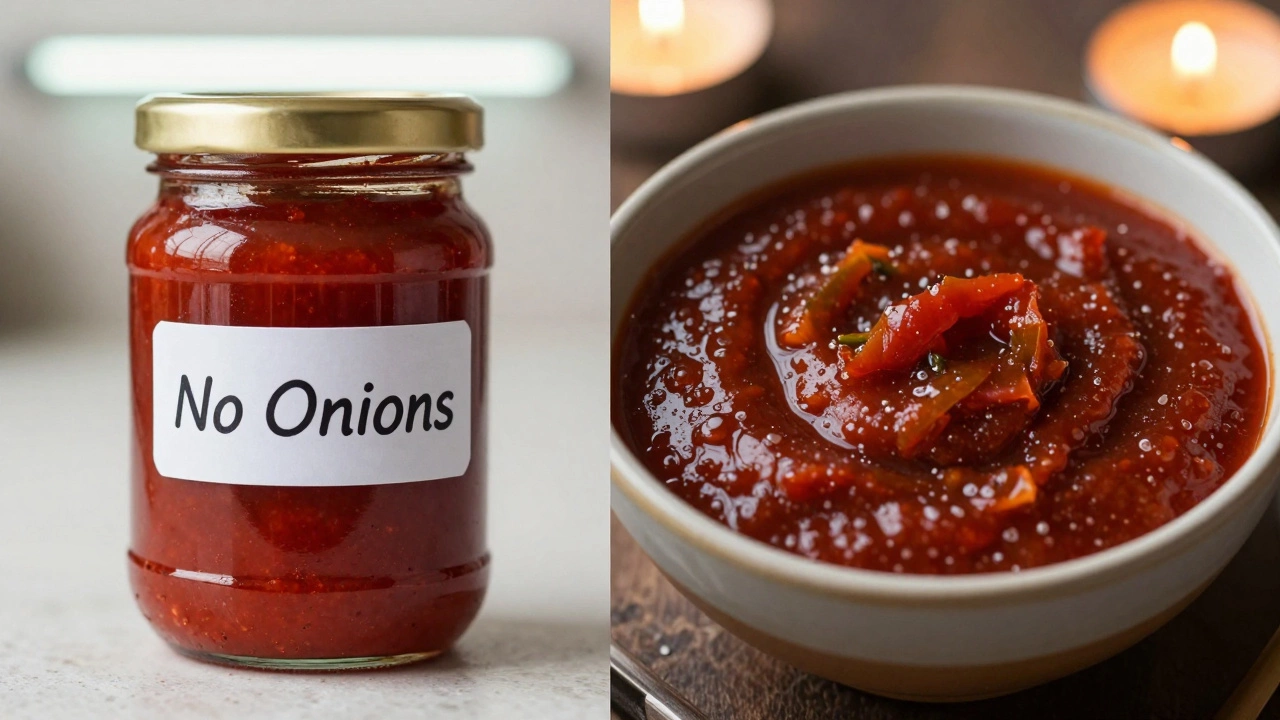
Onions in Store-Bought Sauces? Maybe Not.
If you buy a jar of pasta sauce, check the label. Many popular brands don’t list onions as an ingredient. That’s because they use flavor enhancers, sugar, and powdered seasonings to mimic depth. Real Italian sauces don’t need them. The onion does the work.One brand that still gets it right: San Marzano tomatoes with a soffritto base. Look for sauces labeled "homemade style" or "traditional"-they often include onion, even if it’s not obvious. The ingredient list might say "vegetables," but if you see celery or carrot, onions are likely there too.
What About Garlic? Isn’t That Enough?
Garlic is powerful, but it’s not a replacement. Garlic adds pungency. Onions add sweetness and body. Think of it like this: garlic is the spotlight. Onions are the stage. You need both to put on a good show.In fact, many Italian cooks will tell you that if you smell garlic too strongly in a sauce, you’ve added too much-or skipped the onion. The onion balances it. It tames the garlic, lets the tomatoes shine, and gives the sauce its soul.
Final Verdict
Yes, Italians put onions in their sauce. Not because they like the taste of onion. But because they know flavor isn’t about what you taste-it’s about what you feel. The quiet, hidden layers that make a sauce feel complete. Skip the onion, and you’re skipping centuries of tradition. Add it, cook it slowly, and let it disappear-and you’ll taste the difference.Do all Italian pasta sauces contain onions?
Not all, but most traditional ones do. Simple tomato sauces in southern Italy might use just a hint, while meat-based ragùs from the north rely on onions as a core ingredient. The exception is seafood sauces, which often skip onions entirely to avoid overpowering delicate fish flavors.
Can I use onion powder instead of fresh onion?
It’s not the same. Onion powder lacks the moisture and texture that fresh onion brings when slowly cooked in oil. It adds flavor, yes-but not the depth or body. You’ll miss the way the onion melts into the sauce and becomes part of its structure. Stick with fresh if you can.
Why do some Italian recipes say "no onions"?
Some modern or regional recipes skip onions for personal or dietary reasons. Others are simplified for quick meals. But if you’re aiming for traditional, authentic flavor, onions are standard. If a recipe claims to be "authentic" and leaves them out, it’s likely a shortcut-not the real thing.
What’s the difference between soffritto and mirepoix?
They’re very similar: both are aromatic bases made from onions, celery, and carrots. Soffritto is Italian and usually uses olive oil and finer dice. Mirepoix is French and often uses butter. The purpose is the same-to build flavor-but soffritto is more subtle, meant to disappear into the sauce, while mirepoix can sometimes be more pronounced.
Is it okay to skip onions if I don’t like them?
You can, but you’ll lose something important. The sauce won’t be bad-it’ll just lack depth. Try substituting a small amount of fennel bulb or leek instead. They’re milder and still add that sweet, savory base. But don’t just skip it. Replace it with something that does the same job.