Onions in Sauce: How They Transform Flavor and Why They Matter
When you think about what makes a sauce taste like it’s been simmering for hours, the answer isn’t always the herbs, the spices, or even the meat. It’s often the onions in sauce, a foundational ingredient that caramelizes, softens, and unlocks deep savory notes. Also known as sautéed onions, they’re the silent workhorse behind everything from tomato sauce to curry, turning simple ingredients into something rich and unforgettable.
Onions don’t just add flavor—they build structure. When cooked slowly, their natural sugars turn into caramel, adding sweetness that balances acidity and heat. That’s why every great sauce starts with onions. Whether you’re making a simple tomato base, a slow-cooked beef stew, or a fragrant Indian curry, the onions are the first thing you put in the pan. They’re not an afterthought. They’re the foundation. And if you skip them, or rush them, your sauce will taste flat. There’s no shortcut. You can’t fake the depth that comes from letting onions soften in oil until they’re golden and sweet.
Related to this are the sauce base, the starting point for most savory dishes, built on aromatics like onions, garlic, and sometimes celery or peppers. In Indian cooking, which many of our recipes follow, onions are often fried until deep brown before adding spices—this step is non-negotiable. It’s what gives a curry its body. Without it, you’re just mixing spices into water. The cooking onions, the technique of slowly transforming raw, sharp onions into tender, sweet morsels, is a skill you’ll use every time you cook anything with depth. It’s not hard, but it does require patience. Rush it, and you’ll get bitterness. Wait too long, and they’ll burn. Get it right, and your sauce will taste like it came from a restaurant kitchen.
You’ll find this principle in nearly every recipe here—onions aren’t just an ingredient, they’re the reason the dish works. Whether it’s a simple pasta sauce or a complex biryani, the onions are doing the heavy lifting. They absorb the spices, carry the flavor, and hold everything together. That’s why you’ll see them in recipes for slow-cooked stews, tomato-based curries, and even vegetarian sauces where meat isn’t present. They’re the flavor anchor.
What you’ll find in the posts below aren’t just recipes. They’re lessons in how onions in sauce change everything. You’ll see how timing affects texture, how different types of onions behave, and why some dishes call for frying them until they disappear into the sauce while others keep them chunky for bite. There’s no magic—just practice, observation, and a little patience. And once you understand how onions work, you’ll start noticing them everywhere: in the sauces you love, the soups you crave, the meals that just feel right. That’s the power of something simple, done well.
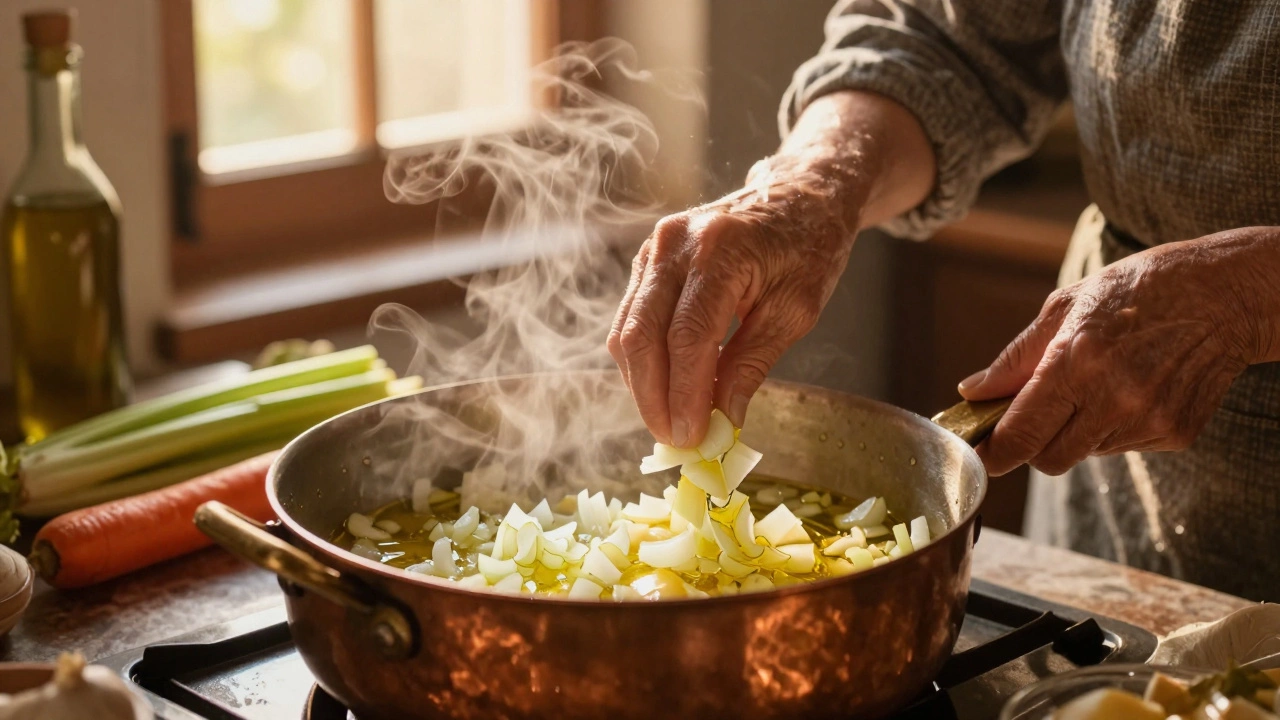
Do Italians Put Onions in Their Sauce? The Truth Behind Classic Pasta Sauces
Italians do use onions in pasta sauce-not as a standout ingredient, but as a quiet foundation. Learn how soffritto builds flavor, regional differences, and why skipping onions changes the whole taste.