Sick Day Comfort Food Finder
When you’re sick, your body isn’t just fighting germs-it’s also telling you to slow down. Your stomach feels off, your throat is raw, and the last thing you want is a complicated meal that takes effort to chew or digest. That’s when comfort food isn’t about nostalgia or indulgence. It’s about survival. It’s about warmth, simplicity, and nutrients your body can actually use.
Why Comfort Food Matters When You’re Sick
Not all comfort food works when you’re sick. A slice of chocolate cake might make you feel better emotionally, but it won’t help your sore throat or settle your stomach. Real comfort food for the sick is soft, easy to swallow, hydrating, and gently nourishing. It’s not about calories-it’s about what your body can tolerate when it’s running on fumes.
Studies from the University of Nebraska Medical Center show that warm liquids like broth can reduce inflammation in the upper respiratory tract and improve mucus flow. That’s why chicken soup has been a go-to for generations. It’s not magic-it’s science. The steam clears nasal passages, the salt helps retain fluids, and the protein gives your immune system something to work with.
Top 5 Comfort Foods for Sick People
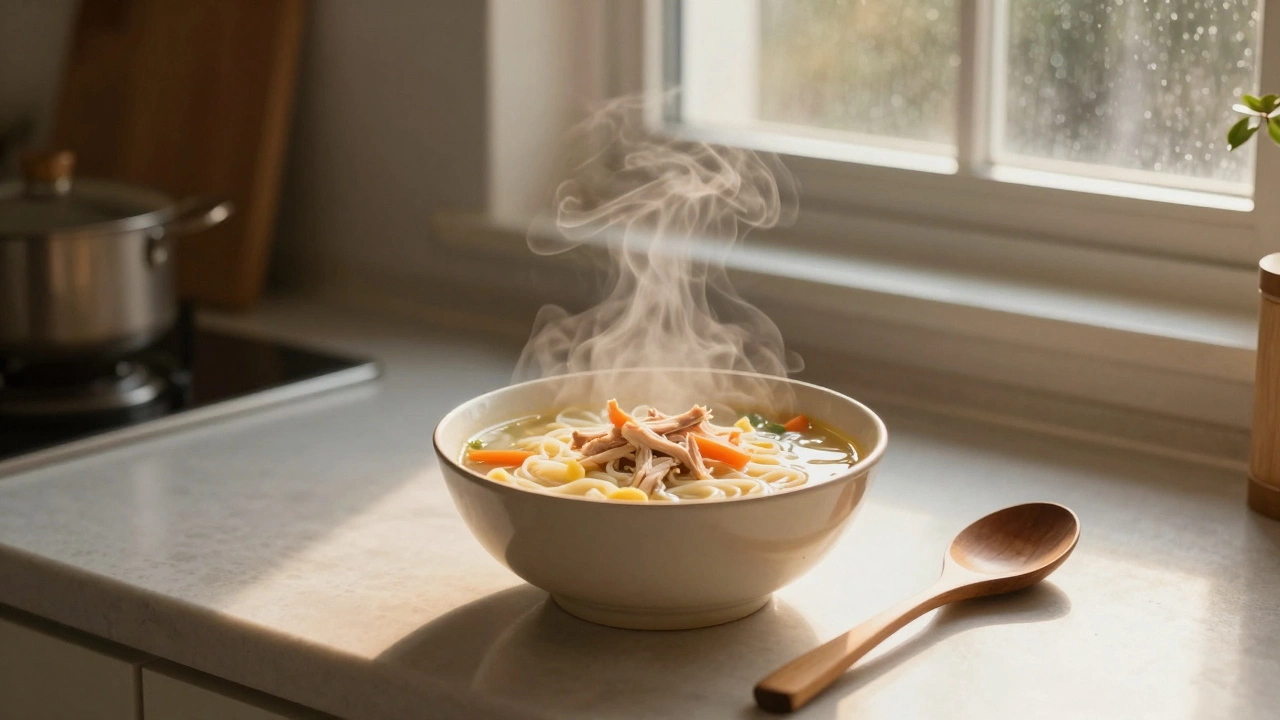
- Chicken noodle soup - The classic for a reason. Homemade broth with shredded chicken, carrots, celery, and egg noodles gives you hydration, electrolytes, and protein. Skip the canned stuff if you can-most have too much sodium and not enough real ingredients.
- Clear broth - Sometimes, even soup is too heavy. A simple beef, chicken, or vegetable broth, warmed, with a pinch of salt and a splash of lemon, can be all you need. Sip it slowly. It’s like a warm hug for your insides.
- Toast with honey - When your throat hurts, swallowing bread can feel like sandpaper. Toast it until it’s crisp but not burnt, then spread a thin layer of raw honey. Honey has natural antibacterial properties and coats the throat, offering relief. Avoid sugar-heavy jams-they can irritate.
- Plain oatmeal - Not the instant kind with added sugar. Just rolled oats cooked in water or milk, with a tiny bit of cinnamon or a drizzle of maple syrup. It’s gentle on the stomach, high in soluble fiber, and helps stabilize blood sugar when you’re not eating much.
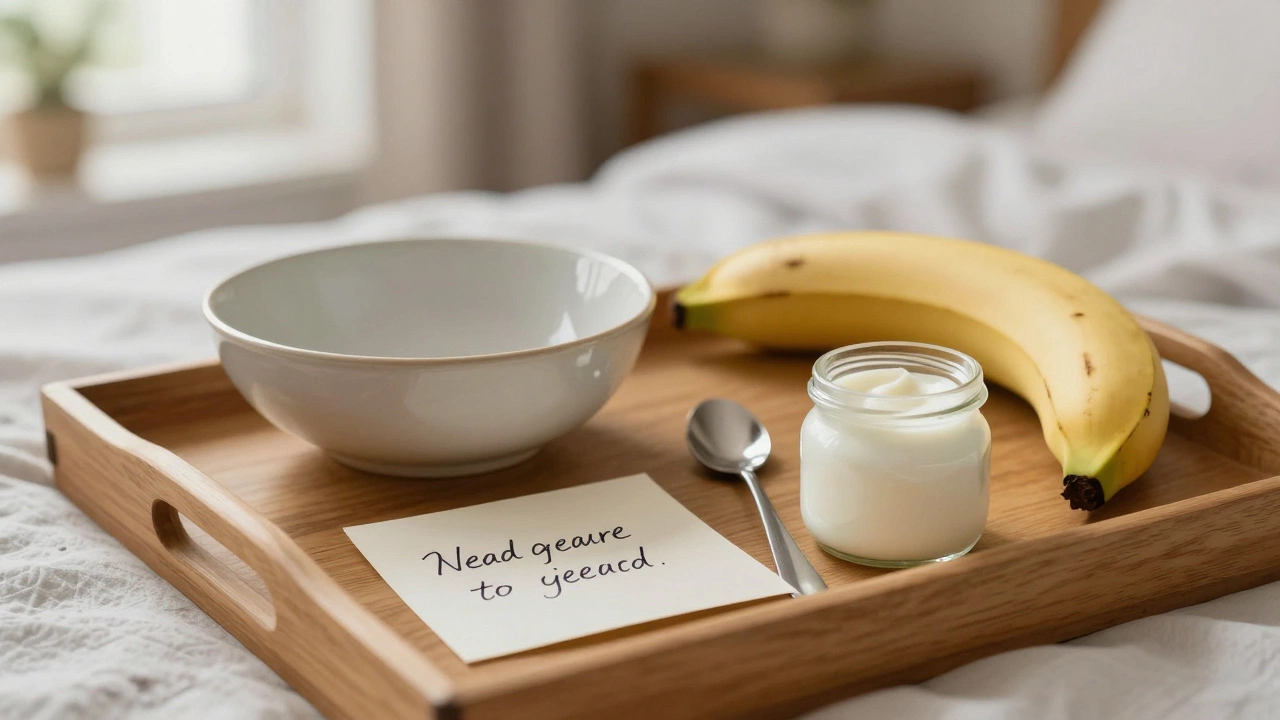
- Yogurt with bananas - Probiotics from plain, unsweetened yogurt help restore gut balance, especially if you’ve taken antibiotics. Bananas are easy to digest and full of potassium, which you lose when you’re vomiting or running a fever.
What to Avoid When You’re Sick
Some foods that feel comforting on a regular day can make you feel worse when you’re sick.
- Greasy or fried foods - Burgers, fries, fried chicken-they’re heavy, slow to digest, and can trigger nausea or heartburn.
- Dairy-heavy dishes - Mac and cheese, creamy soups, ice cream. While many believe dairy increases mucus, research doesn’t back that up. But thick, cold dairy can make throat irritation feel worse. Stick to plain yogurt if you need dairy.
- Sugary snacks - Candy, soda, pastries. Sugar suppresses white blood cell activity, which is the exact opposite of what you want when your immune system is fighting off an infection.
- Caffeine and alcohol - Both dehydrate you. Even if you’re sipping coffee to stay awake, it’s working against you. Stick to water, herbal teas, or broth.

How to Make Comfort Food That Actually Helps
Building a sick-day meal doesn’t need a recipe book. Here’s how to do it right:
- Start with liquid - Sip broth, water, or herbal tea every 20 minutes. Dehydration makes fatigue and headaches worse.
- Add soft protein - Scrambled eggs, shredded chicken, or tofu. Protein helps repair tissue. Aim for 10-15 grams per meal.
- Include mild carbs - White rice, plain pasta, or mashed potatoes. They’re easy to digest and give you energy without stressing your gut.
- Keep it warm - Cold food can trigger throat spasms. Serve everything warm, not hot.
- Season lightly - Salt, a little ginger, garlic, or turmeric can help. Avoid chili, pepper, or strong spices-they irritate inflamed tissue.
Quick Recipe: 10-Minute Soothing Broth
Need something fast? Here’s a version you can make while lying on the couch.
- 1 cup store-bought low-sodium chicken or vegetable broth
- 1 teaspoon fresh grated ginger (or ½ tsp ground)
- 1 small clove garlic, minced
- Pinch of sea salt
- 1 teaspoon lemon juice
- Optional: 1 boiled egg, sliced
Pour broth into a small pot. Add ginger and garlic. Heat on low for 5 minutes-don’t boil. Stir in lemon juice and salt. Pour into a mug. Add the egg if you have one. Sip slowly. You’ll feel calmer in minutes.
When Comfort Food Isn’t Enough
There’s a difference between feeling under the weather and being seriously ill. If you have a fever over 102°F for more than two days, can’t keep fluids down, or feel dizzy when standing, food won’t fix it. That’s when you need a doctor, not another bowl of soup.
But for most colds, flu, or stomach bugs, the right comfort food can shorten your misery by a day or two. It gives your body the fuel it needs to heal without forcing it to work harder to digest.
What Works for One Person Might Not Work for Another
Some people swear by rice porridge when they’re sick. Others need a grilled cheese sandwich with tomato soup. There’s no universal rule. Listen to your body.
If you can’t stomach anything but crackers and water, that’s okay. If you’re craving something warm and salty, go for it. The goal isn’t perfection-it’s sustainability. Eat what you can, when you can. Even a few spoonfuls of broth every hour adds up.
And don’t feel guilty if you only eat toast for two days. Recovery isn’t about nutrition perfection. It’s about giving your body a break-and food that doesn’t fight back.
Is chicken soup really good for colds?
Yes. Chicken soup contains amino acids like cysteine, which can thin mucus and reduce inflammation. The steam helps clear nasal passages, and the salt and fluids prevent dehydration. Studies from the University of Nebraska show it has mild anti-inflammatory effects that may help reduce cold symptoms.
Can I eat dairy when I’m sick?
There’s no strong evidence that dairy increases mucus production. But thick, cold dairy products like ice cream or heavy cream soups can make your throat feel coated and irritated. Plain yogurt is fine-it even helps restore good bacteria, especially after antibiotics. Stick to small amounts and warm it slightly if it bothers you cold.
What if I have no appetite at all?
That’s normal. Don’t force yourself to eat big meals. Sip broth, suck on ice chips, or nibble on a banana every few hours. Your body is using energy to fight infection, not digest food. Even small amounts of fluids and simple carbs like toast or rice can keep your blood sugar stable and prevent weakness.
Are herbal teas helpful for sick days?
Yes. Ginger tea reduces nausea. Peppermint tea soothes stomach upset. Chamomile helps with sleep and inflammation. Avoid black or green tea if you’re dehydrated-they contain caffeine. Stick to caffeine-free herbal blends and drink them warm, not hot.
How long should I stick to comfort food?
As long as you’re feeling unwell, especially if you have nausea, sore throat, or fatigue. Once your appetite returns and your symptoms ease-usually after 2-4 days-you can slowly add back regular foods. Start with bland, easy-to-digest items like baked chicken, steamed vegetables, and plain rice before jumping into spicy or fried meals.
Final Tip: Keep It Simple, Keep It Warm
The best comfort food for sick people isn’t fancy. It doesn’t need a Pinterest board or a five-star review. It’s warm, soft, and quiet. It doesn’t ask much of you-just that you take a sip, swallow slowly, and let your body rest. That’s all it needs to heal.