Spaghetti is one of those dishes that feels simple - boil noodles, toss in sauce, done. But if you’ve ever eaten a bland, watery plate of spaghetti and wondered why it didn’t hit the spot, you’re not alone. The truth? Most people skip the steps that turn ordinary spaghetti into something unforgettable. You don’t need fancy ingredients or hours of cooking. Just a few smart additions make all the difference.
Start with the right pasta
Not all spaghetti is created equal. Look for brands labeled bronze-die extruded. These noodles have a rougher surface that holds sauce better than smooth, mass-produced versions. Brands like De Cecco, Rustichella d’Abruzzo, or Barilla’s bronze-die line are widely available. The difference isn’t subtle - it’s the texture that lets the sauce cling instead of sliding off. If you’re using regular supermarket spaghetti, rinse it lightly under cold water after draining to remove excess starch. That stops the sauce from turning gluey.
Reserve pasta water - always
Before you drain your spaghetti, scoop out at least one cup of the cooking water. It’s not just hot water - it’s starchy, salty, and packed with flavor. When you toss the drained noodles with your sauce, splash in a few tablespoons of that water. The starch helps the sauce emulsify and stick to every strand. You’ll notice the sauce turns creamy without adding cream. This trick works whether you’re using marinara, aglio e olio, or a meat ragù. Skip this, and your spaghetti will always feel dry or separated.
Season the water - properly
Many people under-salt their pasta water. Think of it like seasoning the pasta itself. The water should taste like the sea - salty enough that you notice it. A good rule: one tablespoon of kosher salt per four quarts of water. If you use table salt, cut that to two teaspoons. Under-salted pasta tastes flat, no matter how good the sauce is. The salt doesn’t just flavor the noodles - it helps them cook more evenly and absorb the sauce better later.
Finish cooking in the sauce
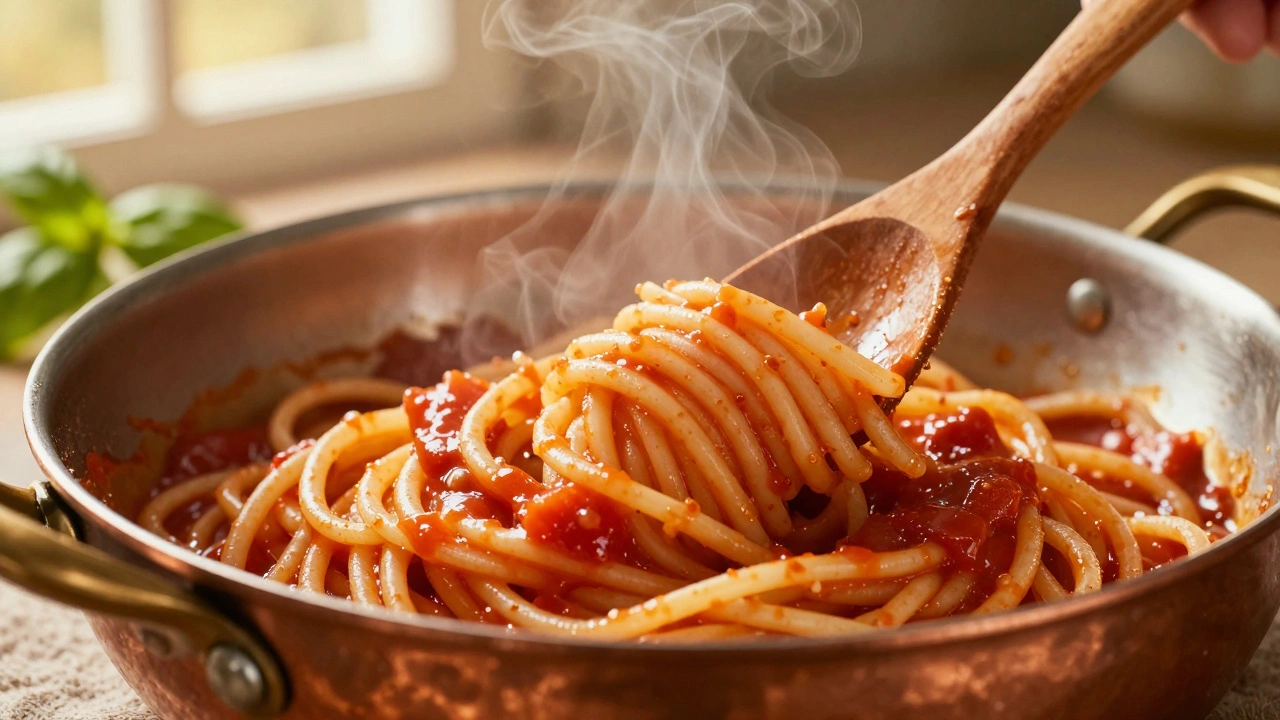
Don’t just dump the drained spaghetti into a bowl of sauce. Transfer the noodles to the pan with your sauce while they’re still slightly undercooked. Let them simmer together for a full minute or two, stirring constantly. This lets the pasta absorb the sauce’s flavor and texture. You’ll end up with a dish where the noodles and sauce are one unit - not two separate parts. It’s the same technique professional chefs use. It’s not magic. It’s physics.
Add fat - but not just butter
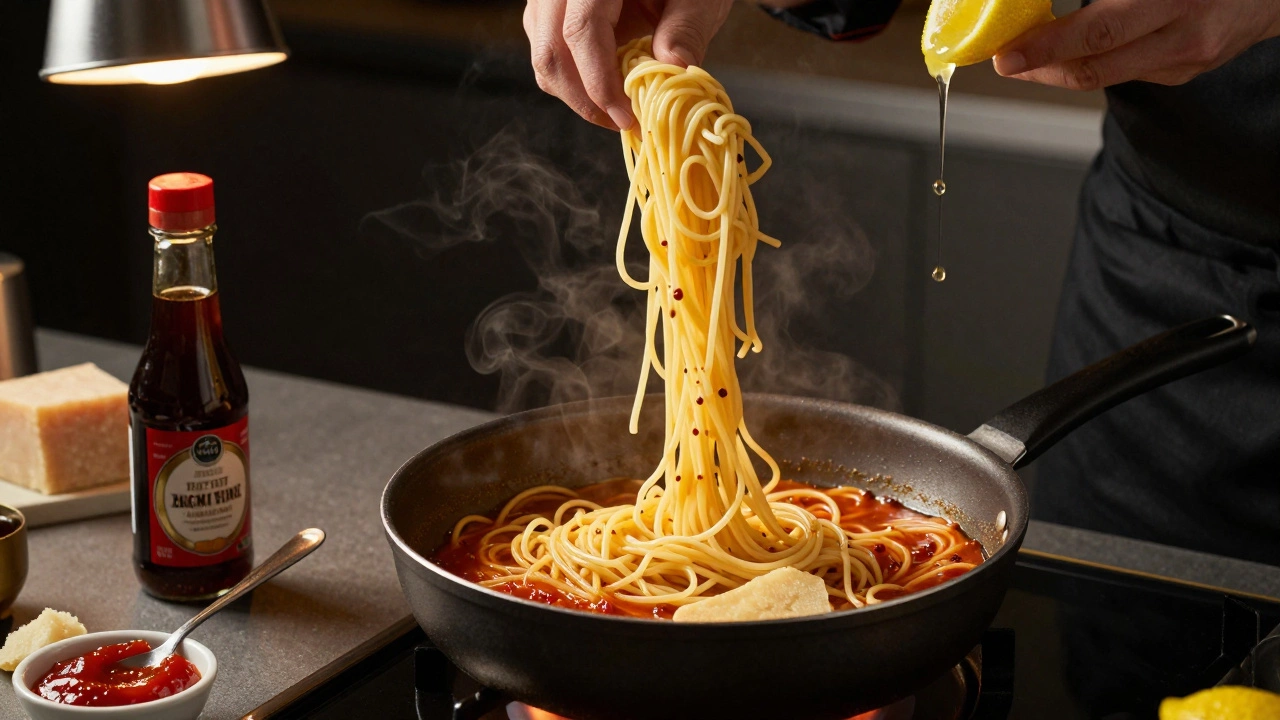
Fat carries flavor. That’s why a splash of olive oil or a pat of butter at the end makes spaghetti taste richer. But don’t stop there. Try adding a spoonful of rendered pancetta fat, duck fat, or even the oil from a jar of sun-dried tomatoes. If you’re using a tomato-based sauce, stir in a teaspoon of rendered bacon fat. It adds depth without overpowering. For a vegan version, use a drizzle of high-quality olive oil or toasted sesame oil. A little goes a long way.
Boost umami with these five ingredients
Umami is the savory fifth taste - the one that makes food feel satisfying. Here’s what to add to spike it:
- Dried mushrooms - Grind a teaspoon of porcini powder into your sauce. It adds earthiness without a mushroom flavor.
- Fish sauce - A half-teaspoon in tomato sauce? Yes. It deepens the flavor without tasting fishy.
- Grated Parmesan rind - Toss it into the sauce while it simmers. Remove it before serving. It melts into the sauce, adding richness.
- Tomato paste - Cook it in the pan for a minute before adding liquids. It caramelizes and turns sweet and complex.
- Worcestershire sauce - Just a dash. It adds a hidden layer of tang and depth.
Finish with fresh herbs and acid
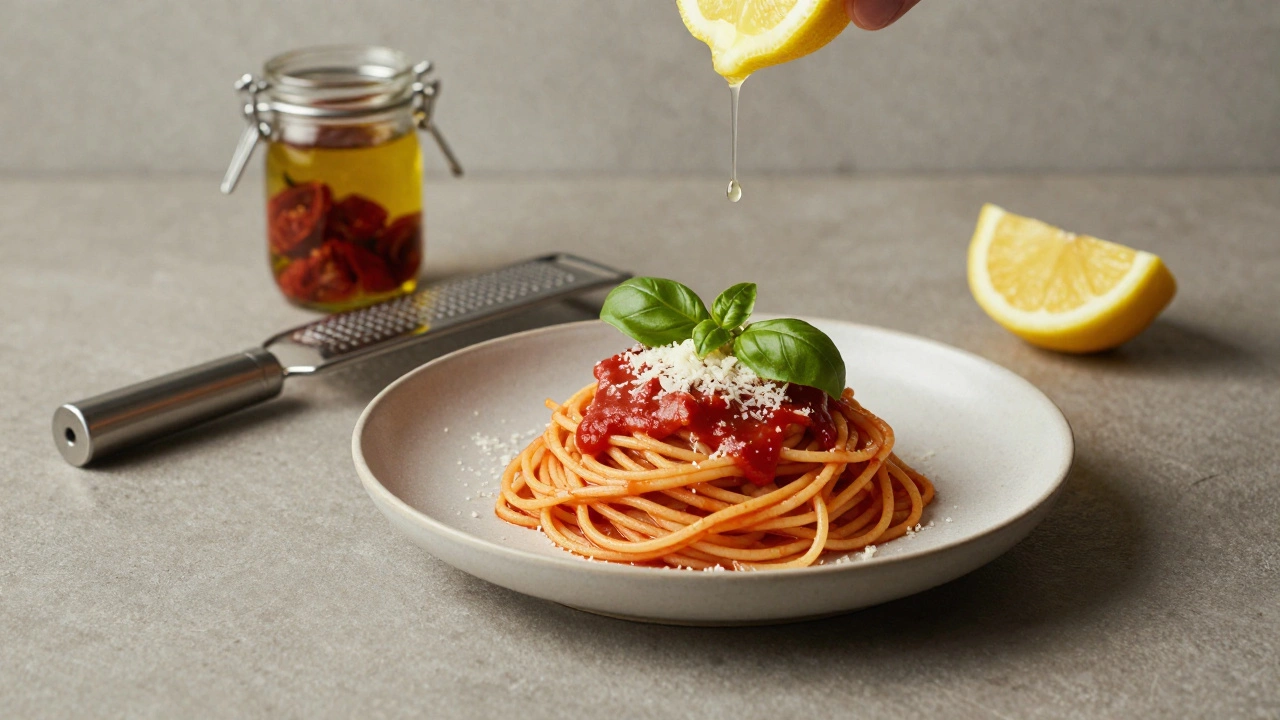
Most spaghetti sauces are too flat because they’re missing brightness. Add acid at the end. A squeeze of lemon juice, a splash of red wine vinegar, or even a teaspoon of balsamic vinegar cuts through richness. Do it right before serving. Heat kills acidity, so don’t add it early.
Same with herbs. Stir in fresh basil, parsley, or oregano just before serving. Dried herbs go in early. Fresh ones go in last. Their aroma is what makes the dish feel alive.
Don’t forget the cheese
Grated Parmesan isn’t just a topping - it’s a flavor builder. Use a microplane to grate it fine. Sprinkle it over the hot pasta, then stir it in. The heat melts it into the sauce. If you’re not using cheese, try a sprinkle of nutritional yeast or a dash of miso paste for a vegan alternative. The saltiness and umami from cheese make the whole dish feel complete.
Use a pinch of sugar - but only if needed
Tomatoes vary in acidity. If your sauce tastes sharp or sour, add a pinch of sugar - not to make it sweet, but to balance it. Start with 1/4 teaspoon. Taste. Add more if needed. This isn’t a trick for bad tomatoes. Even good ones benefit from a touch of sweetness to round out the flavor.
Let it rest
After you toss everything together, cover the pot and let it sit for two minutes. It sounds odd, but it works. The heat continues to meld the flavors. The sauce thickens slightly. The noodles soften just enough to absorb more. It’s like letting a good stew rest overnight - just in two minutes.
What not to do
Don’t rinse the pasta after cooking - it washes away the starch you need for sauce to cling.
Don’t add oil to the boiling water - it doesn’t prevent sticking, and it makes the noodles slippery.
Don’t use jarred sauce straight from the bottle. Even the best ones need a tweak - a splash of water, a pinch of salt, a dash of herbs.
Don’t overcook the noodles. They should be al dente - firm to the bite. Overcooked spaghetti turns mushy and absorbs too much sauce, leaving you with a soggy mess.
Quick flavor boost checklist
- Use bronze-die pasta
- Salt the water like the ocean
- Reserve pasta water
- Finish cooking noodles in the sauce
- Add a splash of fat (olive oil, bacon fat, etc.)
- Stir in umami boosters (fish sauce, tomato paste, Parmesan rind)
- Finish with fresh herbs and a splash of acid (lemon or vinegar)
- Grate cheese directly into the hot pasta
- Let it rest for two minutes before serving
Spaghetti doesn’t need to be complicated. It just needs attention. Most people treat it like a chore. But if you treat it like a dish worth caring about - with salt, with heat, with time - it becomes something you’ll crave again and again.
Can I add cream to spaghetti to make it better?
Cream isn’t necessary for better spaghetti. It works in dishes like fettuccine Alfredo, but it masks the flavor of tomato-based sauces and makes them heavy. If you want richness, use a splash of pasta water and a bit of butter or olive oil instead. They enhance without weighing down the dish.
Should I use fresh or dried herbs for spaghetti?
Use dried herbs when cooking the sauce - they release flavor slowly. Add fresh herbs like basil, parsley, or oregano right at the end. Fresh herbs give brightness and aroma that dried ones can’t. If you add them too early, they lose their punch.
Is it okay to use bottled pasta sauce?
Yes, but don’t use it straight from the jar. Heat it in a pan, then add a splash of pasta water, a pinch of salt, a dash of garlic powder, and a teaspoon of tomato paste. Stir in fresh herbs at the end. This transforms basic jarred sauce into something homemade-tasting.
What’s the best cheese for spaghetti?
Parmesan is the gold standard - it’s salty, nutty, and melts well. Pecorino Romano is sharper and saltier, great for bold sauces. For vegan options, try nutritional yeast or a plant-based Parmesan-style sprinkle. Grate it fine and stir it into the hot pasta so it melts into the sauce.
Why does my spaghetti taste bland even with good sauce?
The most common reason is under-salted pasta water. Even the best sauce won’t fix bland noodles. Also, if you drain the pasta and rinse it, you remove the starch that helps the sauce stick. Always drain, reserve water, and toss the noodles directly into the sauce while they’re still slightly undercooked.