Italian Pasta Pairing Finder
Select your sauce type and preferred region to discover the authentic Italian pasta shape recommended by tradition.
Quick Tip
The golden rule of Italian pasta: sturdy sauces need sturdy pasta; delicate sauces need delicate pasta.
Forget everything you think you know about spaghetti and meatballs. If you walk into a non-touristy trattoria in Rome or a family kitchen in Bologna, you won't find long strands of pasta swimming in red sauce with giant chunks of beef. That is an American invention, not an Italian tradition. So, what do real Italians actually eat when they sit down for dinner?
The short answer is: it depends on where they live. Italy is not a monolith; it is a collection of distinct regions, each with its own dialect, climate, and culinary history. The pasta shape you see on the table is dictated by geography, local ingredients, and centuries-old rules of sauce pairing. Understanding this isn't just about being fancy-it's about eating better food.
The Great Divide: Dry vs. Fresh Pasta
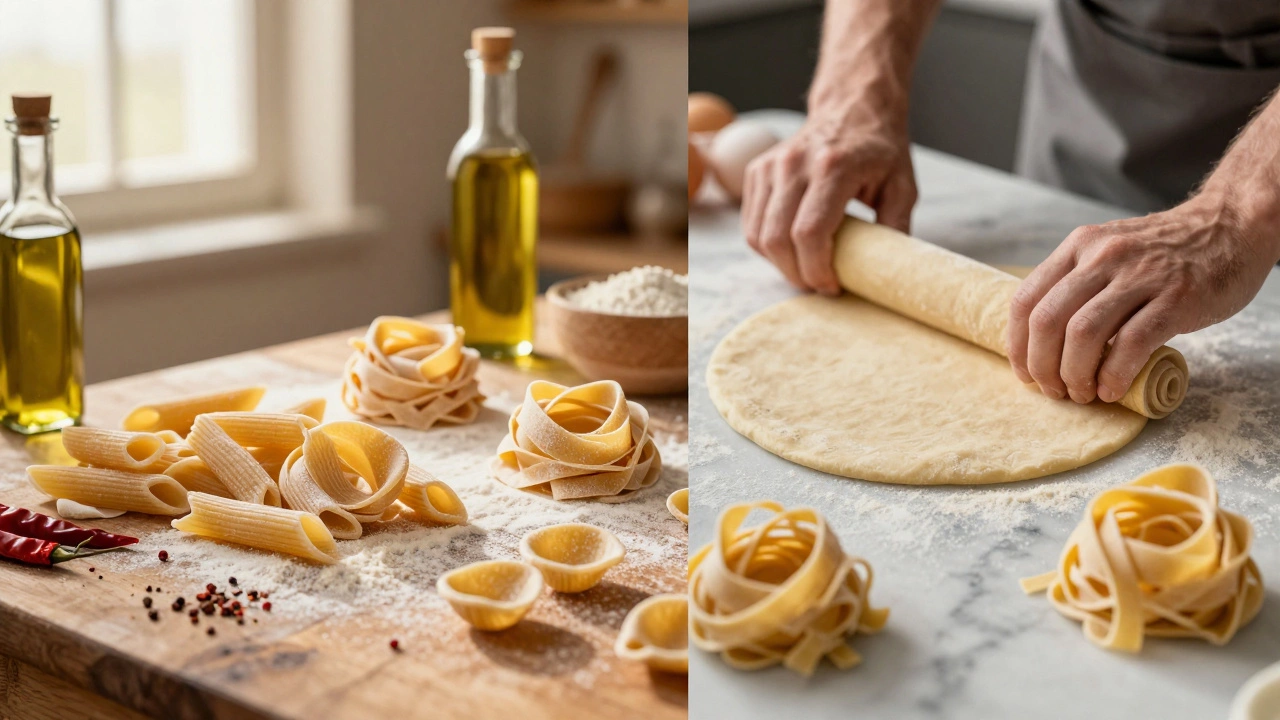
Before we talk about shapes, we have to talk about texture. In Italy, pasta is broadly split into two categories: pasta secca (dry) and pasta fresca (fresh). This distinction is crucial because they are never used interchangeably.
Pasta secca is made from durum wheat semolina (semola di grano duro) and water. It is extruded through bronze dies, which gives it a rough surface perfect for holding onto sauces. This type of pasta has a high protein content and a firm bite (al dente). You will find this in southern Italy, particularly in regions like Puglia and Sicily, where the climate is hot and dry, allowing the pasta to be sun-dried naturally. Think penne, rigatoni, fusilli, and orecchiette.
In contrast, pasta fresca is made from soft wheat flour (farina 00) and eggs. It is tender, delicate, and cooks in minutes rather than ten. This is the domain of northern Italy-Lombardy, Emilia-Romagna, and Veneto. Here, the climate is cooler, and dairy farming is common, making eggs readily available. Fresh pasta comes in shapes like tagliatelle, pappardelle, ravioli, and tortellini.
If you serve a heavy ragù (meat sauce) over delicate fresh egg noodles, the pasta will disintegrate. If you serve a light seafood sauce over dense, dry semolina rigatoni, the flavors get lost. The rule is simple: sturdy sauces need sturdy pasta; delicate sauces need delicate pasta.
Regional Staples: What’s on the Table?
To understand what Italians eat, you have to look at the map. Here is a breakdown of the most common pasta shapes by region and why they are paired with specific ingredients.
| Region | Pasta Shape | Traditional Sauce | Why It Works |
|---|---|---|---|
| Lazio (Rome) | Tonnarelli / Bucatini | Cacio e Pepe, Amatriciana | Hollow center traps cheese and oil; rough exterior holds guanciale fat. |
| Emilia-Romagna | Tagliatelle | Ragù alla Bolognese | Flat, wide ribbon catches the thick, meaty sauce without drowning it. |
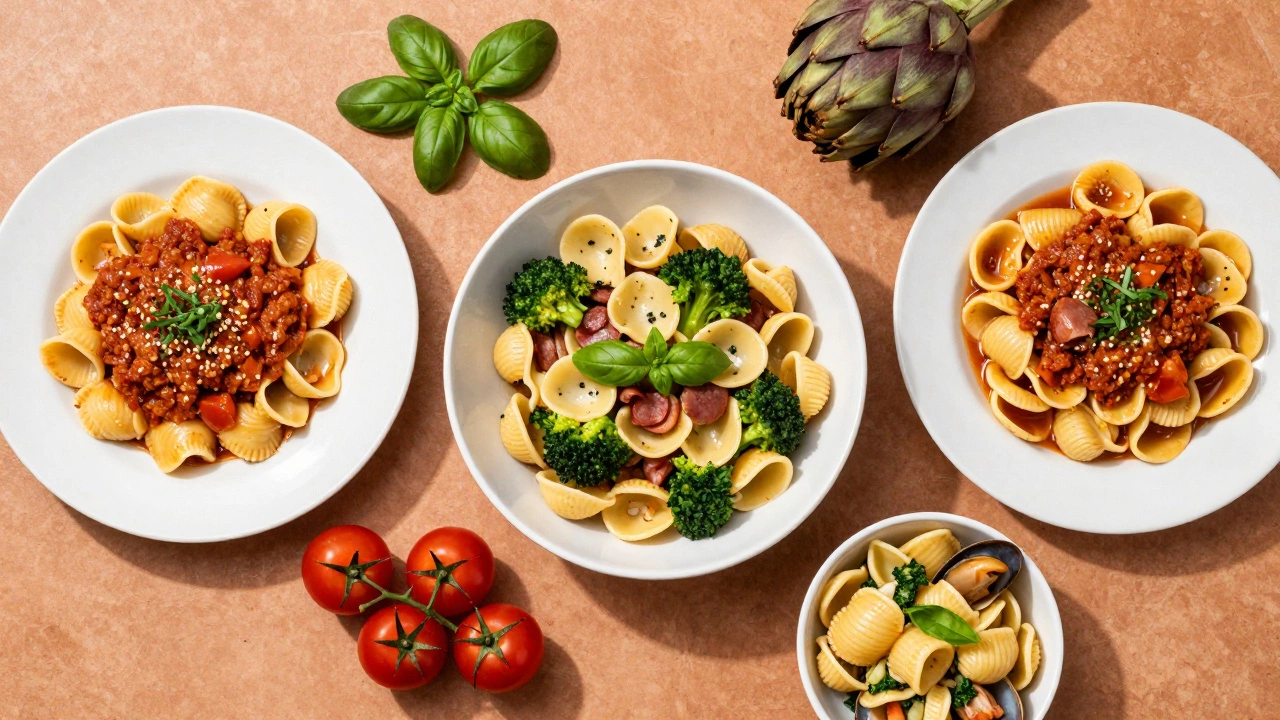
| Puglia | Orecchiette | Broccoli Rabe & Sausage | Ear-shaped cup holds bitter greens and crumbled sausage bits. |
| Sicily | Anelletti / Cavatelli | Con Le Cozze (Mussels) or Caciocavallo | Small size allows for quick cooking and even distribution of seafood juices. |
| Lombardy | Risotto (Not Pasta!) | Milanese Style | Rice replaces pasta in the north due to wetland agriculture. |
Rome: The Power of Simplicity
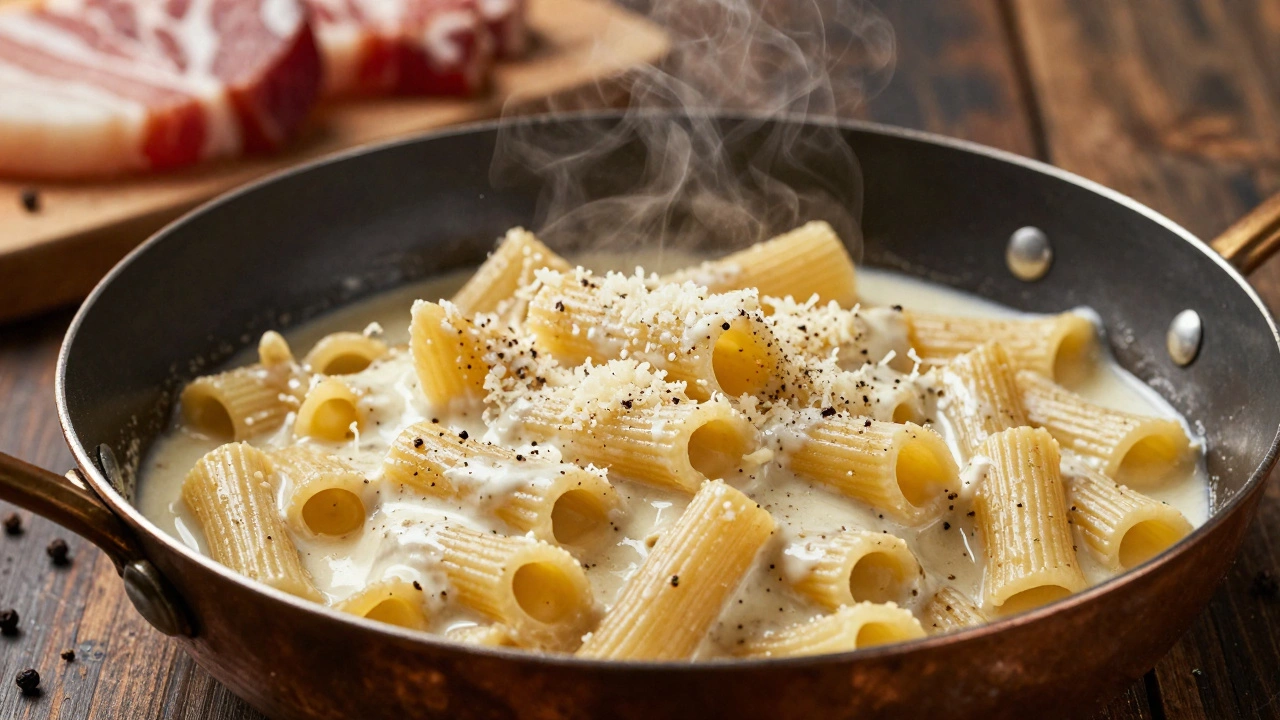
In Rome, pasta is often served with minimal ingredients that rely on high quality. The four classic Roman pastas are Spaghetti alla Carbonara, Gricia, Amatriciana, and Cacio e Pepe. Notice the pattern? They all use guanciale (cured pork cheek), pecorino romano (sheep's milk cheese), and black pepper. The pasta shape of choice is usually tonnarelli (a square-cut spaghetti) or bucatini (spaghetti with a hole in the middle). The hole in bucatini is not decorative; it allows the starchy pasta water and rendered pork fat to penetrate the noodle, creating a creamy emulsion without using cream.
Bologna: The Ragù Rule
If you visit Bologna, the heart of Emilia-Romagna, you will hear locals insist that ragù alla bolognese should never be served with spaghetti. Spaghetti is too thin and slippery for a slow-cooked meat sauce. Instead, they use tagliatelle al uovo. These are flat ribbons cut from fresh egg dough. The width of the tagliatelle provides a large surface area for the rich, tomato-less (or low-tomato) meat sauce to cling to. The ratio is strict: one part ragù to two parts pasta. It is a side dish, not a main course.
The South: Rustic and Hearty
As you move south to Campania, Puglia, and Sicily, the pasta becomes more rustic. Orecchiette from Puglia means "little ears" and is traditionally hand-rolled. It pairs perfectly with bitter vegetables like broccoli rabe (cime di rapa) and spicy nduja sausage. In Sicily, you might find busiate, a twisted shape designed specifically to hold pesto trapanese (a tomato-based pesto) or seafood broths. The south relies heavily on olive oil, garlic, chili flakes, and tomatoes, so the pasta shapes are often tubular or textured to capture these vibrant, oily sauces.
The Golden Rules of Italian Pasta Cooking
Knowing the right shape is only half the battle. How you cook it determines whether the meal is good or great. Italians follow a few non-negotiable rules that separate amateur home cooks from pros.
- Water must be abundant and salty. Use at least 1 liter of water per 100 grams of pasta. The water should taste like the sea. This seasons the pasta from the inside out. If your pasta water tastes bland, your pasta will taste bland.
- Never rinse your pasta. Rinsing washes away the starch that helps the sauce adhere to the noodles. Unless you are making a cold pasta salad, leaving the pasta wet and starchy is essential for emulsification.
- Cook in salted water, finish in the pan. This is called mantecatura. Drain the pasta one minute before it is done. Transfer it directly to the skillet with your sauce. Add a splash of the starchy cooking water. Toss vigorously over heat for 60 seconds. The agitation releases more starch, binding the oil, water, and cheese into a glossy, cohesive sauce that coats every strand.
- Respect the 'Al Dente' texture. Al dente means "to the tooth." The pasta should offer slight resistance when bitten. Overcooked pasta turns to mush and loses its structural integrity, especially important for fresh egg pastas.
Common Myths Debunked
There are several misconceptions about Italian pasta habits that persist abroad. Let’s clear them up.
Myth: Italians add butter to their pasta water.
Truth: Never. Butter clouds the water and prevents proper boiling. Salt is the only seasoning needed in the pot.
Myth: Cream is used in Carbonara.
Truth: Authentic Roman carbonara uses no cream. The creaminess comes from the emulsion of egg yolks, pecorino cheese, and starchy pasta water. Adding cream masks the sharp flavor of the pecorino and the richness of the guanciale.
Myth: Parmesan goes on everything.
Truth: While Parmigiano Reggiano is versatile, it is rarely used on seafood dishes in Italy. Seafood is typically finished with lemon, parsley, or Pecorino Romano (if the fish is fatty). Mixing cow's milk cheese with delicate shellfish is considered a clash of flavors by traditionalists.
How to Shop for Authentic Pasta
If you want to replicate the Italian experience at home, you need to buy the right products. Not all dry pasta is created equal. Look for these markers on the box:
- 100% Durum Wheat Semolina: Avoid brands that list "enriched flour" or additives. Pure semolina has a higher gluten structure, resulting in better texture.
- Bronze-Die Extruded (estrusione al bronzo): This indicates the pasta was pushed through bronze molds, creating a rough, porous surface. Teflon-extruded pasta is smooth and shiny, causing sauces to slide off. Bronze-die pasta looks matte and feels slightly gritty.
- Long Drying Times: High-quality pasta is dried slowly (up to 48 hours) at low temperatures. This preserves the nutrients and ensures the pasta cooks evenly without bloating.
Brands like De Cecco, Rummo, and Garofalo are widely available and adhere to these standards. For fresh pasta, if you can’t make it yourself, look for refrigerated sections in specialty grocery stores, not the shelf-stable aisle. Shelf-stable "fresh" pasta often contains preservatives and lacks the egg-rich texture of true fresca.
Final Thoughts on Eating Like an Italian
Eating like an Italian isn't about following rigid dogmas; it's about respecting ingredients. It’s understanding that a simple bowl of spaghetti aglio e olio (garlic and oil) can be a masterpiece if the garlic is thinly sliced, the oil is high-quality extra virgin, and the chili flakes are toasted gently. It’s knowing that lasagna is a labor of love involving béchamel, not ricotta, and that risotto is a rice dish, not a pasta dish.
Next time you stand in the pasta aisle, don’t just grab the first box you see. Think about the sauce you’re making. Is it chunky? Go for rigatoni or penne. Is it oily and herby? Choose spaghetti or linguine. Is it rich and meaty? Reach for tagliatelle or pappardelle. By matching the shape to the sauce, you aren't just cooking dinner-you're participating in a culinary tradition that has evolved over centuries.
Do Italians really eat pasta every day?
While pasta is a staple, Italians do not necessarily eat it every single day. In many regions, lunch might be a sandwich or leftover soup, and dinner could be fish or vegetables. However, pasta is frequently consumed 3-4 times a week. It is often served as a primo (first course), followed by a secondo (meat/fish) and contorno (vegetable), meaning portion sizes are smaller than in the US.
What is the difference between spaghetti and linguine?
Spaghetti is round and cylindrical, while linguine is flattened and oval. Linguine is traditionally associated with coastal regions like Liguria and is preferred for seafood sauces because its flat surface catches the juices better. Spaghetti is more versatile and works well with both vegetable and meat-based sauces.
Can I use fresh pasta instead of dry pasta?
You can, but you must adjust the sauce. Fresh pasta cooks much faster (2-4 minutes) and has a softer texture. It pairs best with rich, heavy sauces like ragù or cream-based sauces. Using fresh pasta with a light, oil-based sauce may result in the pasta overpowering the delicate flavors. Always reserve some pasta water to help bind the sauce.
Why do Italians put cheese on pasta?
Cheese acts as a seasoning and a binder. Hard cheeses like Parmigiano Reggiano and Pecorino Romano add umami and saltiness. When mixed with starchy pasta water, they create a creamy emulsion that coats the noodles. However, cheese is added at the end, not during cooking, to prevent clumping.
Is it okay to break spaghetti?
Traditionally, no. Breaking spaghetti is seen as disrespectful to the pasta maker and makes it difficult to twirl properly. However, in modern times, some people break it to fit shorter pots. If you do break it, try to keep the pieces uniform in length for even cooking. For authenticity, use a tall pot.
What is the most popular pasta shape in Italy?
Spaghetti is arguably the most recognized and widely eaten shape globally, but within Italy, regional preferences vary. Penne and Rigatoni are extremely popular in the south for their ability to hold hearty sauces. Tagliatelle dominates in the north. Overall, short-cut pastas like penne are likely the most consumed due to their versatility with budget-friendly ingredients like canned tomatoes and ground meat.