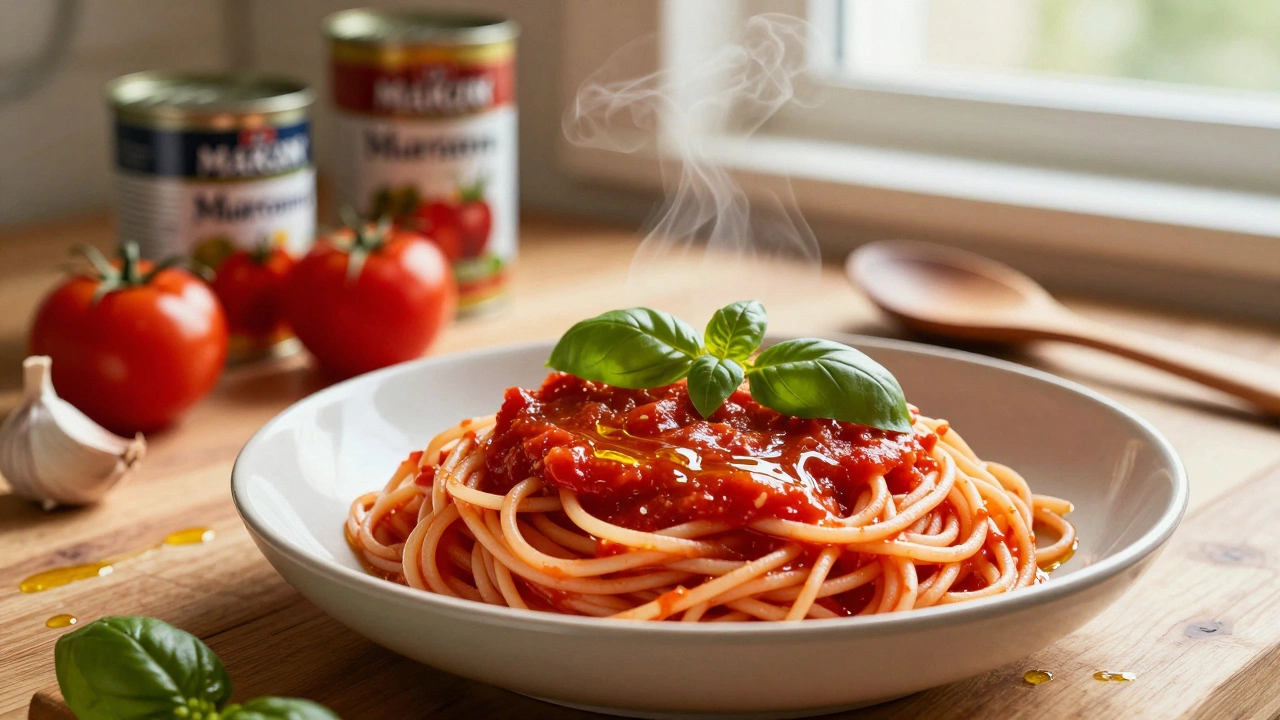
Italian Pasta Mastery Guide
Select a dish below to learn its key technique, ingredients, and common mistakes to avoid.
Pomodoro
EasyThe Foundation
- • San Marzano Tomatoes
- • Basil & Garlic
- • Simmering Technique
Cacio e Pepe
MediumArt of Emulsion
- • Pecorino Romano
- • Black Pepper
- • Emulsification Skill
Carbonara
HardRich Balance
- • Eggs & Guanciale
- • Pecorino Cheese
- • Residual Heat Cooking
Aglio e Olio
Quick FixGarlic & Oil
- • Olive Oil Infusion
- • Chili Flakes
- • Temperature Control
Choose a Dish to Begin
Click on any of the four classic Italian pasta dishes above to explore detailed instructions and expert tips.
Walk into any trattoria in Rome or Naples, and you’ll notice something interesting. The menu isn’t a chaotic list of fifty different shapes mixed with random toppings. Instead, it’s organized around a few core traditions. While there are hundreds of pasta varieties, culinary historians and chefs generally agree on four foundational categories that define Italian pasta culture. These aren't just random favorites; they represent the balance of ingredients, technique, and region that has evolved over centuries.
If you want to cook like an Italian without memorizing a thousand recipes, you need to understand these four pillars. They are Pasta al Pomodoro, Cacio e Pepe, Carbonara, and Aglio e Olio. Each one teaches you a specific skill set: how to use tomatoes, how to emulsify cheese and starch, how to handle eggs safely, and how to infuse oil with flavor. Mastering these four will give you the confidence to tackle almost any other dish.
The Foundation: Pasta al Pomodoro (Tomato Sauce)
You might think tomato sauce is too simple to be a "main" dish, but in Italy, simplicity is the ultimate sophistication. Pasta al Pomodoro is a classic Roman dish consisting of pasta tossed with a fresh tomato sauce made from San Marzano tomatoes, olive oil, garlic, and basil. It serves as the baseline for understanding acidity, sweetness, and texture in cooking.
The secret here isn't complexity; it's quality and timing. You don't need hours of simmering. In fact, long-cooked sauces can sometimes lose the bright, fresh character that defines this dish. Start with high-quality canned San Marzano tomatoes, which are grown in the volcanic soil near Mount Vesuvius and have a lower acid content than regular tomatoes. Crush them by hand or pulse them lightly-you want some texture, not a smooth puree.
Heat good extra virgin olive oil in a pan and gently sweat a clove of garlic until it’s fragrant but not browned. Remove the garlic if you prefer no chunks, then add the tomatoes. Let them bubble away for about ten minutes. The key step? Add a splash of the starchy water from your boiling pasta directly into the sauce. This creates a silky consistency that clings to the noodles. Finish with fresh basil leaves torn by hand, not chopped, to keep their essential oils intact. This dish teaches you how to let high-quality ingredients shine without masking them.
The Art of Emulsion: Cacio e Pepe (Cheese and Pepper)
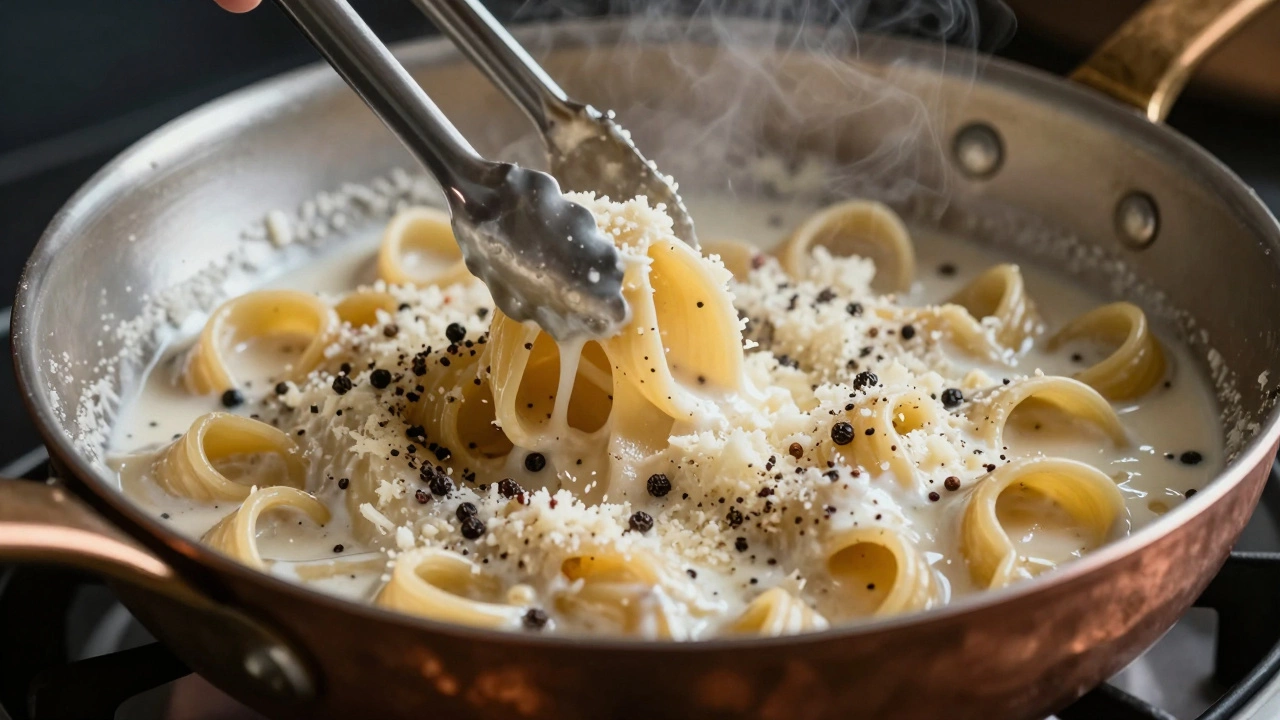
If Tomato sauce is the foundation, Cacio e Pepe is a minimalist Roman pasta dish made with Pecorino Romano cheese, black pepper, and pasta water to create a creamy sauce without cream. It looks easy, but it is notoriously tricky to get right. Many home cooks end up with a grainy, clumpy mess because they misunderstand the chemistry involved.
This dish relies on an emulsion. You are trying to blend fat (the cheese) with water (the pasta water) using agitation. First, toast whole black peppercorns in a dry pan until they pop and release their aroma, then crush them coarsely. Meanwhile, boil your pasta-traditionally Tonnarelli or Spaghetti-in heavily salted water. When the pasta is al dente, reserve a generous cup of the cloudy, starchy cooking water.
Here is where most people fail: adding hot pasta directly to grated cheese causes immediate seizing. Instead, place the drained pasta in a large bowl or skillet off the heat. Add a ladle of hot pasta water and the crushed pepper. Now, gradually sprinkle in finely grated Pecorino Romano while tossing vigorously with tongs. The friction and heat melt the cheese into the water, creating a glossy, creamy sauce. If it gets too thick, add more water. If it’s too thin, add more cheese. This technique is transferable to many other creamy dishes that don’t use dairy cream.
The Rich Balance: Carbonara (Egg, Cheese, and Pork)
Carbonara is a rich Roman pasta dish featuring eggs, hard cheese, cured pork, and black pepper, known for its creamy texture achieved without cream. There is a lot of misinformation about this dish online. Authentic Carbonara does not contain cream, garlic, onions, or parsley. It is a study in temperature control and protein coagulation.
The traditional meat used is Guanciale, which is cured pork jowl. It has a higher fat content and a more intense flavor than bacon or pancetta, though those can work in a pinch. Cut the Guanciale into small cubes or strips and render the fat slowly over low heat until the pieces are crispy. Remove the meat but leave the liquid gold-the rendered fat-in the pan.
In a separate bowl, whisk together egg yolks (and often one whole egg for larger batches) with grated Pecorino Romano and plenty of black pepper. Create a thick paste called the *carbonara* base. When your pasta is cooked, toss it briefly in the rendered pork fat to coat it. Then, remove the pan from the heat entirely. Wait thirty seconds for the temperature to drop slightly, then pour in the egg mixture while tossing rapidly. The residual heat cooks the eggs into a silky custard rather than scrambled bits. Top with the crispy Guanciale and extra cheese. This dish teaches you the delicate art of cooking with residual heat.
The Quick Fix: Aglio e Olio (Garlic and Oil)
Sometimes you don’t have time for rendering pork or balancing cheese emulsions. That’s when Aglio e Olio comes to the rescue. Translating to "garlic and oil," this is perhaps the simplest yet most flavorful of the four classics. It originated as a peasant dish, designed to stretch a small amount of expensive olive oil into a satisfying meal.
The goal here is to infuse olive oil with the flavor of garlic without burning it. Burnt garlic turns bitter and ruins the dish. Slice several cloves of garlic thinly-almost like confit slices-and place them in cold olive oil. Turn the heat to low-medium and let the oil warm up gradually with the garlic. You want the garlic to sizzle gently and turn golden, not dark brown.
Add red pepper flakes at this stage to bloom their heat in the oil. Once the garlic is fragrant and golden, remove the pan from the heat. Toss in your cooked spaghetti along with a splash of pasta water. The water helps the oil emulsify slightly, coating the noodles evenly. Garnish with fresh parsley. This dish is a masterclass in patience and oil temperature management. It proves that you don’t need heavy sauces to make pasta taste luxurious.
Why These Four Matter
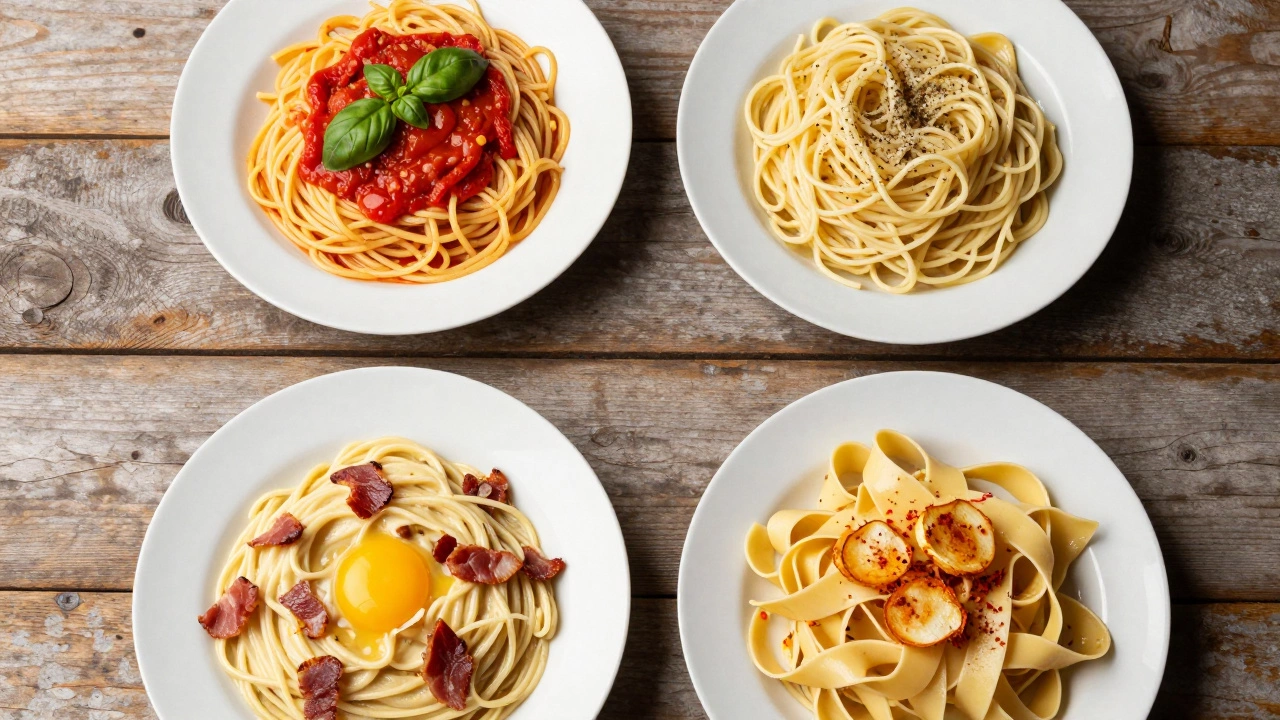
These four dishes cover the spectrum of Italian pasta techniques. Al Pomodoro teaches you about vegetables and acidity. Cacio e Pepe teaches you about emulsions and cheese. Carbonara teaches you about eggs and meat fats. Aglio e Olio teaches you about aromatics and oil. By mastering these, you aren't just learning recipes; you are learning the language of Italian cuisine. You can swap ingredients within these frameworks-using different cheeses or meats-but the underlying mechanics remain the same.
| Dish | Key Ingredients | Primary Technique | Difficulty Level | Best Pasta Shape |
|---|---|---|---|---|
| Pasta al Pomodoro | Tomatoes, Basil, Garlic, Olive Oil | Simmering & Reducing | Easy | Spaghetti, Penne |
| Cacio e Pepe | Pecorino Romano, Black Pepper | Emulsification | Medium | Tonnarelli, Spaghetti |
| Carbonara | Eggs, Pecorino, Guanciale, Pepper | Residual Heat Cooking | Hard | Spaghetti, Rigatoni |
| Aglio e Olio | Garlic, Olive Oil, Chili Flakes | Infusion & Tossing | Easy | Spaghetti, Linguine |
Common Mistakes to Avoid
Even experienced cooks stumble on these classics. One common error is rinsing the pasta after draining. Never do this. The starch on the surface is crucial for helping the sauce adhere to the noodles. Another mistake is using pre-grated cheese. Pre-grated cheese contains anti-caking agents like cellulose, which prevent it from melting smoothly. Always buy blocks of cheese and grate them yourself.
Also, be mindful of your salt levels. Pasta water should taste like the sea. If your water is unsalted, your pasta will be bland no matter how good your sauce is. However, remember that salty ingredients like Pecorino and Guanciale contribute significant sodium, so adjust accordingly during the final seasoning phase.
Can I use mozzarella instead of Pecorino in Cacio e Pepe?
It is not recommended. Mozzarella has a high moisture content and melts differently, often resulting in a stringy, less cohesive sauce. Pecorino Romano is aged and hard, allowing it to emulsify properly with pasta water to create a creamy texture without becoming rubbery.
Is Bacon a suitable substitute for Guanciale in Carbonara?
Yes, but with caveats. Guanciale is pork jowl, which is fattier and has a distinct flavor profile. Bacon is smoked, which adds a flavor not present in traditional Carbonara. Pancetta is a closer substitute as it is unsmoked, but Guanciale remains the authentic choice for the best result.
Why does my Carbonara turn out scrambled?
This happens when the pasta is too hot when you add the egg mixture. Always remove the pan from the heat source before adding the eggs. The residual heat should be enough to cook the eggs gently into a sauce. If you keep it on the burner, the eggs will curdle instantly.
What is the best type of tomato for Pasta al Pomodoro?
San Marzano tomatoes are considered the gold standard due to their low acidity and sweet flavor. Look for cans labeled "DOP" (Denominazione di Origine Protetta) to ensure authenticity. Whole peeled tomatoes are preferred over crushed so you can control the texture by crushing them yourself.
Can I make Aglio e Olio ahead of time?
Not really. This dish is best served immediately because the garlic continues to cook in the residual heat and can become bitter if left sitting. Additionally, the oil may solidify or separate as it cools, requiring reheating which risks burning the garlic again.