Slow Cooker Safety & Prep Checker
Check your current setup to see if your meal is starting safely or if you're risking your ceramic pot and food health.
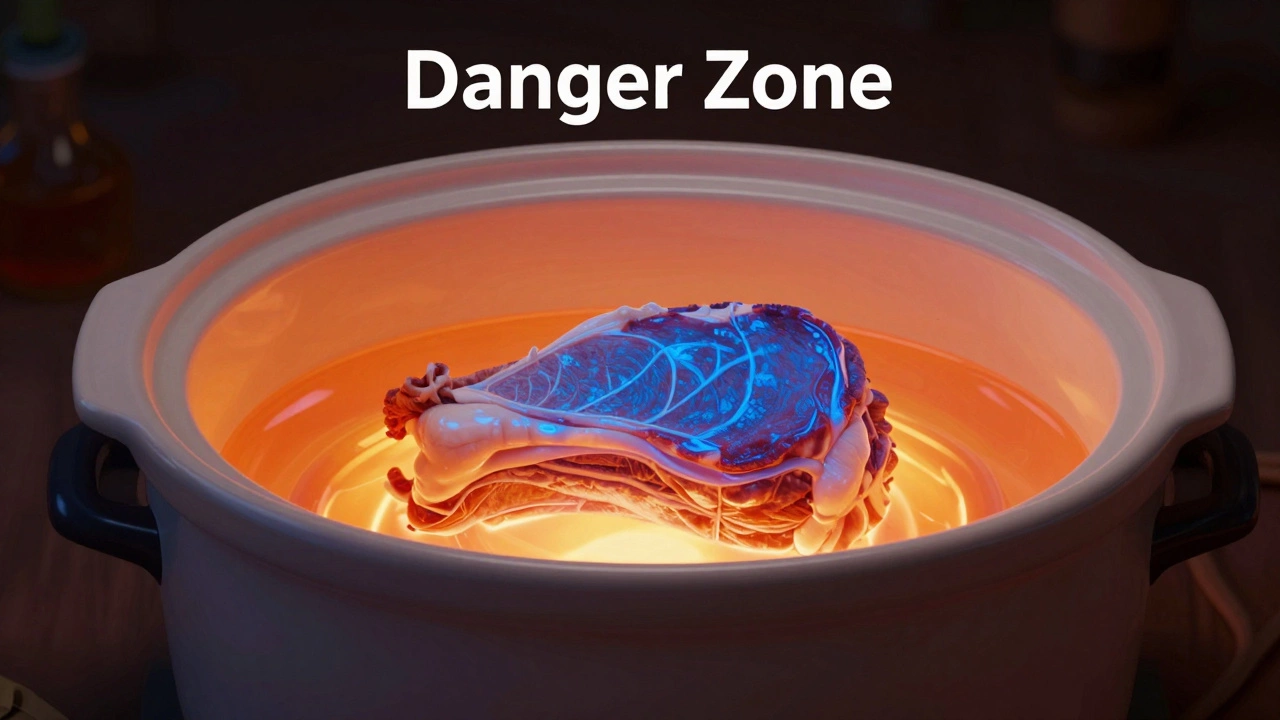
Danger Zone Status (40°F - 140°F)
Quick Takeaways: The Golden Rules
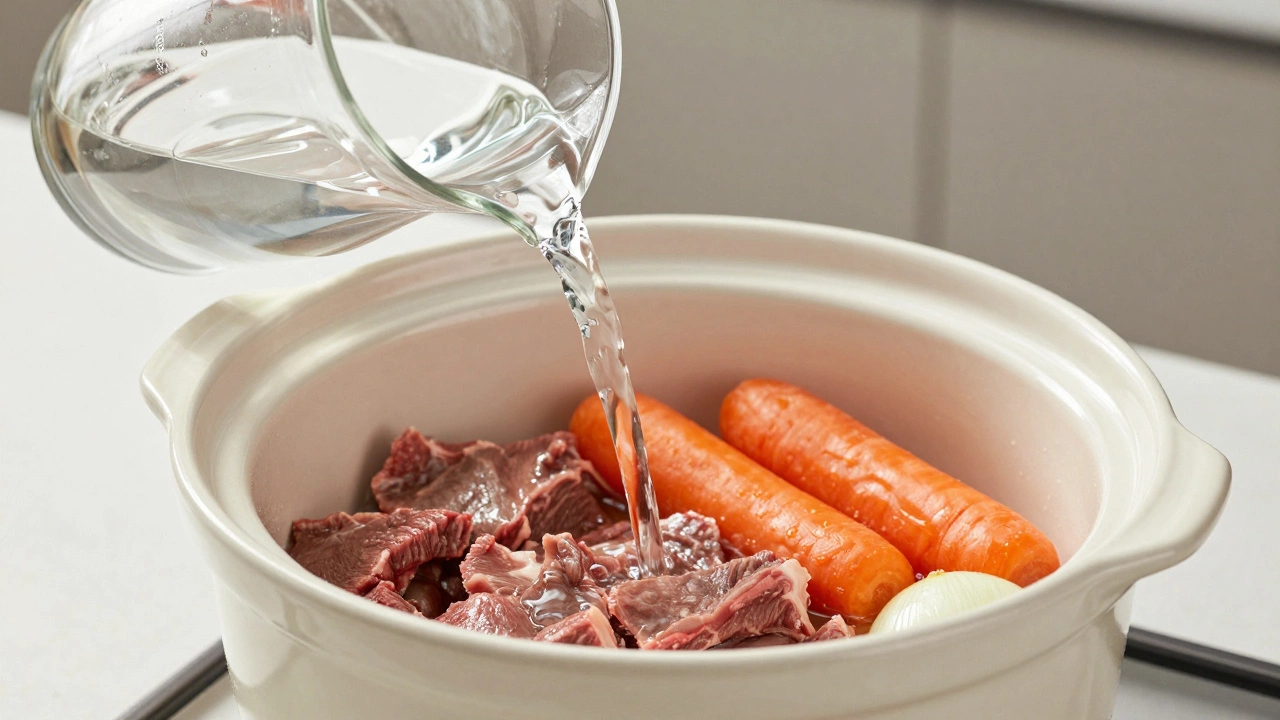
- Use cold or room-temperature water. Most recipes are designed for this.
- Avoid boiling water. It can crack ceramic pots and doesn't actually speed up the overall cooking time significantly.
- Don't overfill. Leave a couple of inches at the top to prevent spills and ensure even heating.
- Prioritize food safety. The biggest risk is leaving meat in the "danger zone" for too long.
Why Boiling Water is a Bad Idea
It's tempting to think that starting with boiling water gives your Crock-Pot a head start. But there are two big reasons why you should avoid this. First, there's the physical risk to your equipment. Most slow cookers use a ceramic crock. If you pour boiling water into a cold ceramic pot, you risk "thermal shock." This happens when the material expands too quickly in one spot, which can lead to hairline cracks or, in worst-case scenarios, the entire pot shattering. Second, boiling water creates a false sense of security. Just because the liquid is hot doesn't mean the thick chunk of pork shoulder in the middle is. The water heats up instantly, but the meat stays cold. This creates a temperature gradient where the outside of the meat is cooking, but the inside is sitting in a lukewarm environment for hours. This is exactly where bacteria love to grow.Understanding the Danger Zone
To understand why water temperature matters, we have to talk about the Danger Zone. In the world of food safety, this is the temperature range between 40°F and 140°F (4°C to 60°C). In this window, bacteria like Salmonella and Staphylococcus aureus multiply at an alarming rate. If you add boiling water to a pot of cold ingredients, you might think you're skipping this zone. In reality, the boiling water cools down the second it hits the cold meat and vegetables. You end up with a pot of liquid that is barely warm-right in the heart of the danger zone-for a longer period than if you had just started with cold water and let the machine's heating element work consistently from the bottom up.How a Slow Cooker Actually Works
Unlike a stovetop pot, a slow cooker doesn't boil things rapidly. It uses a low-wattage heating element wrapped around the ceramic liner. This element is designed to gradually raise the temperature of the entire vessel. When you use cold water, the heating element works as intended, slowly bringing the entire mass of food up to a simmer. If you're worried about the time it takes to heat up, remember that a slow cooker is a marathon, not a sprint. Adding boiling water might shave 20 minutes off the initial warm-up, but in a 8-hour cook cycle, that's negligible. The consistency of the heat is what makes the meat tender, and messing with the starting temperature can actually lead to unevenly cooked food.| Feature | Cold/Room Temp Water | Boiling Water |
|---|---|---|
| Pot Safety | Safe for ceramic | Risk of thermal shock/cracking |
| Heat Distribution | Gradual and even | Uneven (hot liquid, cold center) |
| Food Safety | Predictable rise in temp | Potential for prolonged "Danger Zone" |
| Cooking Time | Standard (per recipe) | Negligible difference |
The Best Way to Speed Up Your Slow Cooker
If you're in a rush, adding boiling water isn't the answer. Instead, try these pro moves that actually work without risking your dinner or your pot:- Brown your meat first. Searing meat in a cast iron skillet or pan not only adds a massive amount of flavor via the Maillard reaction but also raises the internal temperature of the meat before it even hits the slow cooker.
- Cut ingredients smaller. Smaller chunks of carrots or beef heat through much faster than giant blocks.
- Use the "High" setting for the first hour. Some people start their slow cooker on high to get the temperature up quickly and then switch to low for the remainder of the day.
- Don't over-stack. If you pile ingredients too high, the heat can't circulate. Keep your ingredients in a relatively flat layer for faster heating.
Common Pitfalls to Avoid
One of the biggest mistakes is adding frozen meat directly to the slow cooker and then trying to "fix" the temperature by adding boiling water. This is a recipe for disaster. Frozen meat takes a long time to thaw, and boiling water will only cook the very surface, leaving the core of the meat in the danger zone for hours. Always thaw your meat in the refrigerator first. Another common error is filling the pot to the brim. When water boils, it expands and creates steam. If there's no room for that steam to collect, you'll end up with a soggy mess overflowing onto your counter. Aim for about half to three-quarters full.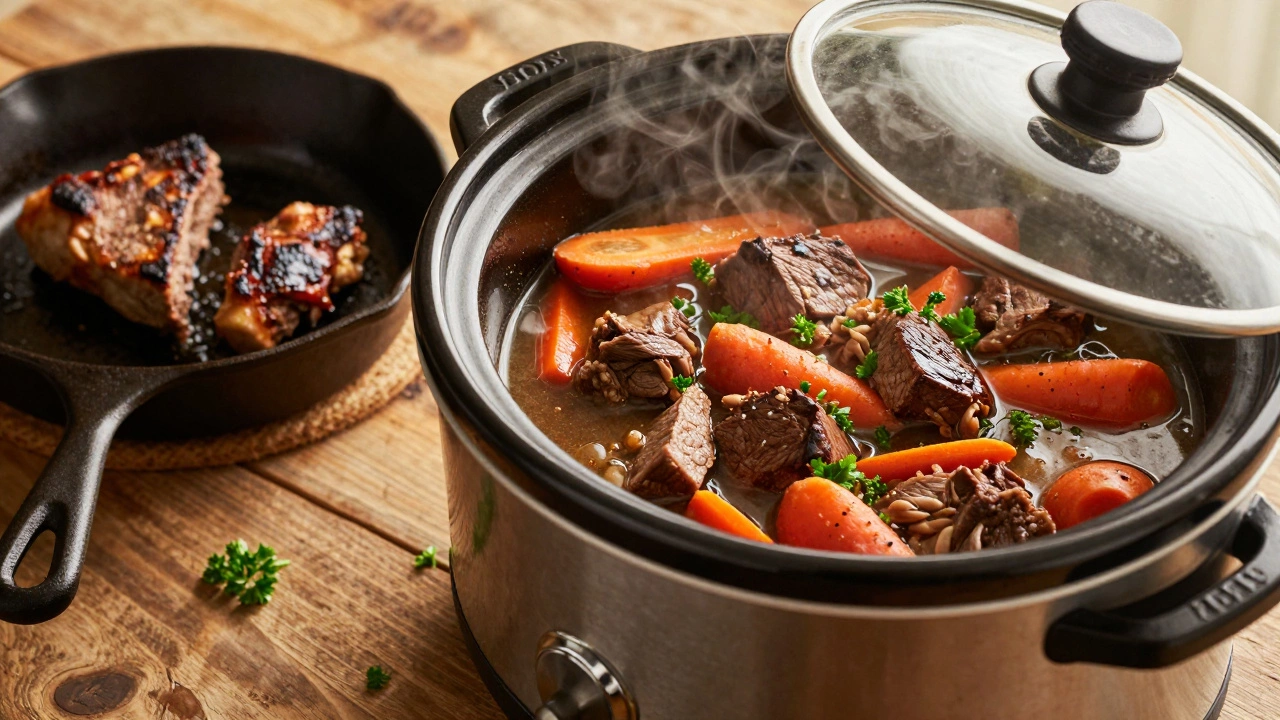
Alternative Liquids for Better Flavor
While we're talking about water, why use plain water at all? If you want to improve the depth of your dish, swap the water for something with more character. Instead of plain water, try:- Beef or Chicken Broth: Adds a salty, savory base that enhances the meat.
- Vegetable Stock: Great for vegan stews or pot roasts.
- Dry White Wine: Perfect for cutting through the richness of a pork shoulder.
- Apple Cider: Adds a subtle sweetness to pork or autumn-themed slow cooker meals.
Will using cold water make my food take too long to cook?
No. Slow cooker recipes are written with the assumption that you are using cold or room-temperature ingredients. The timing provided in the recipe already accounts for the time it takes the machine to heat up the liquid and the food.
Can I use warm water from the tap?
Yes, warm tap water is perfectly fine. It won't cause thermal shock to the ceramic pot like boiling water does, and it's a safe starting point for your meal.
What happens if I accidentally used boiling water?
If you've already done it, don't panic. Check your ceramic pot for any new cracks. If the pot is fine and your food reaches a simmering temperature within a reasonable time, you're likely okay. However, if you're cooking something highly perishable like seafood, be extra cautious about the internal temperature.
Is it safe to put frozen meat in a slow cooker?
Generally, no. Most food safety experts and manufacturers recommend thawing meat in the fridge first. Frozen meat lowers the temperature of the entire pot, keeping the food in the danger zone for too long, regardless of whether the water you add is cold or boiling.
Does the type of slow cooker (digital vs. manual) change this rule?
The rule remains the same. Whether you have a basic manual dial or a high-tech digital programmable cooker, the ceramic pot and the slow heating element function the same way. Avoid boiling water to protect the hardware and your health.