Crockpot Safety Timer & Checker
Select a scenario below to determine if your meal is safe to eat or needs immediate action.
Awaiting Input
Fill out the details on the left and click "Check Safety" to see if your crockpot meal is safe.
Action Required
You’re rushing out the door, you toss a frozen chicken breast or a block of beef stew meat into your slow cooker, set it on low, and hope for dinner at 6 PM. But life gets busy. Maybe you forget to turn it on until noon. Maybe the power goes out briefly. Or maybe you just left it sitting there all morning while you ran errands. The big question isn't just "will it taste good?"-it's "is this going to make me sick?"
The short answer is: raw meat shouldn't sit in a cold crockpot for more than two hours before heating starts. Once it’s warm, the clock resets based on temperature, not time alone. If you leave cooked meat in the "Warm" setting too long, you enter the danger zone where bacteria throw a party. Let’s break down exactly how long is safe, why the rules are strict, and how to keep your Sunday roast from becoming a Tuesday hospital visit.
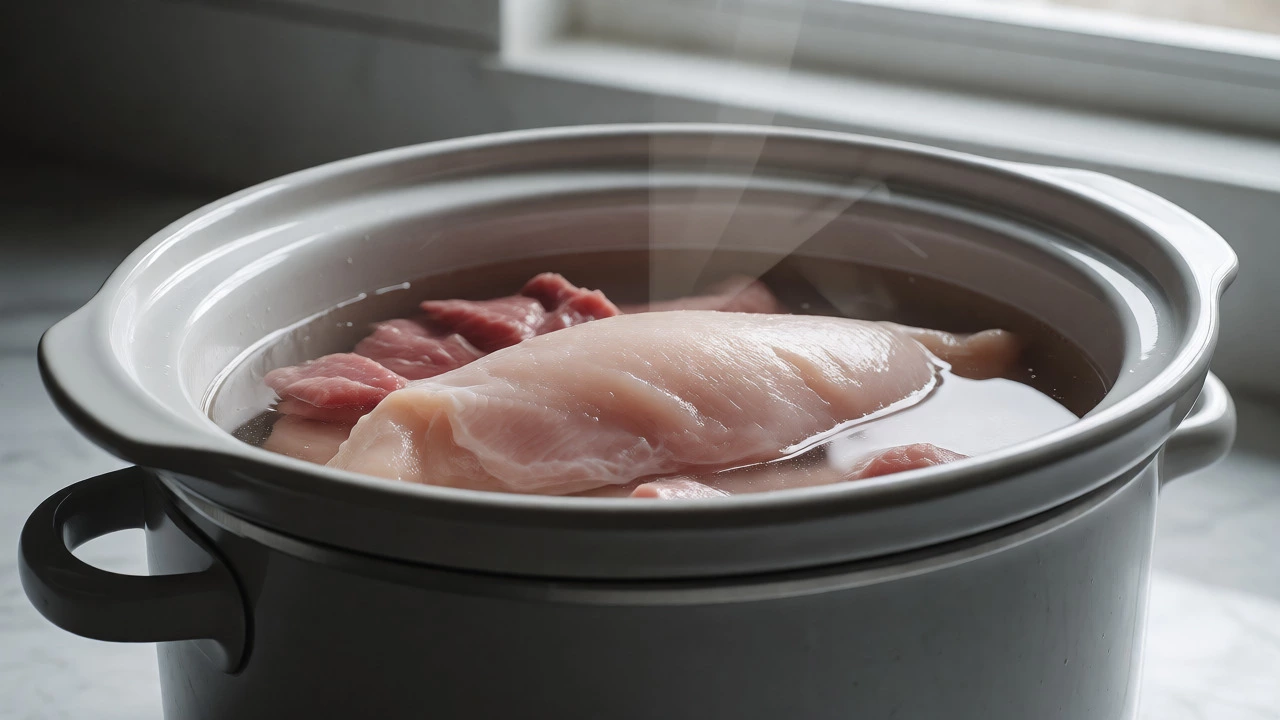
The Two-Hour Rule: Raw Meat in Cold Liquid
When you put raw meat into an unheated crockpot, you’re creating a perfect incubator. The liquid (broth, sauce, water) might be room temperature, but once that pot sits on the counter, the ambient air warms it up. According to the USDA and food safety standards globally, perishable foods should not stay in the "Danger Zone"-between 4°C and 60°C (40°F-140°F)-for more than two hours.
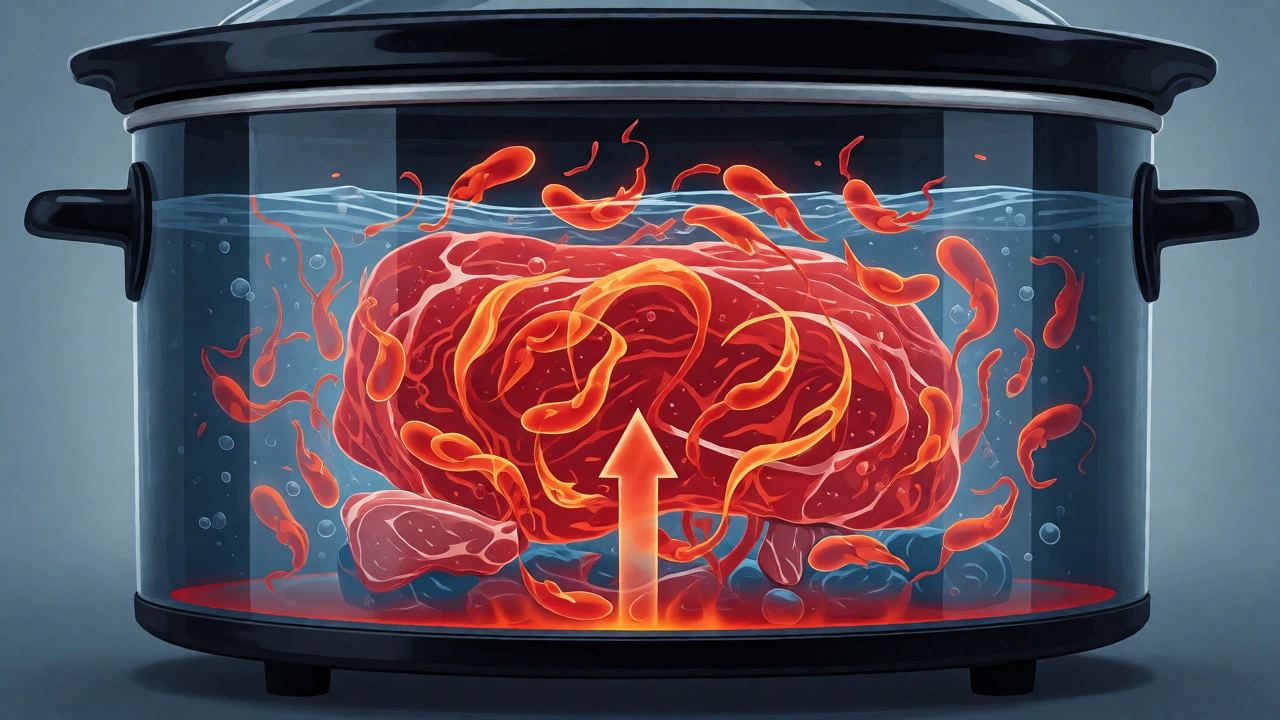
Why two hours? Because bacteria like Salmonella, E. coli, and Listeria double in number every 20 minutes under ideal conditions. If you leave raw pork chops in a cold crockpot with some BBQ sauce for four hours, you aren't just marinating; you're culturing billions of bacteria. When you finally turn the heat on, those bacteria don't just die instantly. They produce toxins as they multiply. Some of these toxins are heat-stable, meaning even if you boil the meat later, the toxin remains and can still cause food poisoning.
Here is the practical rule: If your crockpot is off and the meat has been sitting in it for less than two hours, you are generally safe to start cooking. If it’s been longer than two hours, especially in a warm kitchen (like my Auckland summer afternoons), you need to either discard the meat or get it into the fridge immediately. Do not try to "cook away" the risk if the meat has been sitting warm for half a day.
The Danger Zone During Heating
Many people think the real danger is leaving the pot on Low all day. Actually, the most critical window is the first hour of cooking. Slow cookers are designed to heat slowly. On the Low setting, it can take 1-2 hours just to bring the contents up to 60°C (140°F). During this ramp-up period, the meat passes through the temperature range where bacteria thrive fastest.
If you load a full crockpot with dense cuts of meat, the center takes longer to heat than the edges. This is why recipe developers always say: cut meat into smaller pieces. A whole 2kg beef roast takes much longer to reach a safe internal temperature than 500g cubes. If you leave a large piece of meat in the crockpot on Low for 8 hours, it spends a significant amount of time in that 40°C-60°C zone. To mitigate this:
- Pre-heat the pot: Fill the crockpot with boiling water, let it sit for 10 minutes, dump it out, then add your ingredients. This gives the meat a head start out of the danger zone.
- Use High first: Start on High for the first 30-60 minutes to blast through the danger zone quickly, then switch to Low.
- Don’t overfill: Keep the pot between half and three-quarters full. An overstuffed pot heats unevenly and traps cold spots.
Cooked Meat: How Long Can It Sit on Warm?
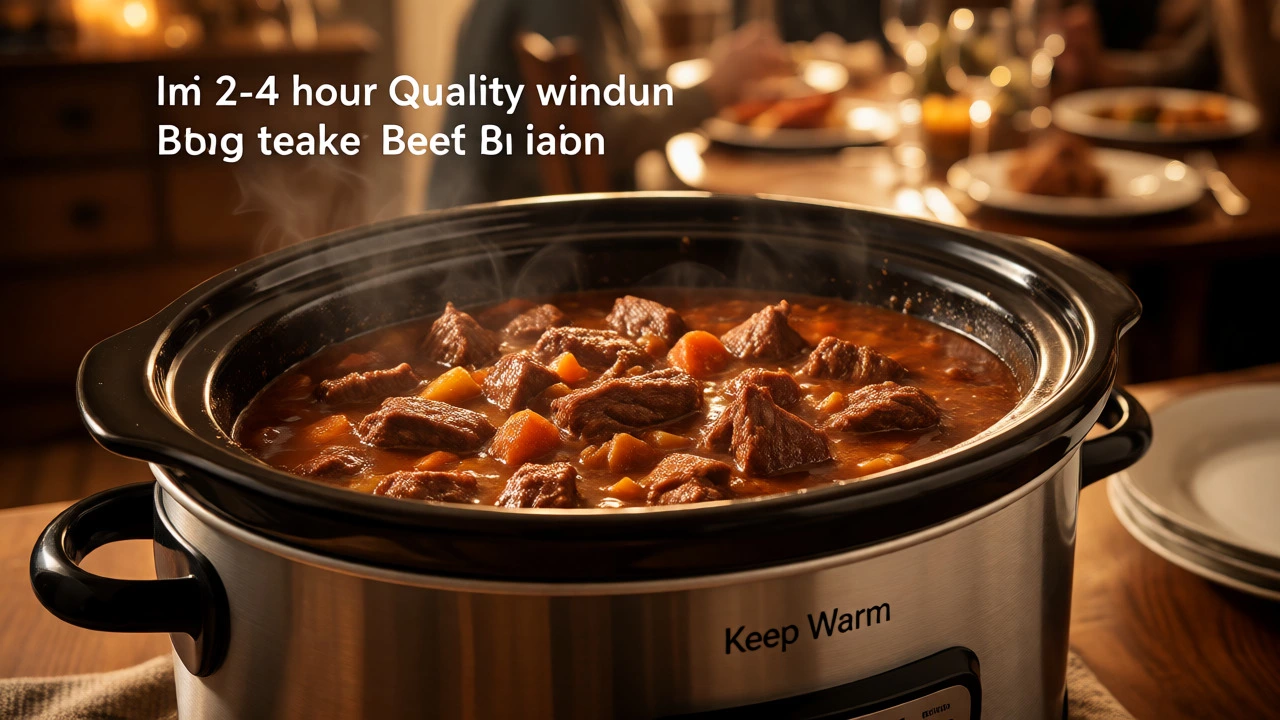
Once the meat is fully cooked, the rules change. You’re no longer worried about raw bacteria multiplying; you’re worried about re-contamination and texture degradation. Most modern crockpots have a "Keep Warm" function that holds food between 60°C and 75°C (140°F-165°F). This is technically above the danger zone, so it’s safe from a bacterial standpoint for several hours.
However, "safe" doesn't mean "tasty." If you leave cooked beef stew on Warm for more than 4 hours, the proteins tighten up, moisture evaporates, and you end up with dry, stringy meat. Vegetables turn to mush. For optimal quality, aim to eat within 2-4 hours of finishing the cook cycle. After 4 hours on Warm, the flavor profile often flattens out, and the texture becomes unappealing.
There is a caveat: if your "Warm" setting is faulty or drops below 60°C, you are back in the danger zone. Use a probe thermometer to check. If the food reads below 60°C after sitting on Warm, do not eat it unless you reheat it to a rolling boil (74°C+) right before serving. If it’s been lukewarm for more than two hours, toss it.
| Scenario | Max Safe Time | Risk Factor | Action |
|---|---|---|---|
| Raw meat in cold pot (off) | 2 Hours | Bacterial growth in danger zone | Start cooking or refrigerate |
| Heating phase (Low setting) | N/A (Process) | Uneven heating in center | Ensure internal temp hits 74°C+ |
| Cooked meat on Warm | 4 Hours (Quality) Unlimited (Safety if >60°C) |
Drying out / Texture loss | Serve or transfer to fridge |
| Power outage | 2-4 Hours (if lid closed) | Temperature drop | Check temp upon power return |
Frozen Meat: A Special Case
A common myth is that you can’t put frozen meat in a crockpot. The USDA actually says you can, but you must increase the cooking time by 50%. The bigger issue is time in the danger zone. Frozen meat keeps the surrounding area cold for longer, which delays bacterial growth initially. However, as it thaws inside the pot, it spends extended periods in the 4°C-60°C range.
If you plan to use frozen meat, ensure your crockpot reaches 60°C within 2 hours. If you’re gone for 8 hours, starting with frozen meat on Low might mean the center stays cool for too long. I recommend thawing meat in the fridge overnight whenever possible. If you must go from freezer to crockpot, use the High setting for the first hour to accelerate the thaw-and-cook process.
What If You Forget to Turn It On?
This happens to the best of us. You prep everything, walk away, and realize six hours later that the switch was never flipped. Here’s how to handle it based on what’s in the pot:
- Raw meat only: If the pot was off for more than 2 hours, the meat is likely compromised. Discard it. Don't gamble with $15 worth of steak versus a night in the bathroom.
- Meat with high acid/salt: If you have heavily salted cured meats (like bacon bits or jerky strips) or highly acidic sauces (tomato-based), the environment is slightly less hospitable to bacteria. Still, after 4+ hours, caution is advised. If it smells sour or looks slimy, bin it.
- Veggie-heavy mix: If the meat portion is small and surrounded by onions, garlic, and vinegar, you *might* be okay, but it’s risky. Better safe than sorry.
Signs Your Meat Has Gone Bad
Your nose is a decent detector, but not a foolproof one. Pathogenic bacteria (the ones that make you sick) don't always produce a bad smell. Spoilage bacteria do. So, if it smells rotten, definitely toss it. But if it smells fine, you still need to look for other signs:
- Texture: Raw meat that feels slimy or tacky instead of moist and firm is suspect.
- Color: Beef turning grayish-green or chicken developing a yellowish tint indicates oxidation and bacterial activity.
- Smell: Any hint of ammonia, sulfur, or sourness is a red flag.
Remember, cooking kills bacteria, but it doesn't remove all toxins. If you are unsure, throw it out. Food poisoning is miserable, and no meal is worth the risk.
Pro Tips for Safe Slow Cooking
To maximize both safety and flavor, adopt these habits:
- Thermometer is King: Buy a cheap digital probe thermometer. Check that the internal temperature of the meat hits at least 74°C (165°F) for poultry and 63°C (145°F) for whole cuts of beef/pork/lamb (followed by a 3-minute rest).
- Layer Wisely: Put root vegetables on the bottom near the heat source, meat on top. Veggies take longer to soften; meat cooks faster.
- Keep the Lid Closed: Every time you lift the lid, the pot loses significant heat, extending the time spent in the danger zone. Only open it when necessary.
- Refrigerate Leftovers Fast: If you aren't eating the leftovers within 2 hours of taking them off the heat, divide them into shallow containers and refrigerate. Deep containers cool slowly, keeping the center in the danger zone.
Slow cooking is convenient, but it requires respect for microbiology. By understanding the time limits for raw and cooked states, you can enjoy tender, flavorful meals without the worry.
Can I leave raw meat in the crockpot overnight before cooking?
No, not if the crockpot is off. Leaving raw meat in an unheated pot overnight (8+ hours) allows bacteria to multiply significantly in the danger zone. Even if you cook it thoroughly afterwards, heat-resistant toxins may remain. Always refrigerate meat if you won't start cooking within 2 hours.
Is it safe to leave cooked food in the crockpot on 'Warm' all night?
Generally, yes, provided the 'Warm' setting maintains a temperature above 60°C (140°F). However, the quality will suffer-the meat will become dry and tough. For safety, it is acceptable, but for taste, it is better to refrigerate leftovers and reheat them the next day.
What if the power went out while my crockpot was cooking?
If the power was out for less than 2 hours and the lid remained closed, the food is likely still safe due to residual heat. If it was out for longer, check the internal temperature. If the food dropped below 60°C and stayed there for more than 2 hours, it should be discarded or rapidly reheated to 74°C+ before consuming.
Does adding ice cubes help prevent burning if I'm late?
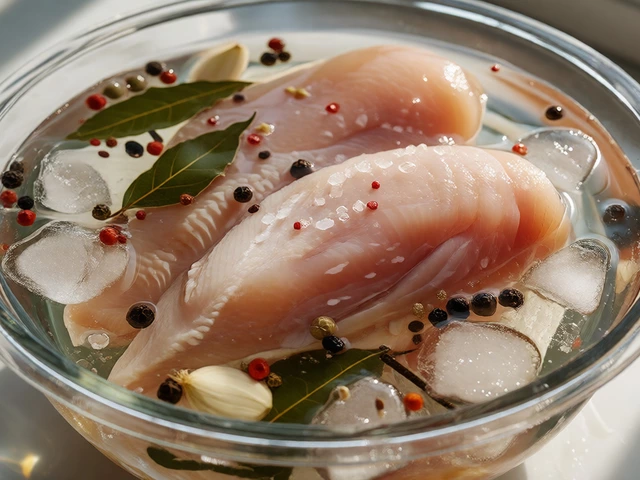
Adding ice cubes can lower the initial temperature, potentially keeping the food out of the danger zone longer if the pot is off. However, it also extends the time needed to reach a safe cooking temperature once turned on. It is a useful trick for very hot days, but monitor the total cooking time carefully.
Can I refreeze meat that has been in the crockpot?
You can refreeze meat that was previously frozen, thawed, and then fully cooked in the crockpot. You cannot safely refreeze raw meat that sat in the crockpot for hours without being cooked. Always cool cooked food properly before freezing.