Vegan Meal Swap Calculator
Find easy vegan replacements for your favorite meals using the pantry staples mentioned in the article. Start small with one meal change.
Switching to a vegan diet doesn’t mean you have to overhaul your whole life overnight. You don’t need to buy fancy supplements, become a nutrition expert, or give up your favorite foods. You just need to start making small, doable changes that stick. If you’re wondering how to begin eating vegan, the answer isn’t in a 30-day challenge or a rigid rulebook. It’s in your kitchen, right now, with what’s already in your fridge.
Start by replacing one meal a day
Don’t try to go vegan for all meals on day one. That’s how people burn out. Instead, pick one meal-breakfast, lunch, or dinner-and make it vegan. For most people, dinner is the easiest place to start. Think about your usual dinner: chicken and rice? Swap the chicken for lentils. Pasta with meat sauce? Use crumbled tempeh or textured vegetable protein. You’ll still eat the same meal, just without animal products.
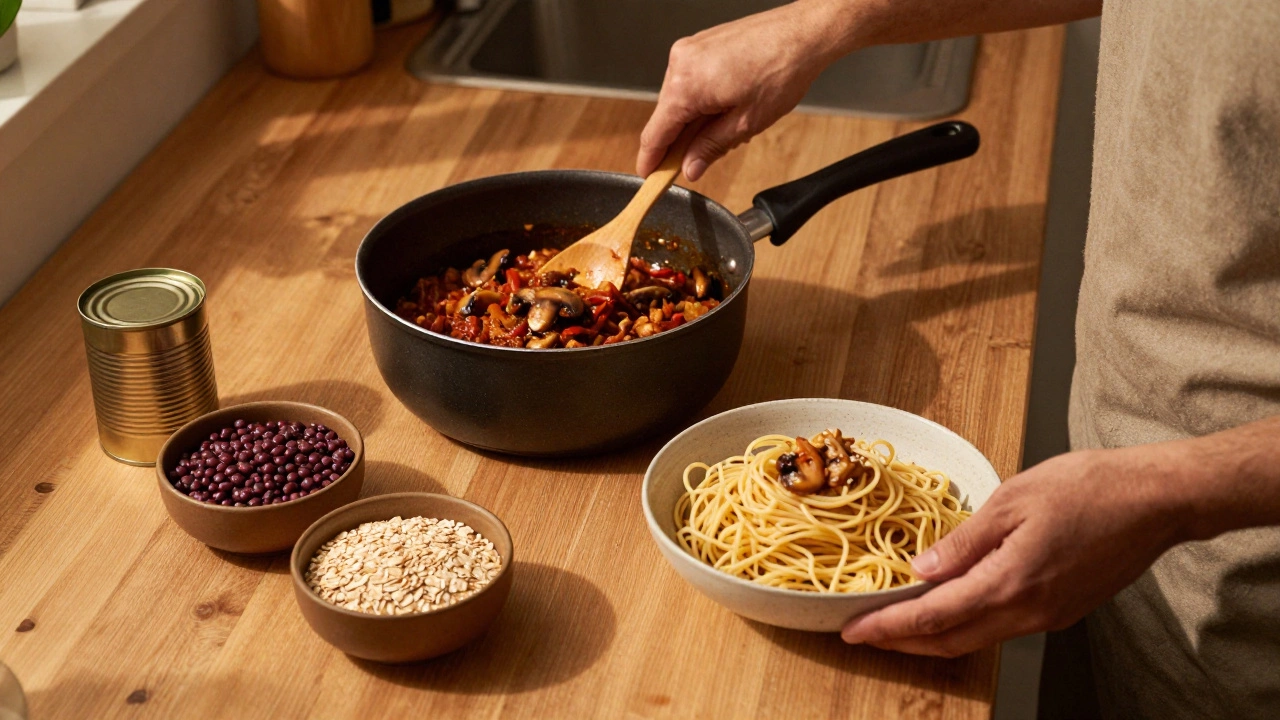
One real example: a friend in Auckland swapped her weekly spaghetti Bolognese for a mushroom-and-lentil Bolognese. She didn’t notice the difference. Her kids didn’t either. She saved money, felt lighter, and didn’t feel like she was missing out. That’s the goal: substitution, not sacrifice.
Build your vegan pantry basics
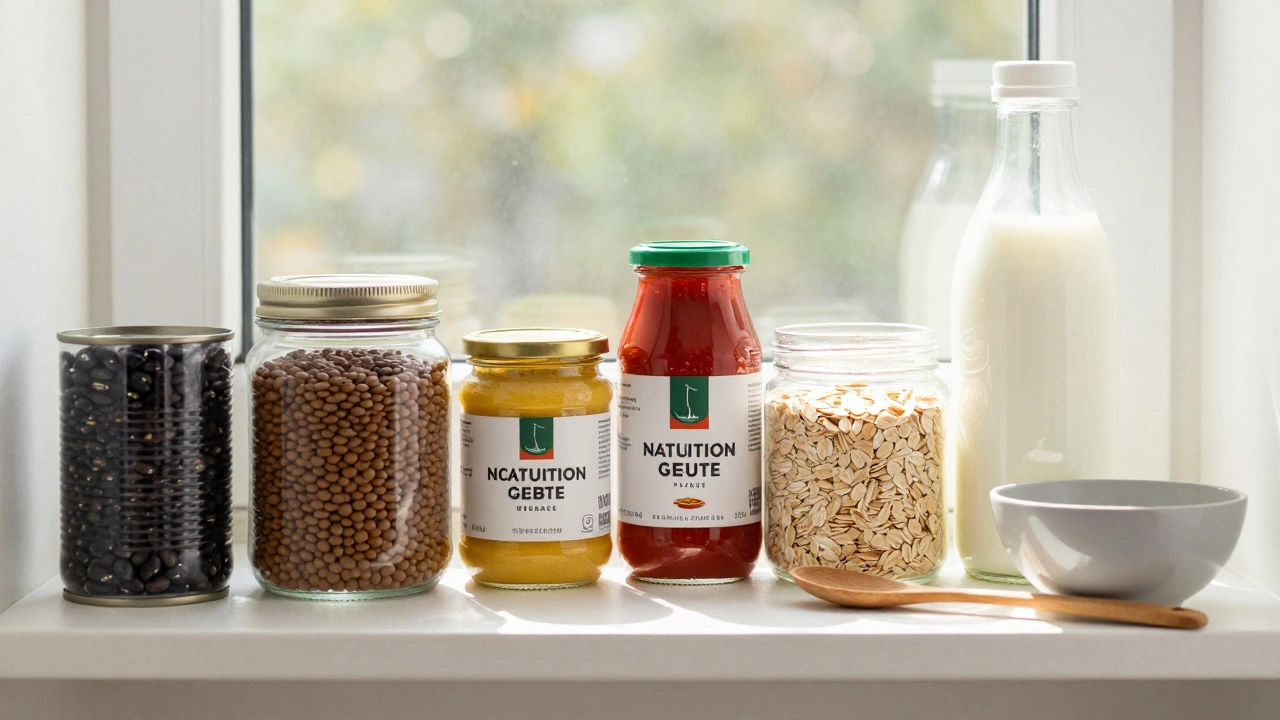
You don’t need a whole new kitchen. You just need a few key things on hand. Start with these:
- Canned beans (black, kidney, chickpeas)-they’re cheap, shelf-stable, and packed with protein.
- Lentils (brown, green, red)-cook in 20 minutes and work in soups, stews, and salads.
- Oats-for breakfast, baking, or even savory bowls.
- Plant-based milk-soy, oat, or pea milk work best for cooking and drinking. Avoid almond milk if you’re using it for cooking; it’s too thin.
- Nutritional yeast-it’s not yeast for baking. It’s a flaky, cheesy-tasting powder that adds depth to sauces and popcorn.
- Tomato paste-adds richness to sauces and stews without needing meat.
- Whole grain bread and rice-simple, filling, and versatile.
That’s it. No exotic spices, no expensive superfoods. Just real food you can find at any supermarket. Keep these stocked, and you’ll always have something ready.
Learn the 3-ingredient rule
When you’re starting out, simplicity wins. If you can make a meal with three ingredients or less, you’re already ahead. Try these:
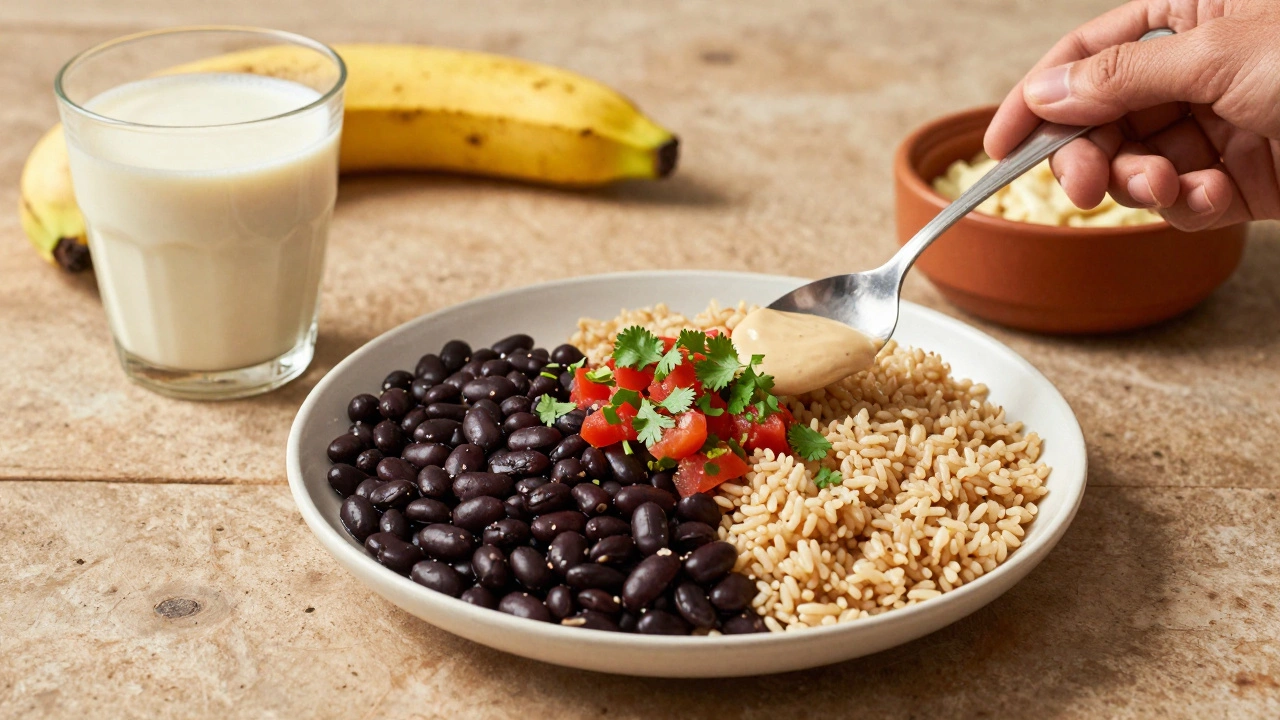
- Black beans + rice + salsa = a full bowl in 5 minutes.
- Lentils + tomato paste + water = hearty stew. Add garlic if you have it.
- Oats + plant milk + banana = breakfast that keeps you full till lunch.
- Chickpeas + olive oil + paprika = roasted snacks. Bake for 25 minutes at 200°C.
You don’t need recipes. You need combinations. These meals are quick, cheap, and satisfying. And they’re all vegan.
Don’t fear the fake meat-at first
Plant-based burgers, sausages, and nuggets aren’t healthy. But they’re useful. If you’re used to eating meat, those textures and flavors can help you make the transition. Use them as a bridge, not a destination.
Try a vegan sausage in your morning toast. Or a plant-based burger once a week. You’ll find they help your brain adjust. But don’t rely on them forever. They’re expensive and processed. Once you’re comfortable with beans, lentils, and tofu, you’ll naturally move away from them.
Use what you already love
Think about your favorite foods. Chances are, they’re already vegan-or can be with one tweak.
- Guacamole? Vegan.
- Hummus? Vegan.
- Chili? Just skip the ground beef.
- Stir-fry? Use tofu instead of chicken.
- Mac and cheese? Try cashew sauce or store-bought vegan cheese.
You don’t have to give up pizza. Just use a vegan cheese or skip it altogether. Top it with roasted veggies and a drizzle of olive oil. It’s still pizza. It’s still delicious.
Be okay with mistakes
You’ll accidentally eat something with dairy. You’ll go out to dinner and realize the fries are cooked in beef fat. You’ll miss cheese. That’s normal. It doesn’t mean you failed. It means you’re human.
Instead of guilt, ask: “What can I learn from this?” Maybe you’ll notice how often dairy hides in sauces. Or you’ll realize you crave cheese more when you’re tired. Use those moments to adjust, not punish yourself.
One woman in Wellington told me she ate a honey-glazed donut on her third day of going vegan. She cried. Then she made a big pot of oatmeal with cinnamon and apples the next morning. She didn’t go back to animal products. She just kept going.
Focus on adding, not taking away
The biggest mistake people make? They think vegan means “no meat, no dairy, no eggs.” That’s a negative mindset. It feels like deprivation.
Instead, think: “What can I add?”
- Add a handful of spinach to your morning smoothie.
- Add roasted sweet potatoes to your salad.
- Add a spoon of tahini to your pasta sauce.
- Add a new vegetable each week-kale, bok choy, eggplant, jicama.
When you focus on adding more plants, you naturally crowd out animal products. You don’t have to force yourself to quit. You just keep filling your plate with color, texture, and flavor.
Don’t go it alone
There’s a reason people stick with diets when they have support. Join a local vegan group. Follow a few vegan food accounts on Instagram. Watch a 10-minute YouTube video on how to make vegan lentil curry. You don’t need to be an expert. You just need to see it’s possible.
Try the “Veganuary” challenge even if it’s not January. It’s not about being perfect. It’s about trying. And if you slip up? Try again tomorrow.
What you’ll notice-without trying
Within a few weeks, you’ll start to feel different. Not because you’re being “good.” But because you’re eating more fiber, more antioxidants, more water-rich foods.
- Your digestion improves.
- You sleep better.
- You don’t feel heavy after meals.
- You start craving fruit again.
These changes aren’t magic. They’re biology. Plants give your body what it needs to run smoothly. Animal products? They’re often heavy, slow, and inflammatory.
You won’t notice all of this on day one. But by week three, you’ll look in the mirror and think: “I feel better than I did last month.” And that’s the real win.
Start today. Not tomorrow.
You don’t need a plan. You don’t need a list of 50 recipes. You just need to make one vegan meal today. Make it simple. Make it tasty. Make it yours.
Next week, do it again. Then again. Slowly, without pressure, you’ll find yourself eating more plants-not because you have to, but because you want to.
That’s how you begin eating vegan. Not with a revolution. With a single bowl.
Do I need to take supplements if I go vegan?
Yes, but only one: vitamin B12. It’s not found in plant foods, and your body needs it to make red blood cells and keep your nerves healthy. Take a daily supplement of 25-100 mcg, or a weekly dose of 1,000 mcg. That’s it. Other nutrients like iron, calcium, and omega-3s are easy to get from plants-lentils, tofu, chia seeds, almonds, and leafy greens cover them all. You don’t need fancy pills. Just B12.
Can I still eat out as a vegan?
Absolutely. Most restaurants now have vegan options, even fast food places. Look for dishes labeled "vegetarian" and ask if they use butter, cheese, or egg in the cooking. Often, you can just remove those. A burrito without cheese? Vegan. A salad with vinaigrette instead of ranch? Vegan. A bowl of rice and beans? Vegan. You don’t need to be perfect. You just need to ask one question: "Is there animal product in this?"
Will I lose weight going vegan?
Maybe, but that’s not the point. Many people lose weight because they stop eating processed meat, cheese, and fried foods. But if you replace them with vegan junk food-vegan pizza, fries, cookies-you won’t lose anything. Focus on whole foods: beans, vegetables, fruits, whole grains. That’s how you naturally eat less and feel better. Weight loss isn’t guaranteed, but feeling more energized is.
What if my family won’t eat vegan food?
You don’t need them to. Make one vegan dish for yourself and keep eating what they eat. Over time, they might ask for a bite. A friend of mine made vegan chili, and her husband asked for seconds. Then he started bringing his own bowl. You lead by example, not by force. Food is personal. Let people come to it on their own.
Is vegan food expensive?
Not at all. Beans, lentils, rice, oats, potatoes, and seasonal vegetables are among the cheapest foods you can buy. Vegan meat substitutes and specialty cheeses are pricey, but you don’t need them. Stick to whole foods, and you’ll spend less than you did on meat and dairy. One study in New Zealand found that vegan households saved about $1,200 a year on groceries.