Guilt-to-Comfort Ratio Calculator
How Guilty Do You Feel?
Your Results
Everyone has that one food they love but won’t admit to eating in front of friends. Maybe it’s a plate of greasy cheese fries at 2 a.m. or a whole tub of cookie dough eaten straight from the fridge. These aren’t just snacks - they’re emotional anchors. Guilty pleasure food isn’t about nutrition. It’s about memory, mood, and moment. And yes, that’s completely normal.
What Exactly Is a Guilty Pleasure Food?
A guilty pleasure food is anything you enjoy intensely but feel a little ashamed of because it doesn’t fit into your idea of "healthy" or "adulting." It’s not necessarily unhealthy - but it’s often high in sugar, fat, salt, or carbs. The guilt comes from the story you tell yourself: "I shouldn’t be eating this." But here’s the truth: if it makes you feel better, it’s serving a real purpose.
Think about it: when you’re stressed, tired, or lonely, your brain isn’t looking for kale. It’s looking for dopamine. And certain foods deliver it fast. A bowl of mac and cheese with extra cheddar. A slice of deep-dish pizza with pepperoni hanging off the edge. A frozen pop-tart warmed in the toaster. These aren’t meals. They’re comfort rituals.
Why Do We Crave These Foods?
Your brain doesn’t judge food. It just remembers how it felt the last time you ate it. Studies show that high-fat, high-sugar foods trigger the release of dopamine and serotonin - the same chemicals activated by exercise, laughter, or even falling in love. When life gets heavy, your body quietly begs for those feelings again.
Childhood plays a big role too. That boxed macaroni and cheese your mom made on Tuesday nights after soccer practice? That’s not just food. It’s a time machine. A bag of sour cream and onion chips you snuck while watching cartoons? That’s a sensory memory tied to safety. These foods aren’t about calories - they’re about connection.
And let’s not ignore the social angle. Guilty pleasure foods are often eaten alone. No one’s judging. No one’s asking if you "really" need that third slice of cake. It’s private. Quiet. A tiny rebellion against perfection.
Common Guilty Pleasure Foods (And Why They Work)
Here are some real, widely shared guilty pleasure foods - not because they’re fancy, but because they’re simple, familiar, and emotionally charged:
- Hot dogs with ketchup and mustard only - No buns. Just the sausage, eaten straight from the wrapper. The salt, the fat, the snap - it’s primal.
- Instant ramen with an egg and butter - Skip the seasoning packet. Add butter, soy sauce, and a raw egg. Stir it all together. It’s warm, salty, and oddly luxurious.
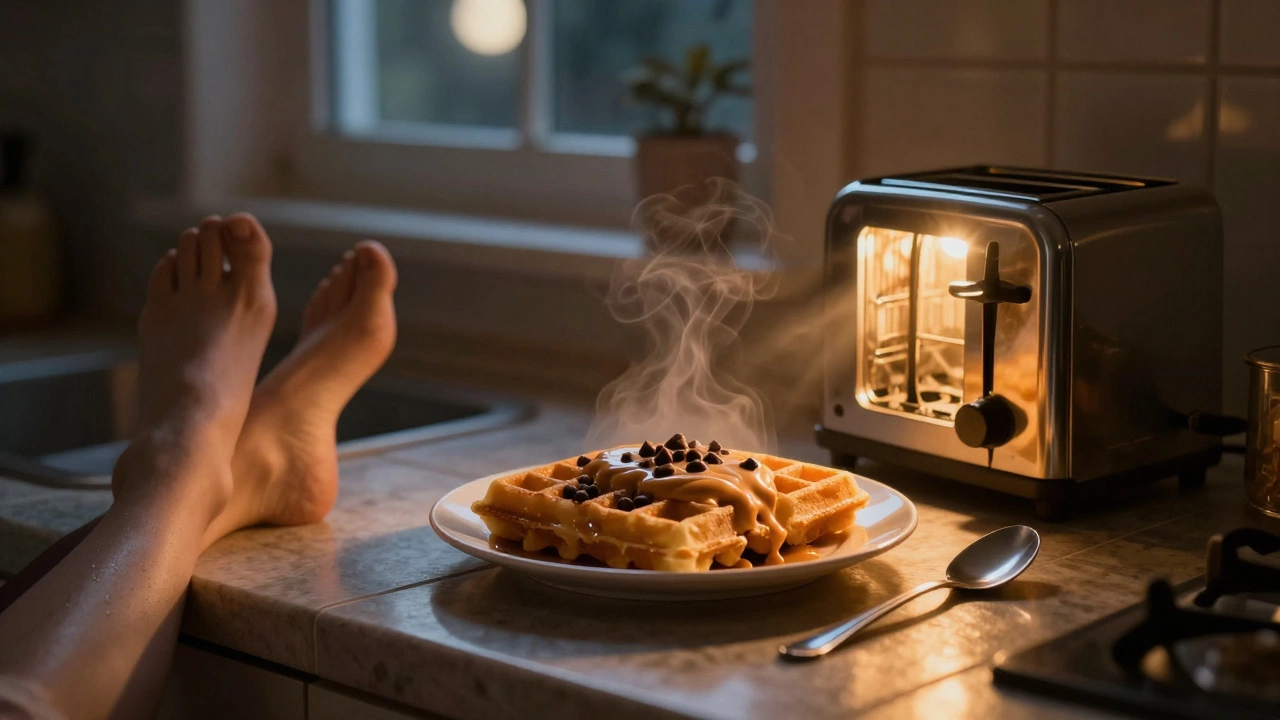
- Frozen waffles with peanut butter and chocolate chips - Toasted. Melting. Messy. No one makes this for company. But you? You make it for yourself.
- Whipped cream straight from the can - A spoonful. Right out of the fridge. It’s sweet, airy, and fleeting. Like a moment of peace.
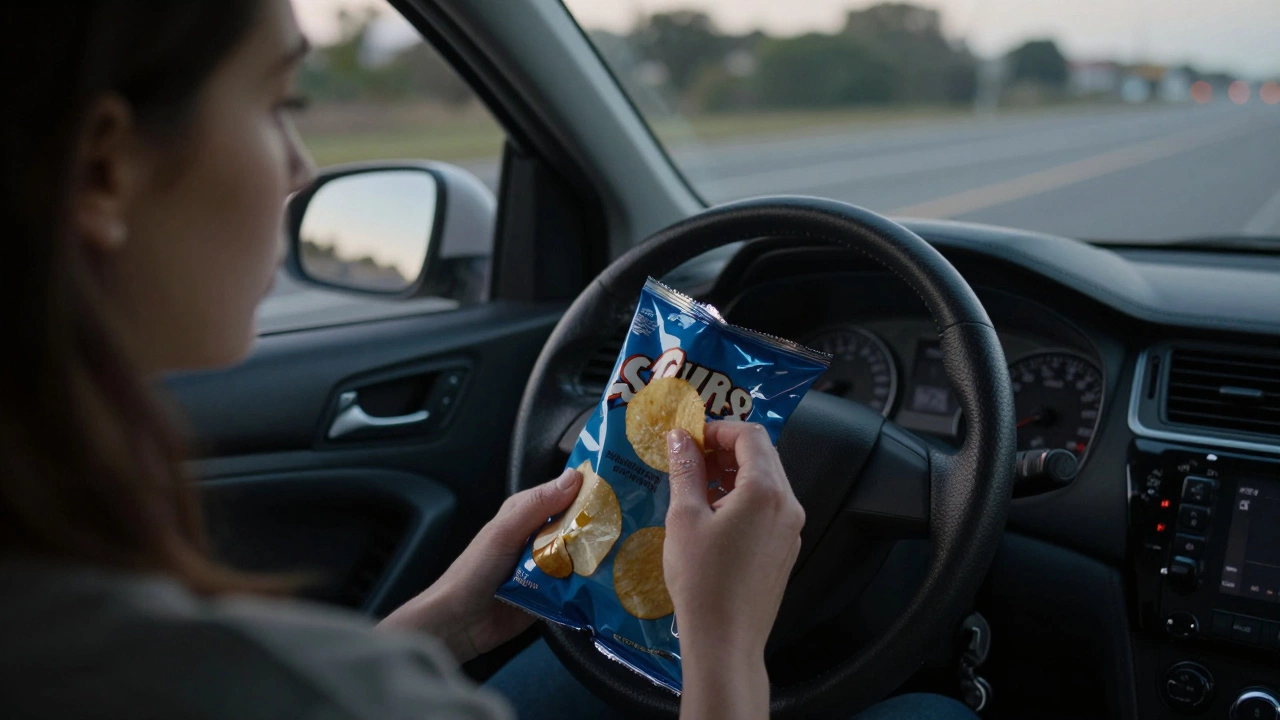
- Bag of plain potato chips eaten in the car - The crunch. The salt. The silence. No one else needs to know.
These foods don’t need recipes. They don’t need presentation. They just need to be eaten in the right mood - usually late, alone, or after a long day.
Is It Okay to Have Guilty Pleasure Foods?
Absolutely. Forcing yourself to eat "perfect" food all the time doesn’t make you healthy. It makes you resentful. And resentment leads to bingeing, not balance.
Research from the University of Toronto found that people who allowed themselves occasional "forbidden" foods were less likely to overeat them. Why? Because they stopped treating them like emergencies. When you stop labeling food as "good" or "bad," you stop fearing it.
Think of it like this: you don’t feel guilty for watching your favorite TV show. You don’t feel guilty for listening to a song you love even if it’s cheesy. Why should food be different? It’s not about discipline. It’s about joy.
Here’s a simple rule: if you eat it with pleasure, and you don’t feel physically sick afterward, it’s not a problem. Guilt is the real enemy - not the food.
How to Enjoy Guilty Pleasure Foods Without the Shame
You don’t have to quit them. You just need to change your relationship with them.
- Don’t hide them. Keep them in the pantry or freezer. Out of sight doesn’t make them less tempting - it just makes you feel worse when you find them.
- Plan for them. Pick one night a week to enjoy your favorite guilty food. Make it intentional. Light a candle. Put on music. Eat slowly. Turn it into a ritual, not a secret.
- Don’t pair them with punishment. No "I’ll workout tomorrow" or "I’ll skip breakfast." That just ties food to guilt again.
- Notice how you feel. After eating it, ask: "Do I feel better?" If yes, that’s enough. You don’t need a justification.
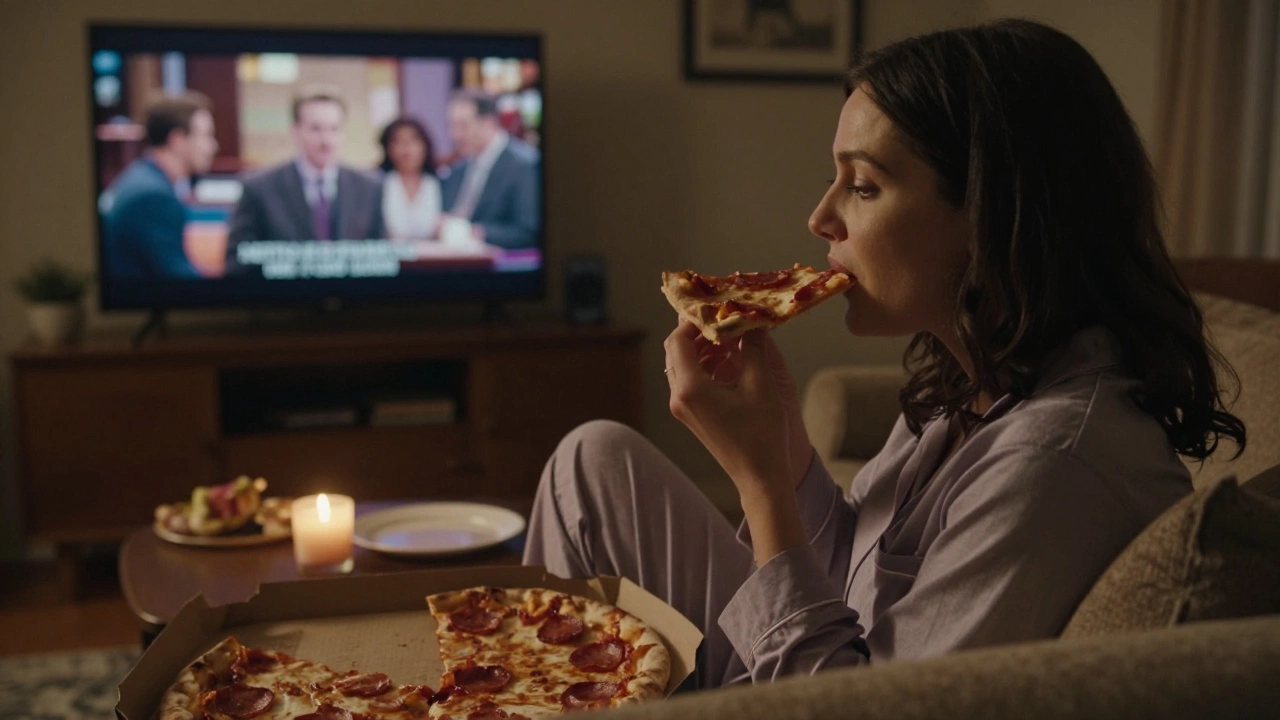
One woman we talked to eats a single slice of frozen pepperoni pizza every Friday night. She doesn’t share it. She doesn’t apologize. She just sits on her couch, eats it slowly, and watches old episodes of The Office. "It’s my reset button," she said. "I don’t need to fix it. I just need to feel it."
What Makes a Guilty Pleasure Different From a Comfort Food?
There’s overlap, but they’re not the same.
Comfort food is about warmth, nostalgia, and care. It’s homemade chicken noodle soup. It’s your grandma’s apple pie. It’s food that reminds you of being loved.
Guilty pleasure food? It’s messier. It’s often store-bought, processed, or eaten in private. It’s not about love - it’s about escape. It’s the neon-orange cheese dust on your fingers after a bag of Cheetos. It’s the syrupy sweetness of a candy bar you bought on impulse.
One person’s comfort food is another’s guilty pleasure. For some, mac and cheese is both. For others, it’s only one.
When Guilty Pleasure Foods Become a Problem
Not every craving is harmless. If you’re eating these foods daily just to numb emotions - anxiety, loneliness, sadness - and you feel worse afterward, it might be time to look deeper.
There’s a difference between enjoying a treat and using food to avoid feeling. The first brings peace. The second brings exhaustion.
If you notice:
- Eating alone because you’re ashamed
- Feeling physically ill after eating
- Using food to avoid talking to people
- Never feeling satisfied, even after eating a lot
Then it’s not really about the food anymore. It’s about what’s underneath.
That’s okay. You don’t have to fix it alone. Talking to a counselor or even a trusted friend can help untangle the emotions behind the cravings.
Final Thought: Food Doesn’t Define You
Guilty pleasure foods aren’t failures. They’re signals. They’re telling you what you need - even if it’s just five minutes of quiet with a warm, salty snack.
You don’t have to be perfect. You just have to be honest. And if your version of peace is a bowl of cereal with cold milk and a sprinkle of cinnamon, then that’s valid. No apology needed.
Is it bad to eat guilty pleasure foods regularly?
Not necessarily. Eating a favorite treat once or twice a week doesn’t harm your health if the rest of your diet is balanced. The issue isn’t frequency - it’s shame. When you feel guilty, your body holds onto stress, which can affect digestion and sleep. Enjoying food without guilt is healthier than avoiding it.
Can guilty pleasure foods be healthy?
Yes, if you redefine "guilty." A bowl of full-fat ice cream with dark chocolate chunks is still a treat, but it contains calcium, antioxidants, and healthy fats. The guilt comes from society’s rigid rules, not the food itself. What matters is how it makes you feel - not whether it fits a diet trend.
Why do I feel worse after eating my guilty pleasure food?
If you feel worse after eating, it’s likely because of the guilt, not the food. Your brain associates the food with shame, so the pleasure is short-lived. Try eating it without judgment next time. Notice the taste. The texture. The warmth. Often, the negative feeling fades when you stop fighting the craving.
Are guilty pleasure foods the same for everyone?
No. What’s a guilty pleasure for one person might be a regular snack for another. Culture, upbringing, and personal history shape these preferences. Someone who grew up with homemade tamales might see them as comfort food, while another person feels guilty for eating store-bought ones. There’s no universal list - only personal meaning.
How can I stop feeling guilty about my favorite foods?
Start by removing the word "guilty." Replace it with "I enjoy." Practice eating without distractions - no phone, no TV. Just you and the food. Notice how it tastes, smells, and feels. Over time, you’ll realize the food isn’t the problem - the story you tell yourself about it is.