Slow Cooker Safety & Texture Risk Calculator
Assess Your Situation
Recommended Action:
You press start on your slow cooker, a kitchen appliance designed for low-temperature, long-duration cooking, walk away for work, and then realize you forgot to turn it off. Or worse, you left it on "High" instead of "Low" while you were out all day. Panic sets in. Is that pot of beef stew still edible? Has it turned into poison? The short answer is: it depends on what kind of meat you cooked, how long it sat there, and whether the liquid boiled dry.
Leaving meat in a slow cooker too long doesn’t automatically mean disaster, but it does introduce specific risks ranging from texture ruin to serious foodborne illness. Understanding exactly what happens inside that ceramic pot when the timer runs out-or never starts-is crucial for keeping your family safe and your dinner palatable.
The Texture Problem: From Tender to Mushy
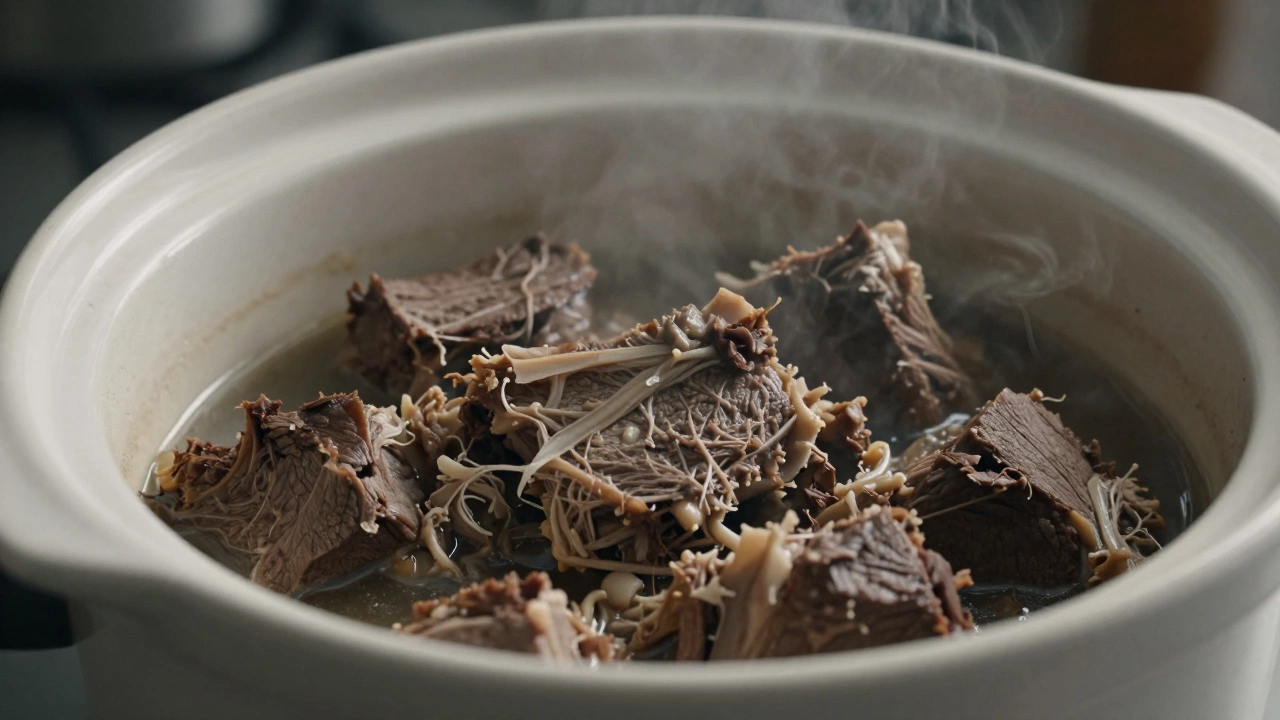
The most immediate consequence of overcooking meat in a slow cooker is textural degradation. Slow cookers work by breaking down connective tissues like collagen into gelatin through prolonged exposure to moist heat. This process usually takes anywhere from 4 to 8 hours depending on the cut. But once those fibers completely break down, they don’t just stop-they collapse.
If you leave a chuck roast or pork shoulder in the cooker for 12 hours instead of 6, the muscle fibers lose their structural integrity entirely. The result isn’t just "well-done"; it’s disintegrated. You’ll find yourself scooping up gray mush with a spoon rather than slicing tender chunks. For lean cuts like chicken breast or fish fillets, this happens even faster. Chicken breast can go from juicy to rubbery brick in as little as 3 hours on high heat. Fish, which has delicate protein structures, will essentially dissolve if left unattended beyond an hour.
This isn’t just about aesthetics. Overcooked meat loses its ability to retain moisture effectively because the proteins have tightened and squeezed out every drop of juice. Even if you add more sauce later, the meat itself cannot reabsorb it. The flavor profile shifts too-overcooked beef often develops a slightly bitter, metallic taste due to the breakdown of myoglobin and other compounds under extended heat stress.
The Safety Zone: Temperature Matters More Than Time
Here’s where things get tricky: time alone doesn’t determine safety. It’s the combination of time and temperature. According to guidelines from the USDA Food Safety and Inspection Service, food must reach a minimum internal temperature of 165°F (74°C) for poultry, 145°F (63°C) for whole cuts of beef, pork, lamb, and veal, and 140°F (60°C) for ground meats. Most modern slow cookers maintain temperatures between 170°F and 280°F, which keeps food safely above the "danger zone" of 40°F-140°F where bacteria multiply rapidly.
So, if your slow cooker stayed plugged in and maintained heat, the meat likely remained safe from bacterial growth-even after 12 or 14 hours. The real danger emerges when the power goes out, the plug gets kicked loose, or the unit fails to maintain consistent heat. In those cases, food sitting in the danger zone for more than two hours becomes a breeding ground for pathogens like Salmonella, E. coli, and Staphylococcus aureus.
However, there’s another risk: spore-forming bacteria such as Clostridium perfringens. These organisms can survive boiling temperatures and germinate if food cools slowly or sits at warm temperatures for extended periods. While rare, improper handling of large volumes of food in slow cookers has been linked to outbreaks of food poisoning, particularly in institutional settings.

Dry Heat Danger: When Liquid Evaporates
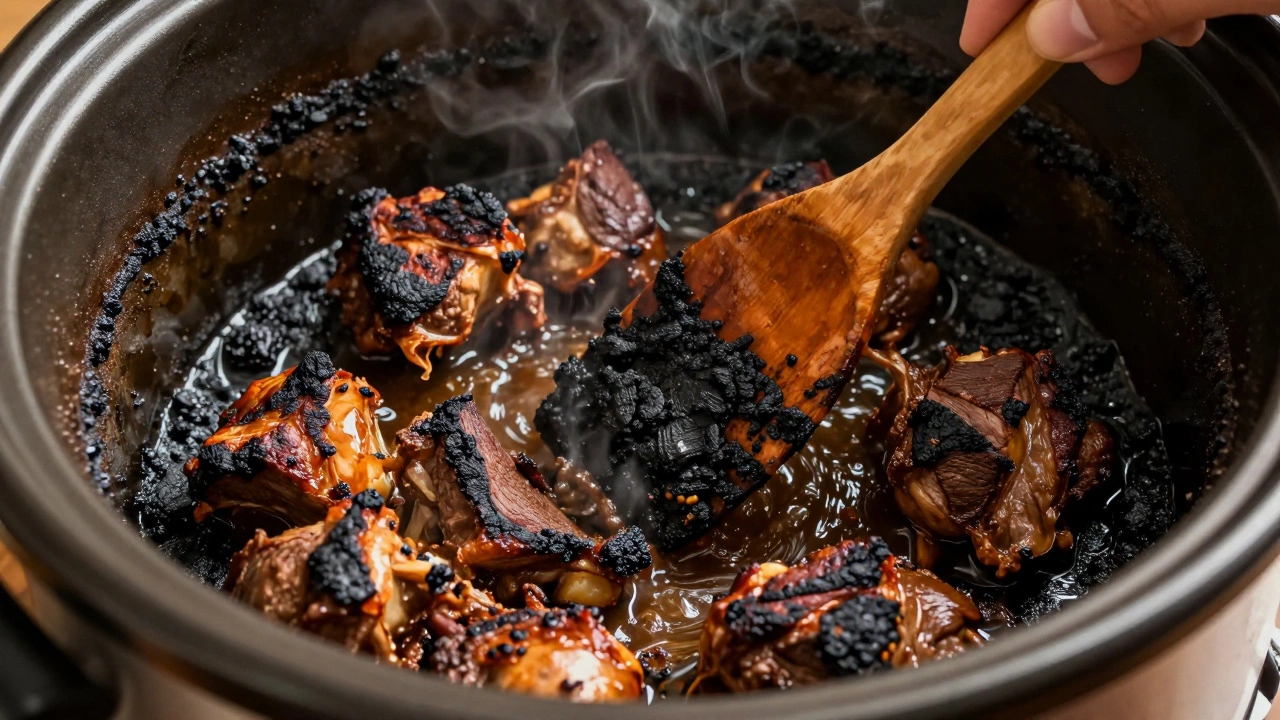
A critical factor often overlooked is evaporation. Slow cookers are designed to trap steam, but no lid is perfectly sealed. Over many hours, especially on the "High" setting, liquids gradually evaporate. Once the braising liquid disappears, the cooking method changes dramatically-from moist heat to dry heat. At this point, the bottom layer of meat begins to bake, then char, and eventually burn against the hot ceramic base.
Burnt meat contains acrylamide and heterocyclic amines (HCAs), compounds formed when amino acids and sugars react at high temperatures. While occasional consumption isn’t immediately harmful, regular intake of burnt foods has been associated with increased cancer risk according to studies published in journals like *Food Chemistry*. More urgently, burnt residues can release smoke particles into your kitchen air, triggering fire alarms or creating unpleasant odors that linger for days.
If you discover your slow cooker ran dry, do not try to salvage the entire batch. Scrape off any blackened portions thoroughly. If the charring extends deep into the meat layers, discard the affected pieces. Always check the interior of the pot before serving-if the bottom looks scorched, assume contamination occurred.
Electrical Hazards: Beyond the Food
While we’re focused on the meat, let’s not ignore the appliance itself. Leaving a slow cooker running unattended for excessive periods poses electrical risks. Older models may lack automatic shut-off features, meaning they continue drawing power indefinitely. Modern units typically include thermal fuses or auto-switch functions, but these aren’t foolproof.
In Auckland, New Zealand, where I live, household fires caused by small appliances account for roughly 15% of residential incidents annually, according to Fire and Emergency New Zealand data. A slow cooker left running overnight near curtains, paper towels, or wooden countertops presents a clear ignition hazard. Even without direct contact, radiant heat from the exterior housing can damage nearby surfaces over time.
Always place your slow cooker on a stable, non-flammable surface away from edges. Never cover the vented lid during operation-it needs airflow to regulate internal pressure and prevent overheating. And never leave it unattended for more than 8-10 hours unless the manufacturer explicitly states otherwise.
How to Rescue Overcooked Meat (If Possible)
Sometimes, despite best efforts, meat ends up overcooked. Before tossing everything, assess the situation:
- Mushy but intact: If the meat fell apart but retains some shape, consider repurposing it. Pull-apart pork or shredded beef works well in tacos, sandwiches, or soups. Add fresh herbs, citrus juice, or vinegar to brighten dull flavors.
- Rubbery chicken: Lean poultry rarely recovers fully. Chop finely and mix into salads, grain bowls, or casseroles where texture matters less.
- Burnt bottoms: Carefully transfer untouched upper layers to a clean container. Discard anything touching the charred zone. Do not stir-the burnt bits will taint the rest.
- Dry throughout: Rehydrate by simmering gently in broth or tomato sauce for 15-20 minutes. Avoid boiling, which worsens toughness.
Prevention remains superior to rescue. Use timers, set reminders on your phone, or invest in a smart slow cooker with Wi-Fi alerts. Many newer models allow remote monitoring via smartphone apps, letting you adjust settings or receive notifications when cooking completes.
Best Practices for Safe Slow Cooking
To avoid accidents altogether, follow these evidence-based practices:
- Match cut to time: Tough cuts (chuck, brisket, shank) need 6-8 hours on Low. Tender cuts (chicken breast, fish, pre-cooked sausage) require only 2-4 hours.
- Use adequate liquid: Ensure at least 1-2 cups of broth, water, or sauce cover the bottom. This prevents drying and regulates temperature.
- Never thaw frozen meat directly in the cooker: Frozen blocks create cold zones where bacteria thrive. Thaw in the fridge first.
- Clean regularly: Residue buildup insulates heat unevenly and harbors microbes. Wash the insert after each use with mild detergent.
- Test your device: Place a thermometer inside an empty slow cooker filled with water. Run on High for 2 hours. Water should reach 190-200°F. If not, replace the unit.
| Meat Type | Recommended Time (Low) | Max Safe Duration | Signs of Overcooking |
|---|---|---|---|
| Beef Chuck Roast | 6-8 hours | 10 hours | Falls apart easily, dark gray color |
| Pork Shoulder | 8-10 hours | 12 hours | Mushy texture, loss of pink hue |
| Chicken Breast | 2-3 hours | 4 hours | Rubbery, dry, white throughout |
| Fish Fillets | 1-1.5 hours | 2 hours | Flaky, opaque, crumbling |
| Ground Beef | 4-6 hours | 8 hours | Crumbly, brown-gray, dry |
Can you eat meat left in a slow cooker for 12 hours?
Yes, if the slow cooker maintained proper heat (above 140°F) and didn’t run dry. However, texture will likely be mushy or dry. Check for off smells or sliminess before consuming. When in doubt, discard.
Does leaving meat in a slow cooker make it poisonous?
Not necessarily. Bacteria grow rapidly between 40°F-140°F. If your slow cooker kept food above 140°F continuously, toxins won’t form. Risk increases if power failed, lid was removed frequently, or food sat out before heating.
What happens if you leave chicken in a slow cooker too long?
Chicken breast becomes tough, rubbery, and dry within 3-4 hours on High. Dark meat (thighs, legs) tolerates longer cooking but turns stringy past 6 hours. Never exceed 4 hours for boneless skinless breasts.
Is it safe to leave a slow cooker on overnight?
Only if using a model with auto-shutoff and verified reliability. Most manufacturers recommend max 8-10 hours. Overnight cooking (12+ hours) risks drying, burning, or electrical faults. Use timers or smart controls instead.
How do you know if slow-cooked meat has gone bad?
Look for sour odor, slimy film, unusual discoloration (green, yellow, black spots), or mold. Taste only if all other signs are normal-but when uncertain, throw it out. Spoilage bacteria produce invisible toxins that survive reheating.