Slow Cooker Safety & Cost Calculator
Energy & Cost Estimate
Estimated Electricity Cost
$0.00
0.00 kWh used
Select Your Meal
Select what you are cooking to see overnight suitability.
Overnight Safety Checklist
Check all boxes that apply to your setup. If unchecked, consider the risk level.
Summary Report
Estimated Cost
$0.00
Food Suitability
Not Selected
Safety Score
N/A
Complete checks to see score.
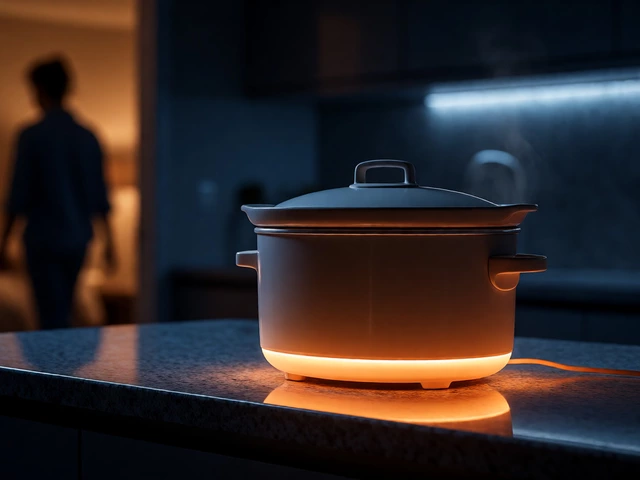
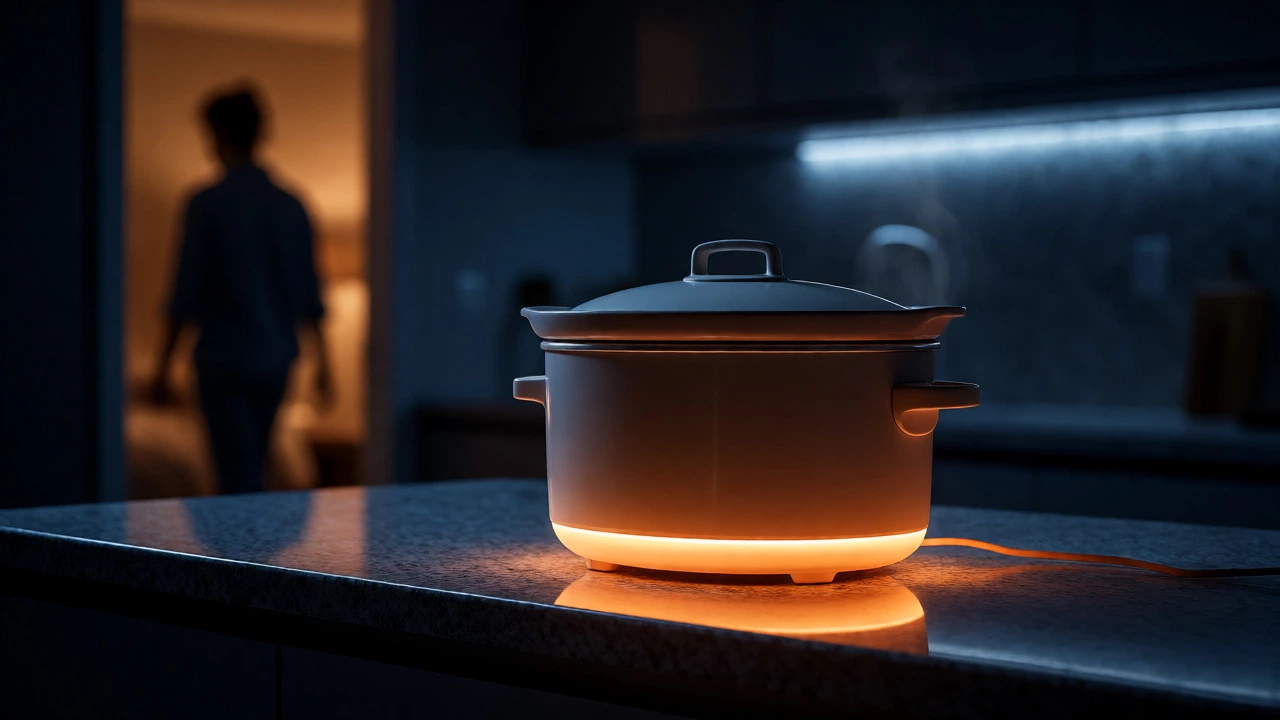
You’re lying in bed, staring at the ceiling, and suddenly it hits you: did I leave the slow cooker on? Or maybe you’re planning to set up a stew tonight so it’s ready when you wake up. The question isn’t just about convenience; it’s about whether your house is going to survive the night. Can you actually sleep with a slow cooker running, or are you playing Russian roulette with your smoke detector? The short answer is yes, you can. But there are rules. Thousands of people do this every single night without their houses turning into bonfires. However, "can" doesn't mean "always safe." It depends entirely on how you use it, where it sits, and what kind of machine you own. Let’s break down exactly how to keep your dinner warm and your home intact.
The Engineering Behind the Heat
First, let’s look at why this appliance is different from a stovetop burner or an oven. A Crock-Pot (or generic slow cooker) is designed specifically for long-duration, low-temperature cooking. Unlike a gas stove that needs constant airflow and open flame, or an electric oven that radiates massive heat, a slow cooker operates at a much lower wattage. Most models draw between 75 and 300 watts depending on the setting (Low vs. High). To put that in perspective, that’s roughly the same energy consumption as a standard incandescent light bulb or a laptop charger. Because the heating element is wrapped around the ceramic pot rather than exposed, the risk of direct ignition is significantly lower. The temperature inside rarely exceeds 210°F (98°C) on high, which is just above boiling water. This thermal profile makes it inherently safer for unattended operation compared to frying pans or deep fryers. However, "safer" does not mean "risk-free." Electrical faults, dry ingredients, or poor placement can still cause issues.
When It Is Safe to Leave It Running Overnight
If you want to sleep soundly, you need to tick off a specific checklist before you hit the pillow. If any of these boxes remain unchecked, you might want to reconsider leaving it on until morning.
- Liquid Content: This is the golden rule. Never run a slow cooker empty or with very little liquid. Dry food can scorch, stick to the bottom, and eventually burn, creating smoke and potentially damaging the heating element. Always ensure there is enough broth, sauce, or water to cover the base and submerge the main ingredients.
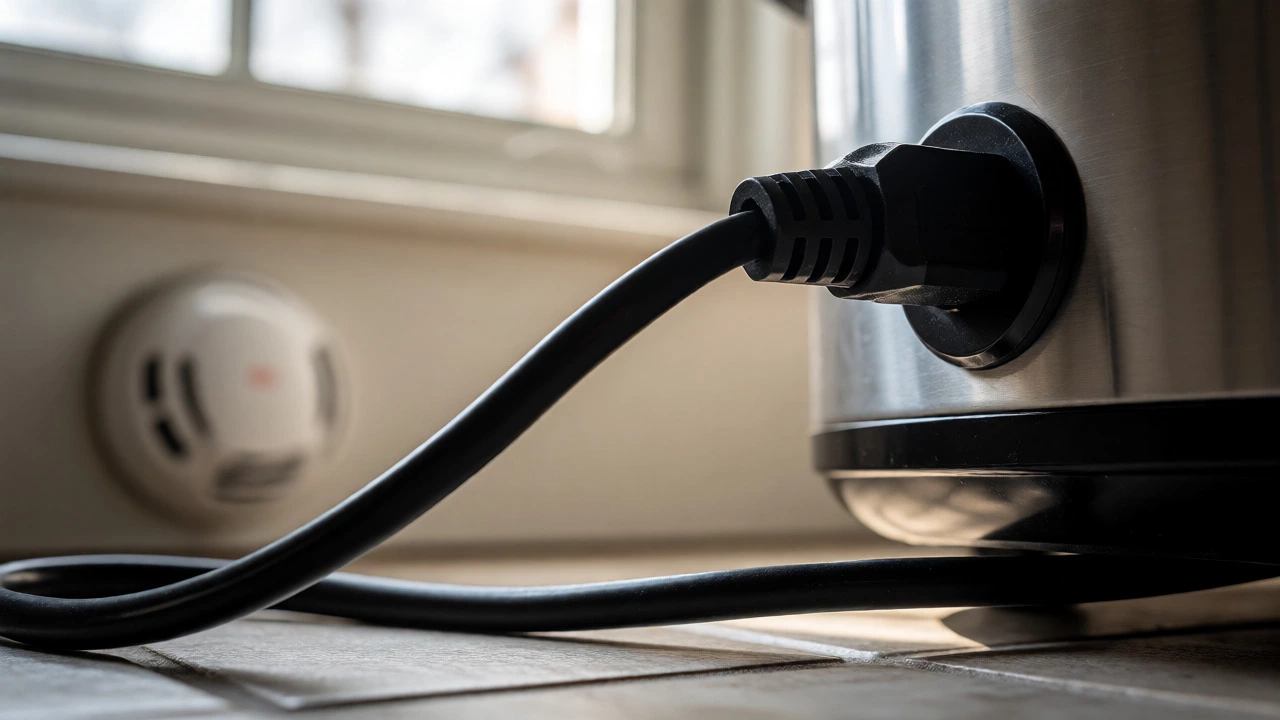
- Cord Condition: Inspect the power cord. Is it frayed? Is it tucked under a rug or behind heavy furniture where it could get pinched or overheated? A damaged cord is the number one cause of electrical fires in small appliances.
- Clearance Space: Your slow cooker needs room to breathe. It generates ambient heat. If you push it against a wall, tuck it under upper cabinets, or place it near curtains, paper towels, or wooden surfaces, you increase the risk of melting nearby plastics or igniting flammable materials. Keep at least six inches of clearance on all sides.
- Stable Surface: Place it on a hard, flat, non-flammable surface like granite, tile, or stainless steel. Avoid wooden tables unless you have a heat-resistant mat underneath. Also, make sure the counter isn’t cluttered. One accidental bump from a pet or a sleepy human hand could tip it over.
- Smoke Detectors: Check your batteries. If your alarm goes off at 3 AM because of steam (which happens), you’ll be annoyed but safe. If the battery is dead and a real problem starts, you won’t know until it’s too late.
The Risks You Need to Know
While millions of units operate safely, things do go wrong. The most common issue isn’t a fire; it’s a ruined meal. Leaving a slow cooker on "High" for eight hours when it only needed four will turn your chicken breast into leather and your vegetables into mush. This is a quality control issue, not a safety hazard, but it’s worth noting. The actual safety risks fall into two categories: electrical failure and mechanical tipping. Electrical faults are rare in modern appliances but possible if the unit is old or cheaply made. If the internal thermostat fails, the cooker might continue heating beyond its intended limit. While most modern units have automatic shut-off features, older models might not. If your cooker is more than ten years old, listen to it. Does it hum louder than usual? Does the exterior feel excessively hot to the touch? These are signs of stress.
Mechanical tipping is surprisingly common. Cats love knocking things off counters. Dogs might wag their tails into the lid. If the lid falls off while the contents are bubbling, hot liquid can splash onto the heating element or the counter, causing burns or minor fires. Secure the lid properly, and consider using a rubber band around the handle if you have particularly curious pets.
Best Foods for Overnight Cooking
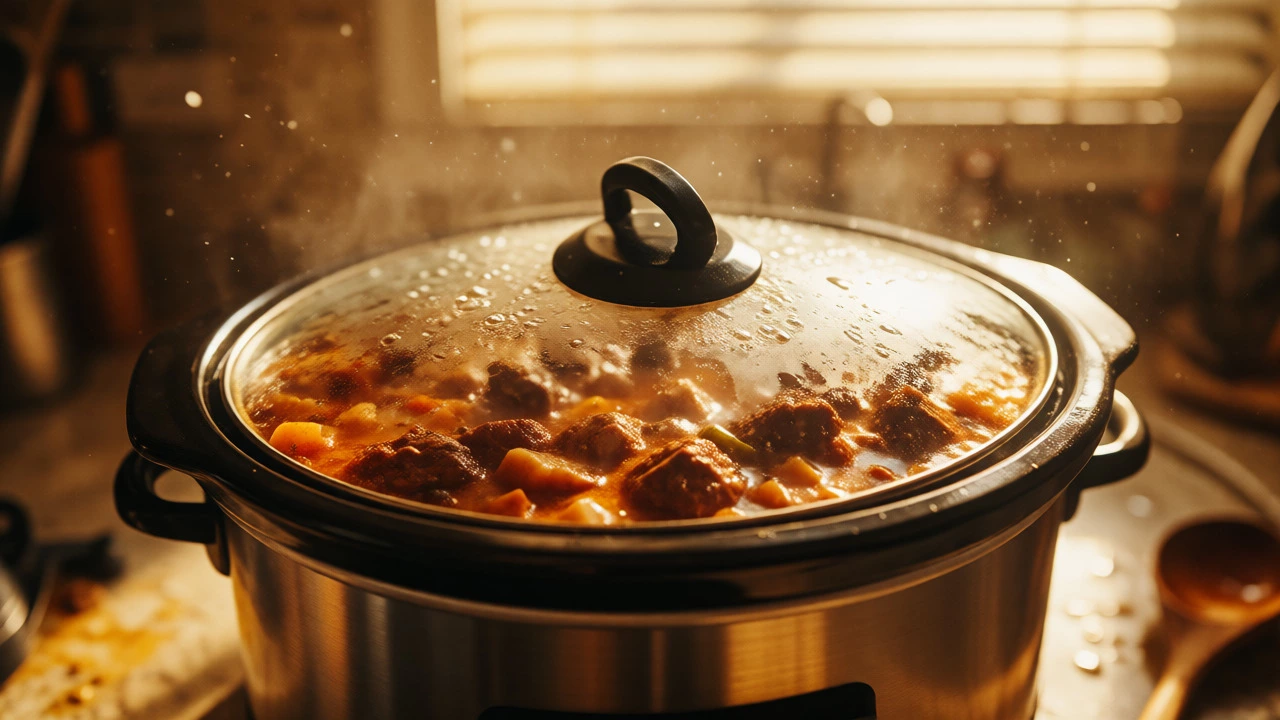
Not every recipe survives an eight-hour sleep cycle. You need dishes that benefit from long, slow breakdowns of collagen and fiber. Here is what works best when you plan to sleep with the machine on:
| Food Type | Suitability | Why |
|---|---|---|
| Beef Stew / Pot Roast | Excellent | Tough cuts need time to tenderize. Low heat prevents drying out. |
| Chili / Bean Soups | Good | Beans hold structure well, but check liquid levels. |
| Oatmeal (Steel Cut) | Good | Perfect for breakfast prep. Use low setting to avoid overflow. |
| Chicken Breasts | Poor | Lean meat dries out quickly. Becomes stringy after 4+ hours. |
| Vegetables (Zucchini/Corn) | Poor | Turns to mush. Add them in the last hour instead. |
| Dairy (Milk/Cream) | Risky | Can curdle or burn if left too long. Add at the end. |
Notice the pattern? Hard proteins and root vegetables thrive. Delicate proteins and dairy suffer. If you want to make a creamy soup, cook the base overnight and stir in the cream right before serving in the morning. If you’re making chicken, consider using thighs instead of breasts-they have more fat and connective tissue, so they stay juicy even after a long night.
Modern Features That Make It Safer
If you’re shopping for a new unit or upgrading, look for specific features that give you peace of mind. The market has shifted away from simple "On/Off" switches toward smart controls.
- Programmable Timers: Some advanced models allow you to set a delay start. You can load the ingredients at 10 PM and tell the machine to start cooking at 6 AM. This means the food spends less time sitting in the "danger zone" (between 40°F and 140°F) where bacteria multiply rapidly. It also ensures your food is piping hot exactly when you wake up, not lukewarm after sitting on "Warm" for six hours.
- Automatic Shut-Off: Many newer crockpots switch to "Keep Warm" mode automatically after the cooking cycle ends. This is crucial. "Keep Warm" uses minimal energy and maintains a safe temperature without continuing to cook the food aggressively. Ensure your model has this feature.
- Non-Stick Inserts: Traditional ceramic inserts are great for heat retention, but non-stick versions are easier to clean if something boils over. However, be careful with metal utensils on non-stick coatings.
What About Food Safety?
Beyond fire hazards, you need to worry about bacteria. The USDA recommends keeping cooked food above 140°F (60°C) if it’s being held for service. If your slow cooker finishes cooking at 2 AM and stays on "Warm" until 7 AM, is the food safe? Yes, provided the "Warm" setting actually holds the temperature above 140°F. Most modern units do. However, if your unit is faulty and drops below 140°F, you enter the danger zone. Bacteria like Salmonella and E. coli thrive between 40°F and 140°F. If the food cools down significantly during the night, reheating it in the morning kills the bacteria but doesn’t necessarily destroy the toxins some bacteria produce. To be extra safe, use a meat thermometer. Check the internal temperature of your stew or roast before eating. If it’s below 165°F (74°C) for poultry or 145°F (63°C) for beef/pork, reheat it thoroughly on the stove or microwave. Don’t rely solely on the "Warm" light.
Practical Tips for Better Sleep
If you decide to run your slow cooker overnight, here are some pro tips to minimize anxiety and maximize results:
- Positioning Matters: Move the slow cooker to the center of the counter, away from edges. If you have pets, this reduces the chance of a tail-wagging disaster.
- Use a Timer Plug: If your slow cooker doesn’t have a built-in timer, buy a simple mechanical or digital outlet timer. Set it to run for 6-8 hours and then shut off completely. This prevents the "overcooked" texture and eliminates the electrical load once the food is done.
- Check for Steam Leaks: Before you go to bed, watch the cooker for five minutes. If steam is escaping violently from the sides, your seal might be compromised. This can lead to dry-out faster than expected.
- Don’t Overfill: Fill the pot no more than two-thirds full. Liquids expand as they heat. An overfilled pot can boil over, making a mess and potentially dripping onto the heating element.
- Listen to Your Unit: Get familiar with the normal hum of your appliance. If it sounds rattly or buzzes unusually, unplug it and inspect it. Trust your ears.
Alternatives to Overnight Cooking
If the idea of electricity humming in your kitchen while you sleep stresses you out, you don’t have to do it. There are other ways to get a ready-made dinner.
Batch Cooking is the most popular alternative. Spend two hours on Sunday making a huge pot of chili or curry. Portion it into containers and freeze it. In the morning, move one portion to the fridge to thaw, and microwave it at lunch or dinner. It tastes nearly identical to fresh-cooked, and zero risk is involved.
Instant Pots (multi-cookers) offer a middle ground. They cook much faster-often in under an hour. You can come home from work, dump ingredients in, press a button, and eat 45 minutes later. No overnight waiting required. This is ideal if you prefer fresher textures and want to avoid the "leftover" taste that sometimes comes with long-simmered meals.
Ultimately, sleeping with a slow cooker on is perfectly fine if you respect the basics. Keep it clean, keep it filled with liquid, keep it clear of clutter, and trust your smoke detectors. Do that, and you’ll wake up to the smell of breakfast or dinner, not the smell of smoke.
Is it cheaper to leave a slow cooker on all night?
Yes, it is generally cheaper than using an oven. A slow cooker uses about 150-300 watts per hour. Running it for 8 hours costs roughly $0.10 to $0.25 depending on your local electricity rates. An oven typically uses 2,000-5,000 watts, costing significantly more for the same duration.
Can I leave my slow cooker on "Low" all day while at work?
Absolutely. This is the most common use case for slow cookers. Just ensure the food reaches a safe internal temperature within the first few hours. Adding frozen meat directly to a cold slow cooker can sometimes keep the food in the bacterial danger zone too long, so try to use thawed ingredients when possible.
What happens if the power goes out while the slow cooker is on?
If the power goes out, the food stops cooking. If the outage lasts less than two hours, the food likely stays hot enough to be safe. If it lasts longer, discard the food if it has been in the "danger zone" (below 140°F) for more than two hours. Do not attempt to finish cooking it later, as bacteria may have multiplied.
Do slow cookers have automatic shut-off?
Most modern slow cookers switch to a "Keep Warm" setting after the programmed cooking time ends, but they do not fully power down. Only high-end programmable models with timers will fully shut off. Always check your specific manual.
Can I sleep with a slow cooker if I have cats?
You can, but take precautions. Cats are attracted to the warmth and movement. Place the cooker away from edges, secure the lid tightly, and consider using a baby gate to keep them out of the kitchen area overnight if they are particularly clumsy.