Crockpot Time Saver Calculator
How Much Time Will You Save?
Compare cooking times between crockpot and faster methods for common dishes. Select a dish and see how much time you'll save.
If you’ve ever stared at your crockpot wondering why dinner still isn’t ready after eight hours, you’re not alone. Slow cookers are great for set-it-and-forget-it meals, but they’re not always practical when you’re hungry now. The truth is, plenty of kitchen tools cook food faster - and just as deliciously. You don’t need to give up tender, flavorful meals. You just need to switch tools.
Pressure Cookers Beat Crockpots by Hours
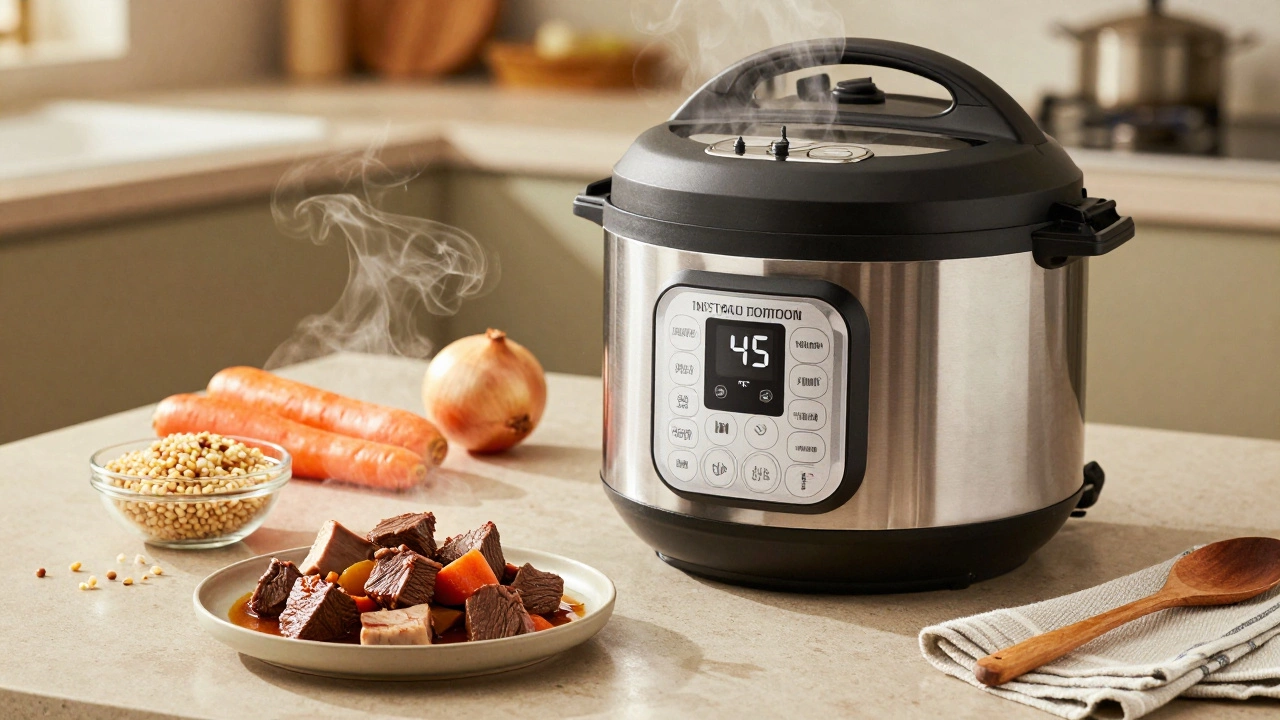
A pressure cooker cuts cooking time by up to 70%. Where a beef stew takes 8 hours in a crockpot, it’s done in 45 minutes under pressure. That’s not magic - it’s science. By trapping steam and raising the boiling point of water, pressure cookers cook food faster without drying it out. Modern electric models like the Instant Pot combine pressure cooking, sautéing, and slow cooking in one device. You can brown meat, then pressure cook it, all in the same pot. No extra dishes. No waiting.
Real-world example: A family in Christchurch used to start their Sunday stew at 7 a.m. to eat at 6 p.m. After switching to a pressure cooker, they started cooking at 5 p.m. and ate by 6.15 p.m. Same recipe. Same taste. No waiting.
Instant Pots Are the Modern Upgrade
The Instant Pot isn’t just a pressure cooker. It’s a multi-tool that replaces your crockpot, rice cooker, steamer, yogurt maker, and even a basic slow cooker. Most models have a dedicated “Slow Cook” setting - but you don’t need to use it. Use the “Pressure Cook” setting instead. Chicken thighs that take 6 hours in a crockpot? Done in 20 minutes. Beans that need 10 hours? Soaked and cooked in 40.
It’s not just speed. It’s control. You can sauté onions before pressure cooking. You can release steam manually for firmer veggies. You can even use the “Keep Warm” function to hold food until you’re ready to eat. It’s the crockpot’s smarter, faster cousin.
Sheet Pan Meals Are the Fastest Option
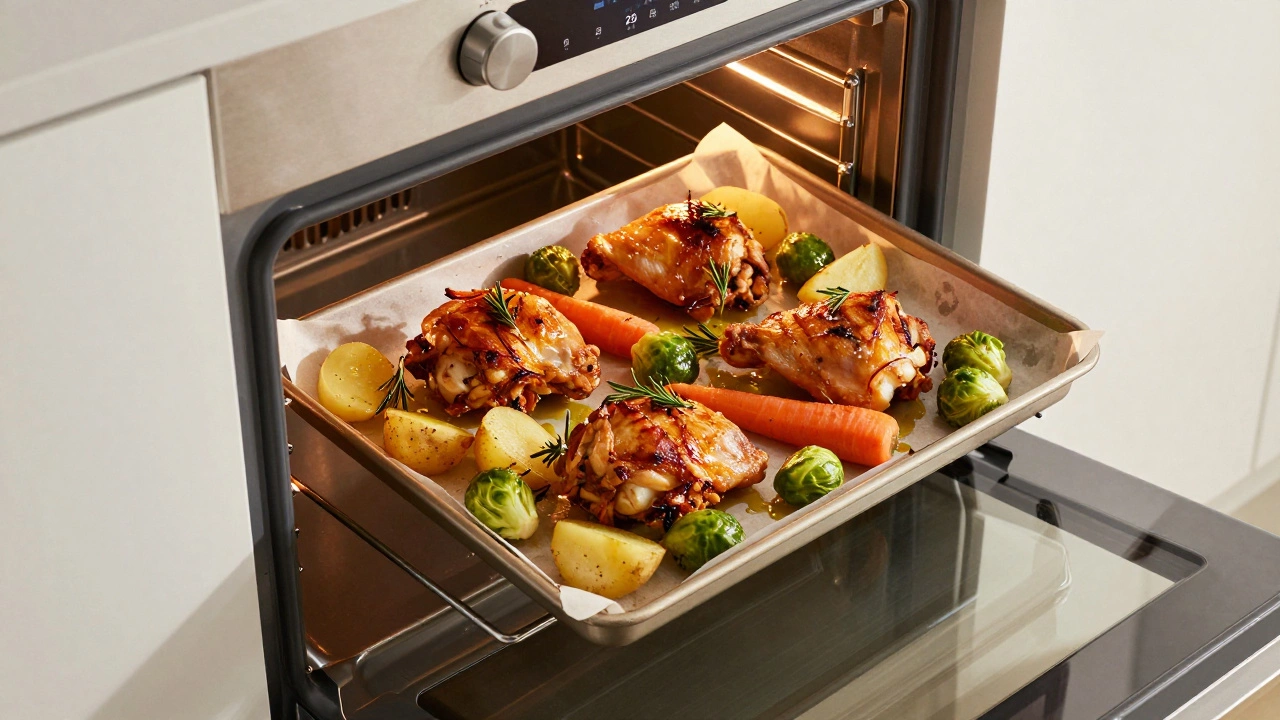
If you want food on the table in under 30 minutes, skip pots and pans entirely. Go straight to the oven with a sheet pan. Toss chicken thighs, potatoes, carrots, and Brussels sprouts with olive oil, salt, and rosemary. Spread them in a single layer. Roast at 220°C for 25 minutes. Done. One pan. No stirring. No babysitting.
This method works for almost any protein and veggie combo. Salmon and asparagus? 18 minutes. Sausages and sweet potatoes? 22 minutes. Even tofu and broccoli? 25 minutes. The key is high heat and a single layer. Crowding the pan = steaming = soggy food. Spread it out. Let the oven do the work.
Stovetop Sauces and One-Pot Wonders
Don’t underestimate the stove. A simple tomato sauce made with canned tomatoes, garlic, and basil can simmer in 20 minutes. Add ground beef or lentils, and you’ve got a full meal. One-pot pasta is another game-changer. Boil pasta in its sauce instead of draining it separately. The starch thickens the sauce. You use less water. Less cleanup. Less time.
Try this: In a large pot, combine 400g of crushed tomatoes, 1 chopped onion, 3 minced garlic cloves, 1 tsp dried oregano, 200g of short pasta (like penne), and 1.5 cups of water. Bring to a boil, stir occasionally, and cook for 10-12 minutes until pasta is tender. Stir in fresh basil and parmesan. Serve. Total time: 25 minutes.
Air Fryers for Crispy Speed
Air fryers aren’t just for fries. They’re perfect for cooking chicken breasts, salmon, tofu, and even frozen meatballs in 12-18 minutes. The hot air circulates rapidly, crisping the outside while keeping the inside juicy. No preheating needed. No oil required. Just toss food in, set the timer, and walk away.
Compare that to a crockpot: 6 hours for chicken breasts that end up mushy. An air fryer gives you tender, golden chicken in 15 minutes. It’s not the same texture as slow-cooked meat - but it’s better for when you need crispiness, crunch, or speed.
Why Crockpots Still Have a Place
That doesn’t mean the crockpot is obsolete. It’s still the best tool for meals you want to leave unattended all day. Think chili for a tailgate, pulled pork for a weekend barbecue, or a pot of beans for a large group. But if you’re cooking for two or three on a weeknight, and you’re hungry by 6 p.m., waiting until 8 p.m. isn’t practical.
Think of it this way: Crockpots are for weekends. Pressure cookers, sheet pans, and stovetop pots are for weekdays.
When to Choose What
- Use a pressure cooker when you want slow-cooked flavor but need it fast - stews, beans, tough cuts of meat.
- Use a sheet pan for simple, no-fuss dinners with veggies and protein - perfect for busy weeknights.
- Use a stovetop one-pot for soups, sauces, and pasta when you want minimal cleanup.
- Use an air fryer when you want crispy textures - chicken, fish, frozen foods, roasted veggies.
- Stick with the crockpot for all-day meals, big batches, or when you’re leaving the house for hours.

Real-Life Swap: From Crockpot to Faster Method
Take a classic beef and barley stew. Traditional crockpot method: 8 hours on low. Result: tender meat, soft barley, rich broth.
Pressure cooker method: 45 minutes on high pressure. Same ingredients. Same broth. Same tenderness. You even get to brown the beef first for deeper flavor. And you’re done before your kids get home from school.
Or try chicken tacos. Crockpot: 6 hours on low. Air fryer: 12 minutes at 200°C. Toss with lime, cilantro, and black beans. Serve in warm tortillas. You didn’t lose flavor. You gained time.
What You Really Need
You don’t need a fancy kitchen. You don’t need five appliances. You just need one fast method you can rely on. Start with a pressure cooker. It’s the single biggest time-saver for anyone tired of waiting. Add a sheet pan and a good pot, and you’ve covered 90% of weeknight meals.
The goal isn’t to replace your crockpot. It’s to have options. Some days you want slow. Some days you need fast. Both are valid. But if you’re always waiting, you’re not cooking - you’re just scheduling meals.
Can I use an Instant Pot instead of a crockpot?
Yes, absolutely. Most Instant Pots have a Slow Cook setting, but you’ll save hours by using the Pressure Cook setting instead. For example, chicken breasts that take 6 hours in a crockpot cook in 20 minutes under pressure. The flavor is just as good - sometimes better because you can brown the meat first.
Is a pressure cooker safe for beginners?
Modern electric pressure cookers like the Instant Pot are very safe. They have multiple automatic safety features: lid locks, pressure release valves, and overheat protection. Just follow the basic rules: don’t overfill, make sure the vent is clear, and let pressure release naturally for meats or manually for veggies. Most users get comfortable in two or three uses.
What’s the fastest way to cook beans?
Use a pressure cooker. Dried beans that take 8-10 hours in a crockpot cook in 30-40 minutes under pressure. No soaking needed. Just rinse the beans, add water and salt, seal the lid, and cook. You’ll save time, energy, and the hassle of planning ahead.
Do sheet pan meals taste as good as slow-cooked food?
They taste different - not better or worse. Slow-cooked food is tender and soft. Sheet pan meals are caramelized and crispy on the edges. Both are delicious. If you like texture and speed, sheet pan meals win. If you want melt-in-your-mouth meat, stick with the crockpot. Choose based on your mood and time.
Can I cook rice faster than in a crockpot?
Yes. A crockpot takes 2-3 hours for rice. A stovetop pot takes 15-18 minutes. An Instant Pot takes 10 minutes. Just use a 1:1.25 water-to-rice ratio, seal the lid, and pressure cook. The rice comes out fluffy and separate. No stirring. No watching.
Next Steps: Try One New Method This Week
Don’t overhaul your kitchen. Just pick one faster method and try it once. This week, make a sheet pan dinner. Or cook beans in your pressure cooker. Or try one-pot pasta. You’ll be surprised how much time you get back - and how little you miss the slow cooker.