Slow Cooker Setting Calculator
There is a persistent myth in the kitchen that setting your slow cooker to low is always superior because it creates more tender results and deeper flavors. You might have heard this from a grandmother who swore by her Crock-Pot or read it on a food blog. But here is the truth: low and high are not different flavors. They are simply different speeds to reach the same internal temperature.
If you want to know whether it is better to slow cook on low or high, the answer depends entirely on your schedule and the cut of meat you are using. One is not inherently "better" than the other; one is just faster. Understanding the thermal dynamics of these appliances changes how you plan your meals, prevents overcooked disasters, and helps you get that fork-tender texture every time.
The Science Behind Low and High Settings
To understand why the settings matter, you need to look at what happens inside the pot. A standard electric slow cooker has two main heating elements or power levels. When you select high, the appliance typically reaches a simmering temperature of around 200°F (93°C) within two hours. When you select low is a slower heat setting that takes about four hours to reach the same simmering point.
Once that target temperature is reached, both settings maintain roughly the same heat. The difference is the ramp-up time. This means that cooking on high for four hours is not exactly the same as cooking on low for eight hours, but they are close enough for most practical purposes. The general rule of thumb used by culinary experts is that one hour on high equals approximately two hours on low.
This thermal behavior matters because connective tissue in meat, specifically collagen, needs sustained heat to break down into gelatin. If the heat rises too quickly, the muscle fibers tighten and squeeze out moisture before the collagen has a chance to melt. This is why tough cuts like chuck roast or pork shoulder benefit from the gradual warmth of the low setting, while leaner meats or pre-cooked ingredients can handle the quicker rise of the high setting.
When to Choose the High Setting
You should choose the high setting when time is your primary constraint. If you come home from work and realize you forgot to start dinner, high is your rescue button. It gets the job done in half the time. However, there are specific scenarios where high is actually the technically correct choice, regardless of your schedule.
- Lean Meats: Chicken breasts, turkey breast, and fish fillets do not have much connective tissue to break down. Cooking them on low for eight hours will often result in dry, stringy meat because the proteins denature and squeeze out all their juices. High cooking finishes these items faster, preserving some moisture.
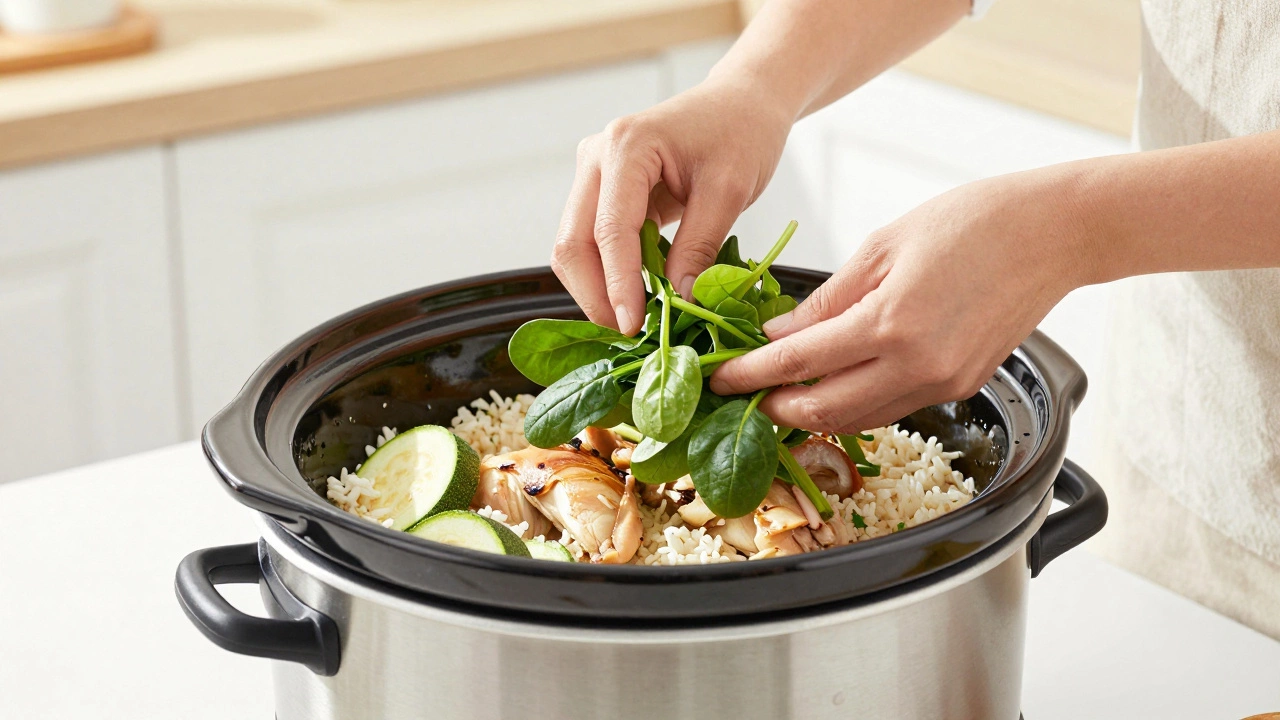
- Vegetables: If you are adding delicate vegetables like spinach, zucchini, or bell peppers, you usually add them in the last hour or two. Starting them on high ensures they cook through without turning into mush if you forget to adjust the timer.
- Reheating Leftovers: If you are using your slow cooker to warm up a large batch of soup or stew, use high. You want to bring the food past the danger zone (140°F / 60°C) quickly to prevent bacterial growth. Low takes too long to achieve this safe transition.
- Small Batches: If you are cooking less than three quarts of food, the thermal mass is lower. The pot heats up faster, so high is more efficient and prevents the food from sitting in a lukewarm state for too long.
When to Choose the Low Setting
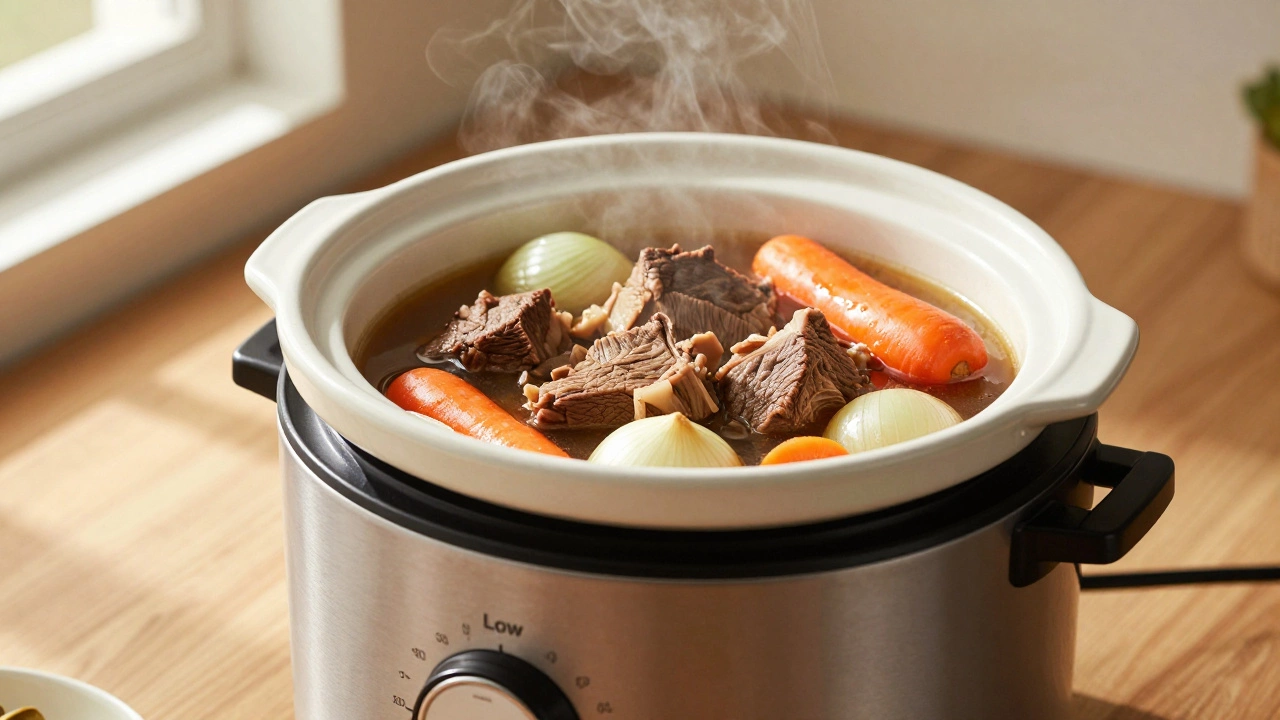
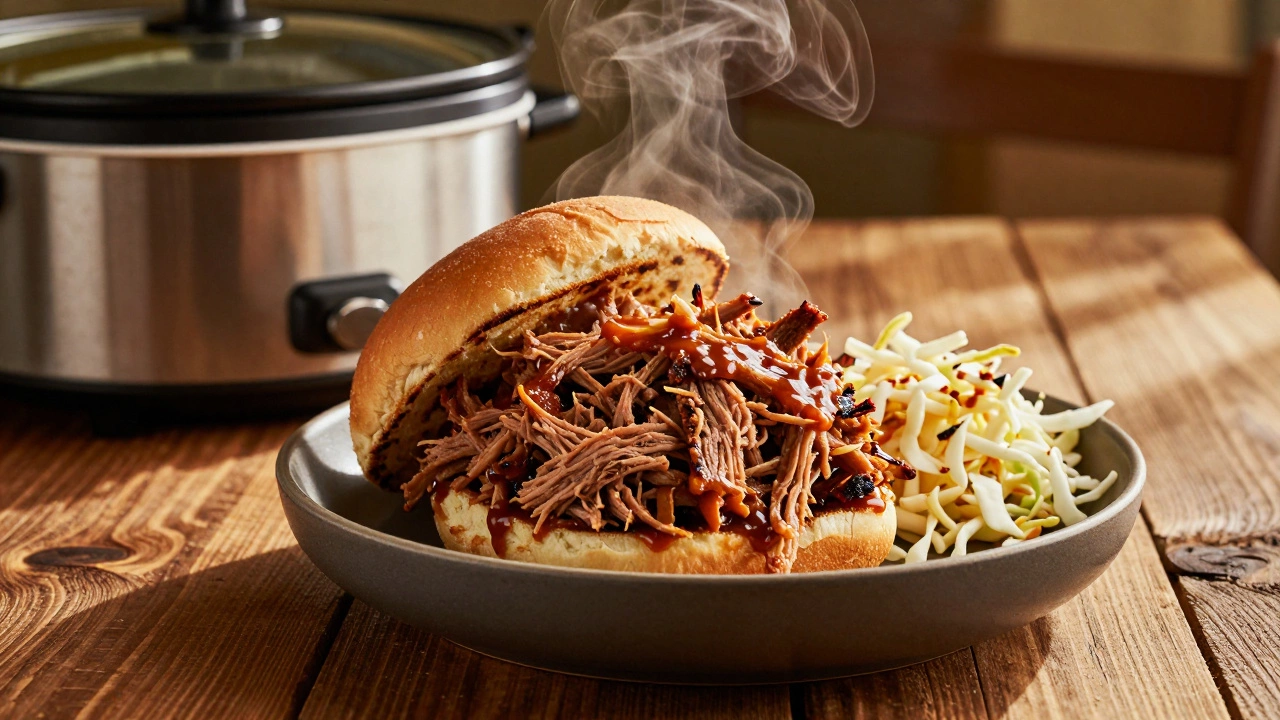
The low setting is the gold standard for traditional comfort foods. It is designed for cuts of meat that are cheap and tough but become luxurious with time. Think chuck roast for pot roast, lamb shanks, beef brisket, or pork butt for pulled pork. These cuts are full of collagen. The slow, steady heat allows the collagen to dissolve into gelatin without overcooking the muscle fibers immediately.
Low is also the better choice for busy mornings. You dump your ingredients in, set it to low, and leave for work. By the time you return six to eight hours later, the meal is ready. The extended time allows flavors to meld more thoroughly. In a tomato-based sauce, for example, the acidity softens and deepens over a longer period, creating a richer taste profile than a quick high-heat cook.
Furthermore, low reduces the risk of burning. Because the temperature rise is gradual, the liquid evaporates more slowly. This is crucial for recipes with thick sauces or glazes that can scorch if the bottom of the pot gets too hot too fast. If you live in a place with high altitude, like parts of New Zealand or Colorado, low is often safer because water boils at a lower temperature, and high settings can sometimes boil away liquids too aggressively.
Can You Switch Between Low and High?
A common question is whether you can start on high and switch to low, or vice versa. The short answer is yes, but you need to manage your expectations regarding total cooking time. Most modern slow cookers allow you to change the setting mid-cycle. However, the thermostat does not instantly adjust the internal temperature. It takes time for the pot to cool down or heat up to the new set point.
If you start on high for two hours and then switch to low, you cannot simply subtract two hours from the recipe’s total time. You have essentially given the food a head start. A recipe that calls for eight hours on low might only need four to five hours total if you start on high for two hours. Conversely, if you start on low and realize you are late, switching to high will speed things up, but it won’t magically finish the meal instantly. It will still take another couple of hours to reach the desired tenderness.
Be cautious with dairy. If you are making a creamy chowder or a cheese-based dip, avoid switching between extremes. Rapid temperature changes can cause milk proteins to curdle or cheese to separate and become grainy. Keep the temperature consistent once dairy is added.
| Feature | High Setting | Low Setting |
|---|---|---|
| Target Temperature | ~200°F (93°C) | ~200°F (93°C) |
| Time to Reach Temp | ~2 hours | ~4 hours |
| Best For | Lean meats, veggies, leftovers | Tough cuts, stews, braises |
| Typical Duration | 3-6 hours | 6-10 hours |
| Flavor Development | Faster, brighter | Deeper, melded |
| Risk of Overcooking | Higher for tough cuts | Lower, more forgiving |
Common Mistakes to Avoid
Even if you pick the right setting, you can ruin a meal by ignoring basic slow cooking principles. One major error is overcrowding the pot. If you fill the cooker to the brim, the heat cannot circulate evenly. The center of the food may remain cold while the edges burn. Always leave some space for steam and circulation. Aim to fill the pot between one-half and two-thirds full.
Another mistake is lifting the lid. Every time you open the slow cooker, you lose about 20 minutes of heat. On a low setting, this can significantly delay the cooking process. Check your food only when necessary. If you must check, do it quickly and replace the lid immediately. Modern slow cookers are designed to be sealed environments. Trust the process.
Liquid management is also critical. Unlike stovetop cooking, very little liquid evaporates in a slow cooker. Recipes that call for a lot of broth on the stove may need less liquid in the slow cooker. If you add too much liquid, especially on the high setting where evaporation is slightly higher, you end up with a watery dish. Start with less; you can always add water or broth later, but you cannot remove it easily.
Practical Examples: Applying the Rules
Let’s look at how this plays out in real recipes. Imagine you are making a classic beef stew. You are using chuck steak, which is tough and fatty. You chop it into cubes and add root vegetables. Here, low is the winner. You want those chunks of beef to braise gently for eight hours. The fat renders slowly, and the collagen turns to gelatin, creating a rich, thick sauce. If you cooked this on high for four hours, the meat might fall apart, but it could also feel dense and chewy because the fibers didn’t relax fully.
Now consider a chicken and rice casserole. You are using boneless, skinless chicken thighs. Thighs are more forgiving than breasts, but they still don’t need eight hours. Four hours on high is perfect. The rice absorbs the liquid, the chicken stays juicy, and you get dinner on the table sooner. If you put this on low for eight hours, the rice would likely turn to porridge, and the chicken might start to shred unintentionally.
What about a fruit compote? If you are making applesauce or berry sauce, low is generally better. Fruit breaks down easily. High heat can cause the skins to split violently and the sugars to caramelize too quickly, leading to a burnt taste at the bottom. Low allows the fruit to soften gradually, releasing its natural pectin and sweetness without scorching.
Safety and Energy Considerations
From a safety standpoint, both settings keep food out of the bacterial danger zone (40°F-140°F / 4°C-60°C) once the initial heating phase is complete. However, because low takes longer to reach the safe internal temperature, it is crucial not to leave raw meat at room temperature for too long before starting the cooker. If you are using frozen meat, it is generally recommended to thaw it first. While some manufacturers say you can cook from frozen, it extends the time the food spends in the danger zone, increasing the risk of bacterial growth. If you must cook from frozen, increase the cooking time by 50% and ensure the final internal temperature reaches at least 165°F (74°C) for poultry or 145°F (63°C) for beef/pork.
Energy-wise, slow cookers are incredibly efficient. They use less electricity than an oven. Running a slow cooker on low for eight hours uses roughly the same amount of energy as running a toaster for 12 minutes. So, worrying about the electric bill is rarely a reason to choose high over low. Choose based on flavor and texture, not cost.
Is it safe to cook on low overnight?
Yes, it is generally safe to cook on low overnight, provided the food reaches a safe internal temperature. Most slow cookers are designed to run unattended for 8-10 hours. Ensure the meat starts at a safe temperature and that the cooker is placed on a stable, heat-resistant surface away from flammable materials. Avoid cooking poultry or ground meats overnight unless you are confident the timer aligns with safe cooking durations.
Does cooking on low make meat more tender?
For tough cuts with high collagen content, yes. The slower temperature rise allows collagen to break down into gelatin without tightening the muscle fibers excessively. For lean meats like chicken breast, low cooking can actually make them drier because the prolonged heat squeezes out moisture. Tenderization depends on the cut, not just the setting.
Can I convert a high recipe to low?
Yes, use the ratio of 1 hour on high equals 2 hours on low. If a recipe calls for 4 hours on high, cook it for 8 hours on low. Monitor the food near the end of the estimated time, as individual slow cookers vary in wattage and efficiency. Some models run hotter than others.
Should I add more liquid when cooking on low?
No, you do not need to add extra liquid for low cooking. In fact, you may need slightly less because evaporation is minimal. Slow cookers trap steam effectively. Adding too much liquid leads to watery sauces. Stick to the recipe’s liquid measurements, reducing them slightly if the recipe includes many watery vegetables like tomatoes or zucchini.
Why does my slow cooker food taste bland on low?
Blandness often comes from insufficient seasoning or lack of acid, not the heat setting. Long cooking times can mute certain flavors. Add salt, pepper, and herbs generously at the start. Finish the dish with a splash of vinegar, lemon juice, or fresh herbs after cooking to brighten the flavors. Also, ensure you browned your meat beforehand; searing adds depth that boiling never can.
Is high setting better for freezing meat?
If you are cooking from frozen, high is often recommended to reduce the time the meat spends in the bacterial danger zone. However, thawing meat in the refrigerator overnight is the safest method. If you must cook from frozen, use high and extend the cooking time by 50%. Never put frozen meat directly into a slow cooker on low, as it may stay too cold for too long.