Vegetarian Parmesan & Cheese Checker
Based on standard industry practices.
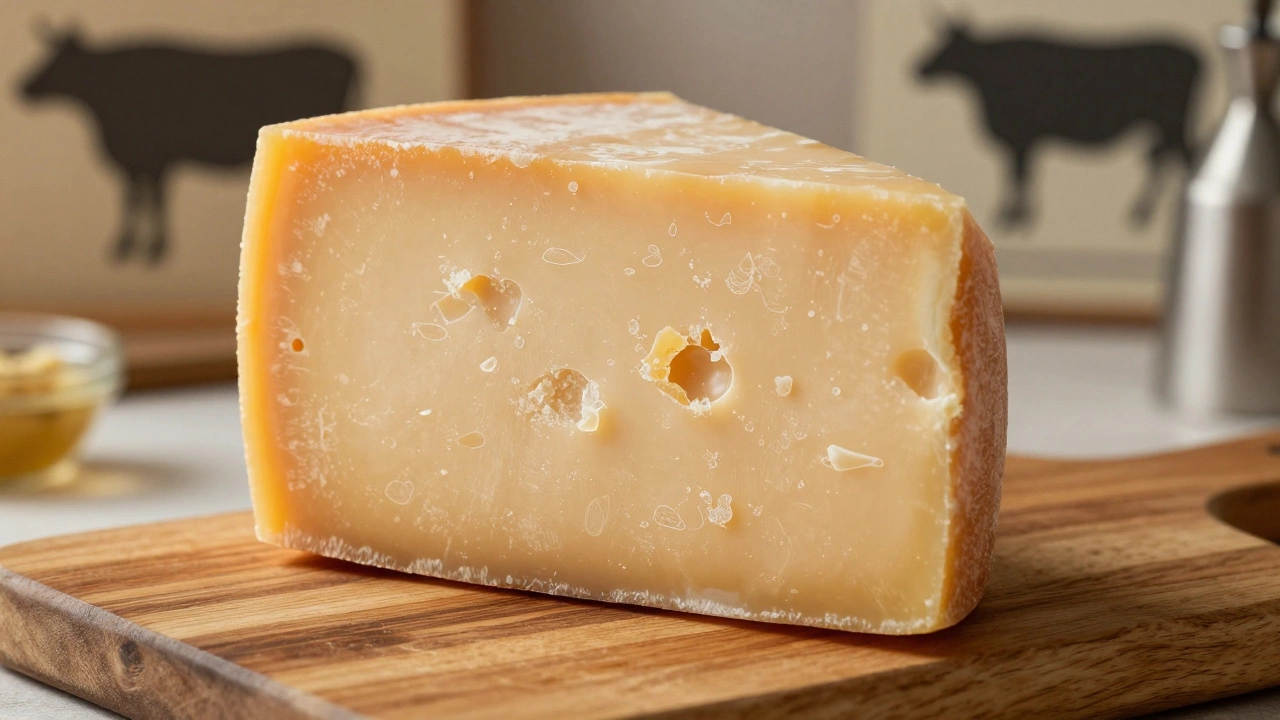
You’re making a classic carbonara or sprinkling fresh shavings over a Caesar salad. You grab the block of Parmigiano-Reggiano, the gold standard of Italian hard cheeses. It tastes incredible. But if you are strictly vegetarian, that delicious pile of crumbs might actually be a dealbreaker. It sounds counterintuitive-cheese comes from cows, right? So why is it not considered vegetarian?
The issue isn’t the milk itself. The problem lies in the invisible ingredient used to turn that liquid into solid curds: an enzyme called rennet a complex of enzymes essential for cheesemaking that coagulates milk. In traditional artisanal cheeses like authentic Parmesan, this rennet is sourced directly from the stomachs of unweaned calves. For vegetarians who avoid products derived from slaughtered animals, this makes traditional Parmesan non-vegetarian.
The Role of Rennet in Cheesemaking
To understand why this matters, we have to look at how cheese is actually made. Milk doesn't just sit there and harden on its own. To separate the solids (curds) from the liquids (whey), you need a coagulant. Think of it as the glue that holds the cheese together.
Animal rennet enzymes extracted from the fourth stomach of young ruminants has been the industry standard for centuries. It contains chymosin, an enzyme specifically designed by nature to help calves digest their mother’s milk. When cheesemakers add this to warm milk, it causes the casein proteins in the milk to clump together, forming curds. This process is efficient and produces a very specific texture and flavor profile that defines aged hard cheeses.
Here is the catch: to get this rennet, the calf must be slaughtered. The enzyme is harvested from the lining of the abomasum (the fourth stomach). Even though the calf is usually destined for meat production anyway, the use of an internal organ from a killed animal violates the core principle of vegetarianism, which seeks to exclude all forms of exploitation and cruelty to animals for food.
Traditional vs. Modern Production Methods
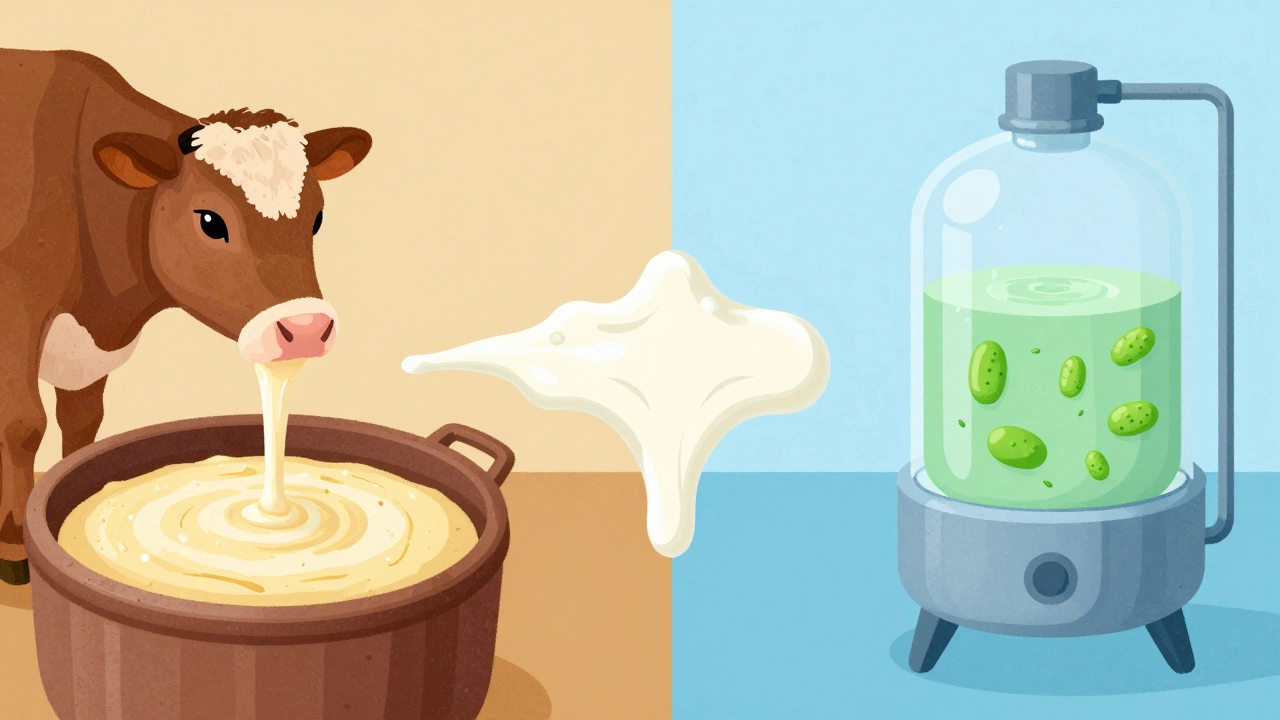
Not all cheese uses animal parts. Over the last few decades, technology has given us two main alternatives to animal rennet:
- Microbial Rennet: Produced by fermenting molds or bacteria. It is completely plant-based and widely used in many commercial cheeses.
- Fermentation-Produced Chymosin (FPC): This is genetically engineered chymosin. Scientists insert the gene for chymosin into yeast or bacteria, which then produce the enzyme during fermentation. While it is chemically identical to animal rennet, no animals were harmed in its creation. Most vegetarians accept FPC because it does not involve slaughter.
So, why do some famous cheeses still use the old method? Tradition and law. In Europe, particularly Italy, certain cheeses are protected by Protected Designation of Origin (PDO) a label identifying that a product originates in a specific location and possesses qualities due to that origin status. To be labeled "Parmigiano-Reggiano," the cheese must follow strict regulations set by the Consorzio del Formaggio Parmigiano Reggiano. These rules mandate the use of raw cow's milk, salt, and natural animal rennet. No substitutes allowed.
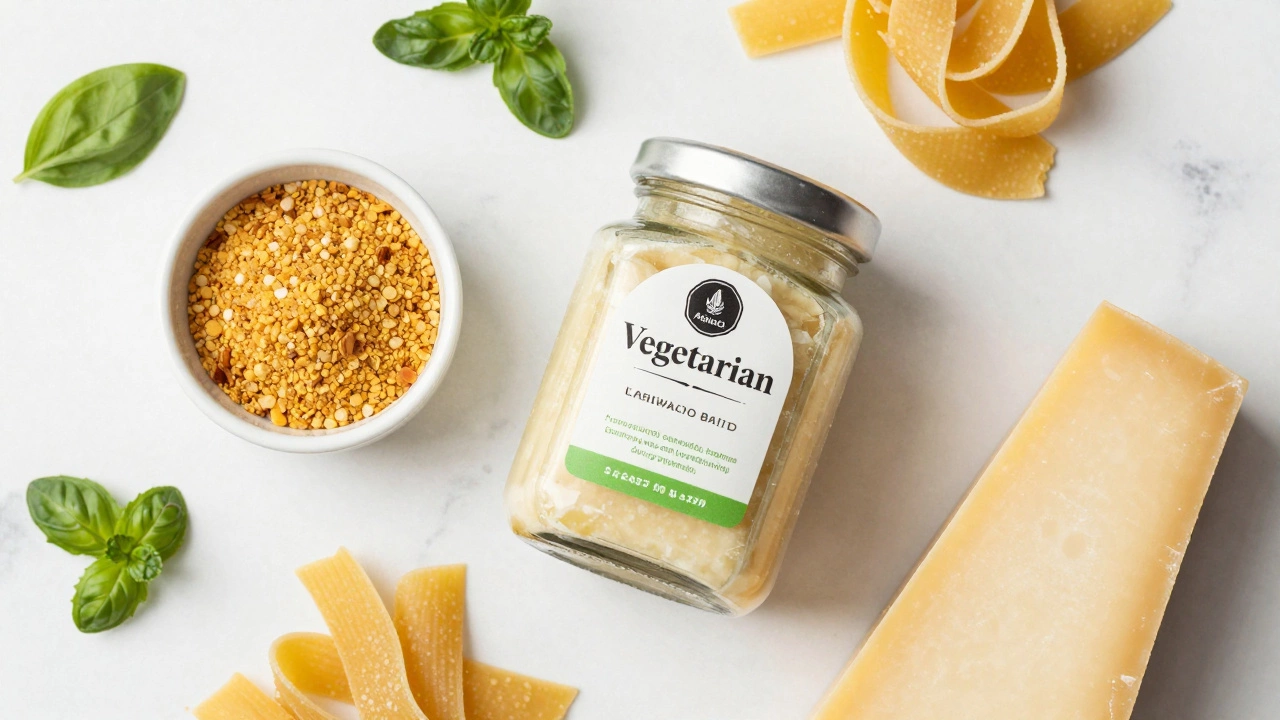
This means that if you buy a jar of grated cheese in the supermarket labeled simply "Parmesan" (without the hyphenated Parmigiano-Reggiano), it might be vegetarian. Many mass-produced brands use microbial or FPC rennet to cut costs and appeal to broader markets. However, if the package says "Parmigiano-Reggiano," you can be 100% sure it contains animal rennet.
How to Spot Non-Vegetarian Cheese
Reading labels can be tricky. Manufacturers aren't always required to list "rennet" explicitly; they might just say "enzymes" or "coagulants." Here is how to navigate the aisle without breaking your dietary code:
- Look for the "Vegetarian" Logo: In many countries, including the UK and Australia, cheese makers can display a green leaf symbol or the word "Vegetarian" prominently if they use non-animal rennet. This is the safest bet.
- Check the Ingredient List for Keywords: If you see "microbial rennet," "vegetable rennet," or "fermentation-produced chymosin," you are good. If you see "animal rennet," "calf rennet," or just "rennet" without qualification, assume it is animal-derived unless the brand states otherwise.
- Avoid Traditional European Names: Be cautious with cheeses that have PDO status. Alongside Parmigiano-Reggiano, other likely culprits include Roquefort, Gorgonzola, Pecorino Romano, and Grana Padano. These almost exclusively use animal rennet to maintain their traditional character.
When in doubt, contact the manufacturer. Many large dairy companies now publish lists of their vegetarian-friendly products online because they know this is a common question.
| Cheese Type | Typical Rennet Source | Vegetarian Status | Note |
|---|---|---|---|
| Parmigiano-Reggiano | Animal (Calf Stomach) | No | Mandated by PDO laws |
| Generic "Parmesan" (Supermarket Brand) | Often Microbial or FPC | Usually Yes | Check label carefully |
| Pecorino Romano | Animal (Lamb/Calf) | No | Traditional sheep's milk cheese |
| Cheddar (Mass Market) | Microbial or FPC | Yes | Most major brands are veg-friendly |
| Gouda (Artisanal) | Varies | Check Label | Older/traditional batches may use animal |
Best Vegetarian Alternatives to Parmesan
If you love the sharp, salty, umami punch of Parmesan but want to stick to your values, you have options. You don't have to give up the flavor; you just have to swap the source.
1. Nutritional Yeast
This is a favorite among vegans and vegetarians alike. Nutritional yeast deactivated yeast flakes with a savory, cheesy flavor is sold in flakes or powder. It has a naturally nutty, cheesy taste and is often fortified with B12. Sprinkle it over popcorn, pasta, or roasted vegetables. It won't melt exactly like cheese, but it delivers that crucial savory note.
2. Vegan Parmesan Blends
You can make your own "parmezan" in minutes. Blend cashews, nutritional yeast, garlic powder, and salt in a food processor until it resembles coarse sand. Store it in a jar. It mimics the texture and salinity of grated Parmesan surprisingly well, especially when used as a finishing touch on salads or soups.
3. Vegetarian Aged Cheeses
Some aged cheeses come close to the flavor profile of Parmesan without the animal rennet. Look for aged Asiago an Italian cheese that ranges from soft to hard (specifically Asiago Pressato or older versions labeled vegetarian) or certain brands of Pecorino Italian cheese made from sheep's milk that explicitly state they use vegetable rennet. Note that true Pecorino Romano is rarely vegetarian, so read the fine print.
4. Commercial Vegan Parmesan
The market for plant-based dairy has exploded. Brands like Violife, Follow Your Heart, and Miyoko's Creamery offer vegan parmesan styles that are designed to melt and grate similarly to the real thing. They are slightly more expensive than regular cheese, but for many, the ethical peace of mind is worth the premium.
Why Does This Matter Beyond Ethics?
For many people, the distinction is purely ethical. But there are practical reasons to pay attention to rennet sources too. Some people have sensitivities to animal-derived enzymes, although this is rare. More commonly, knowing what is in your food helps you make informed choices about sustainability. Industrial animal agriculture has a significant environmental footprint. By choosing microbial or fungal rennets, you are supporting a supply chain that relies less on intensive livestock farming for every single step of the food process.
Additionally, understanding these differences elevates your cooking knowledge. Knowing that animal rennet contributes to the specific crystalline crunch of aged Parmigiano-Reggiano helps you appreciate why the substitute, while tasty, might lack that exact textural bite. It turns a simple grocery trip into a deeper engagement with food science.
Troubleshooting Your Cheese Choices
Switching to vegetarian cheese can feel overwhelming at first. Here are a few quick tips to keep things simple:
- Stick to Brands You Trust: Once you find a few brands that consistently use vegetable rennet (like many organic lines or specific international brands), stick with them. It saves time reading labels every week.
- Don't Fear Fresh Cheeses: Soft cheeses like ricotta, mozzarella, and cottage cheese are much more likely to be vegetarian than hard, aged cheeses. The aging process is where traditionalists insist on animal rennet for flavor development.
- Ask at Restaurants: If you are dining out, ask the server if their parmesan is vegetarian. Many high-end restaurants use imported Parmigiano-Reggiano, which is not vegetarian. Others might use a house-grated blend that is safe. It never hurts to ask.
Eating vegetarian doesn't mean you have to sacrifice flavor. It just means you have to become a smarter shopper. By understanding the hidden role of rennet, you can enjoy your pasta dishes with confidence, knowing exactly what went into that final sprinkle of savory goodness.
Is all Parmesan cheese non-vegetarian?
No, not all cheese labeled "Parmesan" is non-vegetarian. Only authentic "Parmigiano-Reggiano" is legally required to use animal rennet. Many generic supermarket brands labeled "Parmesan" use microbial or fermentation-produced chymosin, making them vegetarian-friendly. Always check the ingredient list or look for a vegetarian certification logo.
What is the difference between animal rennet and vegetable rennet?
Animal rennet is an enzyme extracted from the stomach lining of unweaned calves. Vegetable rennet (often called microbial rennet) is produced by fungi or bacteria through fermentation. Both perform the same function of coagulating milk, but vegetable rennet involves no animal slaughter, making it suitable for vegetarians.
Can I use nutritional yeast instead of Parmesan?
Yes, nutritional yeast is an excellent vegetarian and vegan alternative to Parmesan. It has a similar savory, umami-rich flavor profile. While it doesn't melt exactly like cheese, it works beautifully as a topping for pasta, popcorn, salads, and roasted vegetables. For a closer texture match, you can blend it with ground nuts.
Is Cheddar cheese vegetarian?
Most mass-produced Cheddar cheese is vegetarian because manufacturers typically use microbial or fermentation-produced chymosin to save costs and appeal to a wider audience. However, some artisanal or traditional Cheddars may still use animal rennet. It is always best to check the packaging for a "vegetarian" label or inspect the ingredients list.
Why do traditional cheeses use animal rennet?
Traditional cheeses use animal rennet because it produces a unique flavor profile and texture that many chefs and consumers prefer. The enzymes in animal rennet break down proteins in a way that creates distinct crystalline structures and complex flavors during aging. Additionally, legal protections like PDO status in Europe mandate the use of traditional methods, including animal rennet, to preserve cultural heritage.